
Definition
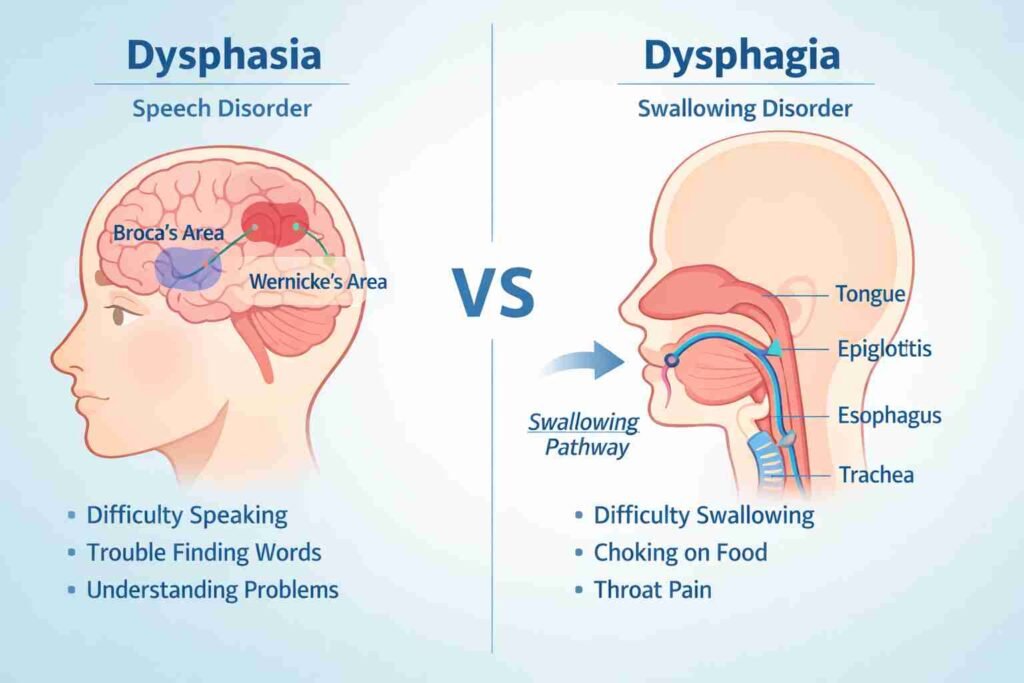
Dysphasia and dysphagia are medical conditions that sound similar but affect different body functions. Dysphasia impacts language and communication abilities, while dysphagia affects swallowing. Understanding the difference is essential for proper diagnosis, treatment and patient care.
Medical terms can often sound alike, which leads to confusion. Dysphasia and dysphagia are two such terms. Although they differ by only one letter, they describe very different conditions. Dysphasia affects a person’s ability to speak, understand, read, or write language. Dysphagia affects a person’s ability to swallow food or liquids safely.
This confusion can delay diagnosis and proper treatment. A person with dysphasia may struggle to express words clearly. A person with dysphagia may cough or choke while eating. Both conditions can occur after a stroke, brain injury, or neurological disease, but they require different forms of therapy. dysphagia vs aphasia
Understanding the difference between dysphasia vs dysphagia is important for caregivers, medical professionals, and patients. Early identification improves outcomes, reduces complications, and supports recovery. This article explains definitions, causes, symptoms, treatments, real-world examples, global perspectives, exercises, and frequently asked questions to help you clearly distinguish between these two conditions.
Dysphagia is difficulty in swallowing, while aphasia is difficulty in language or speech due to brain injury. dysphagia vs aphasia.
Quick Overview
Dysphasia and dysphagia affect different systems in the body.
| Feature | Dysphasia | Dysphagia |
|---|---|---|
| Affected System | Language and communication | Swallowing mechanism |
| Main Difficulty | Speaking or understanding language | Swallowing food or liquids |
| Common Cause | Stroke, brain injury | Stroke, neurological disorders |
| Specialist | Speech-language pathologist | Speech-language pathologist, gastroenterologist |
| Risk Level | Communication barriers | Risk of choking or aspiration |
The key difference in dysphasia vs dysphagia lies in function. Dysphasia is related to language. Dysphagia is related to swallowing.
Definition and Explanation
What Is Dysphasia
Dysphasia is a language disorder caused by brain damage. It affects a person’s ability to speak, understand, read, or write. It usually occurs after a stroke, traumatic brain injury, tumor, or neurological disease.
Dysphasia can be mild or severe. Some individuals struggle to find words. Others cannot form sentences or understand speech clearly.
Dysphasia is sometimes used interchangeably with aphasia. However, aphasia often refers to complete language loss, while dysphasia refers to partial impairment.
Common symptoms include:
- Difficulty finding words
- Speaking in short or incomplete sentences
- Using incorrect words
- Trouble understanding spoken language
- Difficulty reading or writing
What Is Dysphagia
Dysphagia is a swallowing disorder. It makes it difficult or painful to swallow food, liquids, or saliva. It can occur in the mouth, throat, or esophagus.
Swallowing is a complex process involving muscles and nerves. When these systems are damaged, swallowing becomes unsafe.
Common symptoms include:
- Coughing during meals
- Choking while eating
- Food getting stuck in the throat
- Drooling
- Unexplained weight loss
- Recurrent pneumonia
Unlike dysphasia, dysphagia can become life-threatening due to choking or aspiration pneumonia.
Risk Factors and Causes
Causes of Dysphasia
- Stroke, responsible for nearly 30 percent of stroke survivors experiencing language impairment
- Traumatic brain injury
- Brain tumors
- Infections affecting the brain
- Neurodegenerative diseases such as Alzheimer’s disease
Causes of Dysphagia
- Stroke
- Parkinson’s disease
- Multiple sclerosis
- Muscular dystrophy
- Head and neck cancer
- Esophageal disorders
Studies show that up to 65 percent of stroke patients experience dysphagia in the early recovery phase. Many recover partially with therapy.
Classifications and Types
Types of Dysphasia
- Expressive dysphasia: Difficulty speaking but understanding remains intact
- Receptive dysphasia: Difficulty understanding language
- Global dysphasia: Severe impairment in both speaking and understanding
Types of Dysphagia
- Oral dysphagia: Difficulty chewing or moving food in the mouth
- Pharyngeal dysphagia: Difficulty initiating swallowing
- Esophageal dysphagia: Food feels stuck after swallowing
Understanding these classifications helps healthcare providers create effective treatment plans.
Advantages and Challenges of Early Diagnosis
Benefits of Early Dysphasia Diagnosis
- Improves speech therapy outcomes
- Supports faster communication recovery
- Reduces emotional distress
Risks of Delayed Dysphagia Diagnosis
- Increased choking risk
- Aspiration pneumonia
- Malnutrition
- Dehydration
Early intervention significantly improves quality of life.
Real World Examples
Case Example 1: Dysphasia After Stroke
A 62-year-old man experiences a stroke. He understands conversations but cannot find the right words. He says “chair” instead of “table.” This is expressive dysphasia.
With speech therapy for six months, he regains much of his language ability.
Case Example 2: Dysphagia in Parkinson’s Disease
A woman with Parkinson’s disease begins coughing during meals. She reports food sticking in her throat. A swallowing test confirms pharyngeal dysphagia.
She begins swallowing therapy and switches to softer foods. Her choking episodes decrease.
Regional and Global Usage
Dysphasia and dysphagia occur worldwide, but awareness and access to treatment vary.
North America and Europe
Advanced stroke centers provide early screening for both dysphasia and dysphagia. Speech-language pathologists are standard members of rehabilitation teams. Swallowing assessments are routinely conducted after stroke.
Asia
In countries such as Japan and South Korea, aging populations have increased the prevalence of swallowing disorders. Early dysphagia screening is emphasized in as older people care facilities.
Middle East and South Asia
Awareness is growing, but access to specialized speech therapy may be limited in rural areas. Telehealth services are helping bridge this gap.
Africa
Limited healthcare resources affect early diagnosis. However, educational programs and online training are improving recognition of speech and swallowing disorders.
Globally, stroke remains the leading cause of both dysphasia and dysphagia, making early rehabilitation a public health priority.
Common Mistakes and Misconceptions
| Mistake | Why It Is Incorrect | Correct Understanding |
|---|---|---|
| Assuming dysphasia and dysphagia are the same | They affect different body systems | Dysphasia affects language, dysphagia affects swallowing |
| Ignoring mild swallowing issues | Can lead to pneumonia | Early screening is essential |
| Believing recovery is impossible | Many improve with therapy | Rehabilitation improves outcomes |
| Confusing speech difficulty with swallowing difficulty | They involve different mechanisms | Assessment determines the condition |
Diagnosis Methods
Diagnosing Dysphasia
- Neurological examination
- Brain imaging such as MRI or CT scan
- Language assessments
Diagnosing Dysphagia
- Swallowing study
- Modified barium swallow test
- Endoscopic evaluation
- Physical examination
Early testing ensures safe and effective management.
Treatment Options
Dysphasia’s Treatment
- Speech and language therapy
- Communication exercises
- Alternative communication devices
- Cognitive therapy
Treatment for Dysphagia
- Swallowing therapy
- Diet modifications
- Thickened liquids
- Feeding strategies
- In severe cases, feeding tubes
Therapy is often long term and requires patient commitment.
Exercises with Answers
Exercise 1
Identify whether the condition is dysphasia or dysphagia.
- Difficulty forming sentences
- Coughing while eating
- Trouble understanding spoken words
- Food stuck in throat
Answers:
1 Dysphasia
2 Dysphagia
3 Dysphasia
4 Dysphagia
Exercise 2
Match the symptom to the correct disorder.
| Symptom | Dysphasia | Dysphagia |
|---|---|---|
| Word finding difficulty | Yes | No |
| Choking during meals | No | Yes |
| Reading difficulty | Yes | No |
| Painful swallowing | No | Yes |
Related Comparisons
Dysphasia vs Aphasia
Aphasia often refers to complete loss of language. Dysphasia typically means partial language impairment.
Dysphagia vs Odynophagia
Odynophagia means painful swallowing. Dysphagia means difficulty swallowing.
Understanding these related terms prevents diagnostic confusion.
FAQs
What is the main difference between dysphasia and dysphagia?
Dysphasia affects language and communication. Dysphagia affects swallowing ability.
Can a person have both dysphasia and dysphagia?
Yes. Stroke patients often experience both conditions because brain damage can affect speech and swallowing areas.
Is dysphagia dangerous?
Yes. It can lead to choking, malnutrition, and aspiration pneumonia if untreated.
Is dysphasia permanent?
Not always. Many patients improve significantly with speech therapy.
What specialist treats dysphasia and dysphagia?
Speech-language pathologists evaluate and treat both conditions.
How is dysphagia diagnosed?
Through swallowing studies, imaging tests, and clinical assessments.
Does aging increase risk?
Yes. Both disorders are more common in older adults due to stroke and neurodegenerative diseases.
Can therapy fully cure these disorders?
Some patients recover fully. Others improve but may have lasting symptoms.
Are these disorders common after stroke?
Yes. Up to one third of stroke survivors experience language issues, and more than half may experience swallowing difficulty initially.
How can caregivers help?
Encourage therapy, follow dietary guidelines, and monitor symptoms closely.
Conclusion
Dysphasia and dysphagia may sound similar, but they affect very different functions. Dysphasia impacts language and communication, while dysphagia interferes with swallowing. Both commonly occur after stroke or neurological damage, and both require early diagnosis and therapy.
Understanding the distinction between dysphasia vs dysphagia ensures correct treatment and better outcomes. Speech therapy can improve communication abilities in dysphasia patients. Swallowing therapy and dietary modifications reduce life-threatening complications in dysphagia. aphasia vs dysphagia
If you notice speech difficulties or swallowing problems in yourself or a loved one, seek medical evaluation promptly. Early intervention saves lives, improves quality of life, and promotes recovery. aphagia vs dysphagia:Aphagia is the inability to swallow at all, while dysphagia is difficulty or discomfort in swallowing.

Christopher Hayes is a passionate language enthusiast and the lead content creator at TalkNexs.com, a platform dedicated to helping readers master the art of grammar, writing and effective communication. With years of experience in writing, editing and teaching language, Christopher’s mission is to make grammar simple, practical and engaging for everyone.