
Definition
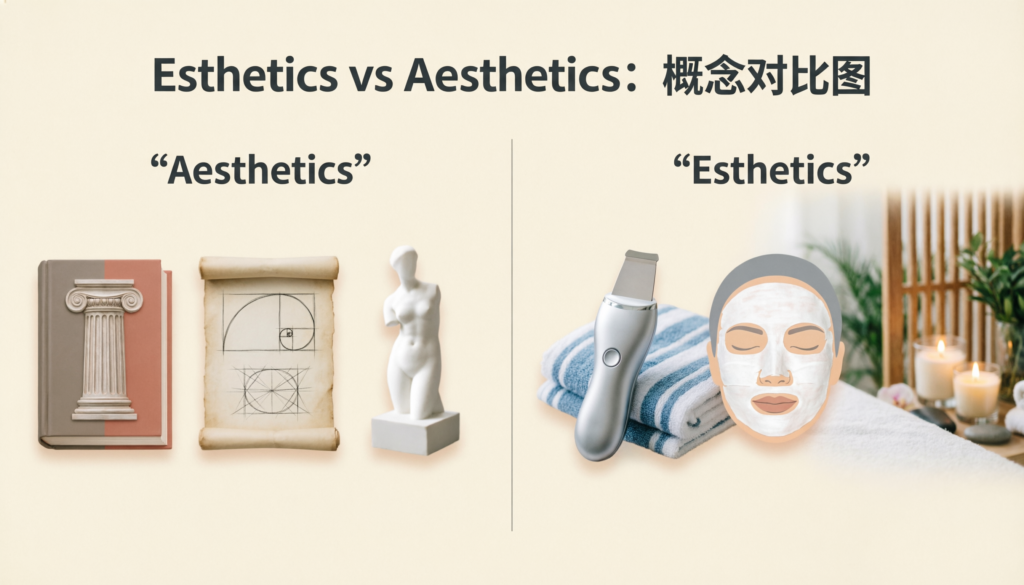
Esthetics and aesthetics have the same core meaning related to beauty and appearance. The difference lies mainly in usage and context. Aesthetics is commonly used in philosophy and art, while esthetics is often used in skincare and beauty professions, especially in American English.
Language can be confusing, especially when two words look almost the same and mean nearly the same thing. Esthetics and aesthetics are perfect examples. Many people wonder if one spelling is correct and the other wrong. Others think they mean different things.
In reality, both words relate to beauty, appearance, and the appreciation of art. However, their usage depends on context, industry, and region. For example, you may see aesthetics in philosophy books and esthetics in skincare schools.
Understanding the difference between esthetics vs aesthetics is important for students, professionals, writers, and business owners. Using the correct form improves clarity, professionalism, and search visibility online.
This article explains the meanings, history, professional usage, regional differences, common mistakes, exercises, and practical examples. By the end, you will clearly understand when and how to use each term correctly.
Quick Overview
Esthetics and aesthetics both relate to beauty and visual appeal. The key difference lies in spelling preference and professional context.
| Feature | Esthetics | Aesthetics |
|---|---|---|
| Meaning | Study or practice of beauty | Study or philosophy of beauty |
| Common Use | Skincare and cosmetology | Philosophy, art, design |
| Region | Mostly American English | British English and global academic use |
| Industry Context | Esthetician, esthetics school | Aesthetic theory, aesthetic design |
In simple terms, aesthetics is broader and academic, while esthetics is often industry specific.
Definition and Explanation
What Is Aesthetics
Aesthetics is a branch of philosophy that studies beauty, art, taste, and visual perception. It explores questions like:
- What makes something beautiful
- Why do people find art meaningful
- How do colors, shapes, and sounds affect emotions
The word aesthetics comes from the Greek word aisthesis, meaning perception or sensation. It has been used in philosophy for centuries.
Examples of aesthetics in use:
- The aesthetics of modern architecture
- Aesthetic theory in art history
- The aesthetics of minimal design
What Is Esthetics
Esthetics is a simplified spelling of aesthetics. In modern usage, especially in the United States, it is commonly used in the beauty and skincare industry.
Examples of esthetics in use:
- Licensed esthetician
- Esthetics training program
- Esthetics certification
In professional settings such as cosmetology schools, the spelling esthetics is often preferred.
Historical Background
The word aesthetics entered English in the eighteenth century through German philosophy. Philosophers such as Immanuel Kant discussed aesthetics as the theory of beauty and taste.
Over time, American English began simplifying spellings. Just as color differs from colour, esthetics became an accepted variant of aesthetics.
Today:
- Academic institutions often use aesthetics
- Beauty schools in the United States frequently use esthetics
Both forms are correct, but context matters.
Industry and Professional Usage
In Philosophy and Art
In academic fields such as art history, literature, and philosophy, aesthetics is the standard spelling. Scholars discuss aesthetic principles, aesthetic values, and aesthetic judgment.
For example:
- The aesthetics of Renaissance painting
- Aesthetic analysis of film
- Aesthetic experience in music
In Beauty and Skincare
In cosmetology and skincare industries, especially in North America, esthetics is commonly used. Professionals who perform facials, skin treatments, and cosmetic services are often called estheticians.
Examples include:
- Esthetics license
- Esthetics program
- Medical esthetics training
This spelling aligns with industry terminology and certifications.
Real World Examples
Understanding esthetics vs aesthetics becomes easier through practical examples.
1 Example
A university course titled Introduction to Aesthetics focuses on philosophy of art and beauty.
2 Example
A beauty school advertising an Esthetics Certification Program focuses on skincare training.
3 Example
A marketing agency discussing brand aesthetics refers to design style and visual appeal.
4 Example
A spa hiring a licensed esthetician uses the industry spelling esthetics.
These examples show that the meaning overlaps, but the professional context determines the spelling.
Regional and Global Usage
Language varies across regions, and so does spelling preference.
United States
In academic writing, aesthetics is common.
In skincare and beauty industries, esthetics is widely used.
United Kingdom
Aesthetics is the standard spelling in both academic and beauty contexts. Esthetics is rarely used.
Canada
Both forms appear, but aesthetics is more common in formal writing.
Australia and New Zealand
Aesthetics is the preferred spelling across industries.
Globally, aesthetics is more widely recognized. However, in American beauty education, esthetics remains common.
Advantages and Disadvantages of Each Term
Advantages of Using Aesthetics
- Internationally recognized
- Standard in academic writing
- Broader meaning
Disadvantages of Using Aesthetics
- Longer spelling
- Less industry specific in skincare
Advantages of Using Esthetics
- Industry specific in beauty fields
- Common in American licensing programs
- Clear professional identity
Disadvantages of Using Esthetics
- Less recognized internationally
- May appear informal in academic writing
Choosing the right word depends on your audience and field.
Common Mistakes and Corrections
Mistake 1
Using esthetics in a philosophy research paper.
Correction
Use aesthetics for academic and theoretical discussions.
Mistake 2
Using aesthetics in official American esthetician licensing documents.
Correction
Follow the industry standard spelling esthetics.
Mistake 3
Thinking one spelling is incorrect.
Correction
Both are correct, but context determines proper usage.
Mistake 4
Switching spellings randomly in the same document.
Correction
Maintain consistency throughout your writing.
Related Concepts and Comparisons
Esthetics vs Aesthetics vs Cosmetic Science
| Term | Focus Area |
|---|---|
| Aesthetics | Philosophy of beauty and art |
| Esthetics | Practical skincare and beauty treatments |
| Cosmetic Science | Chemical formulation of beauty products |
Aesthetic vs Esthetic
Aesthetic is the adjective form commonly used worldwide.
Example: aesthetic appeal
Esthetic is less common but sometimes used in American industry contexts.
Example: esthetic procedures
In most cases, aesthetic remains the safer choice in general writing.
Practical Exercises with Answers
Exercise 1
Choose the correct word.
- She studied modern art and its ______ principles.
- He enrolled in an ______ training program.
- The interior design focused on minimalist ______.
- She became a licensed ______ after completing her course.
Answers
- Aesthetic
- Esthetics
- Aesthetics
- Esthetician
Exercise 2
Identify whether the context is academic or beauty industry.
- Discussion of Kant and beauty
- Facial treatment certification
- Visual branding strategy
- Skin care clinic training
Answers
- Aesthetics
- Esthetics
- Aesthetics
- Esthetics
Why This Difference Matters for SEO and Branding
In digital marketing and content writing, choosing between esthetics vs aesthetics can impact search visibility.
For example:
- People searching for philosophy topics usually type aesthetics.
- Students looking for beauty programs may search esthetics school near me.
Using the correct keyword improves ranking, relevance, and professionalism.
Businesses should research their audience and use consistent spelling aligned with industry standards.
FAQs
What is the main difference between esthetics and aesthetics?
The difference between esthetics vs aesthetics is mainly spelling and context. Aesthetics is academic, while esthetics is often used in skincare professions.
Is esthetics a real word?
Yes, esthetics is a correct spelling variant, especially in American beauty and cosmetology industries.
Which spelling is correct in academic writing?
Aesthetics is the correct and widely accepted spelling in academic and philosophical writing.
Do esthetics and aesthetics mean the same thing?
Yes, both relate to beauty and appearance, but usage depends on professional context.
Why do beauty schools use esthetics instead of aesthetics?
Many American cosmetology programs prefer esthetics as industry terminology for skincare training.
Is aesthetics used internationally?
Yes, aesthetics is the globally recognized spelling in most English speaking countries.
Can I use aesthetics for skincare writing?
Yes, but in American licensing contexts, esthetics may be more appropriate.
Does spelling affect SEO?
Yes, choosing the correct keyword based on audience improves search visibility and clarity.
What is an esthetician?
An esthetician is a licensed skincare professional trained in treatments such as facials and skin therapy.
Is aesthetic different from aesthetics?
Aesthetic is usually an adjective, while aesthetics is a noun referring to the study of beauty.
Conclusion
Understanding esthetics vs aesthetics is not about choosing right or wrong. Both words are correct. The difference lies in context, industry, and regional preference.
Aesthetics is widely used in philosophy, art, and academic discussions about beauty and perception. Esthetics is commonly used in American beauty and skincare professions, especially in licensing and training programs.
For students, writers, and professionals, consistency is key. Choose the spelling that matches your field and audience. If you are writing academically, use aesthetics. If you are referring to skincare certification in the United States, esthetics may be more appropriate.
Clear communication builds credibility. Knowing when to use esthetics and when to use aesthetics ensures professionalism and accuracy in every context.

Jonathan Reed is a dedicated grammar expert and language researcher at TalkNexs.com. With a strong passion for English structure, clarity and effective communication, he has spent years helping students, writers and professionals improve their grammar skills in simple and practical ways.