Definition
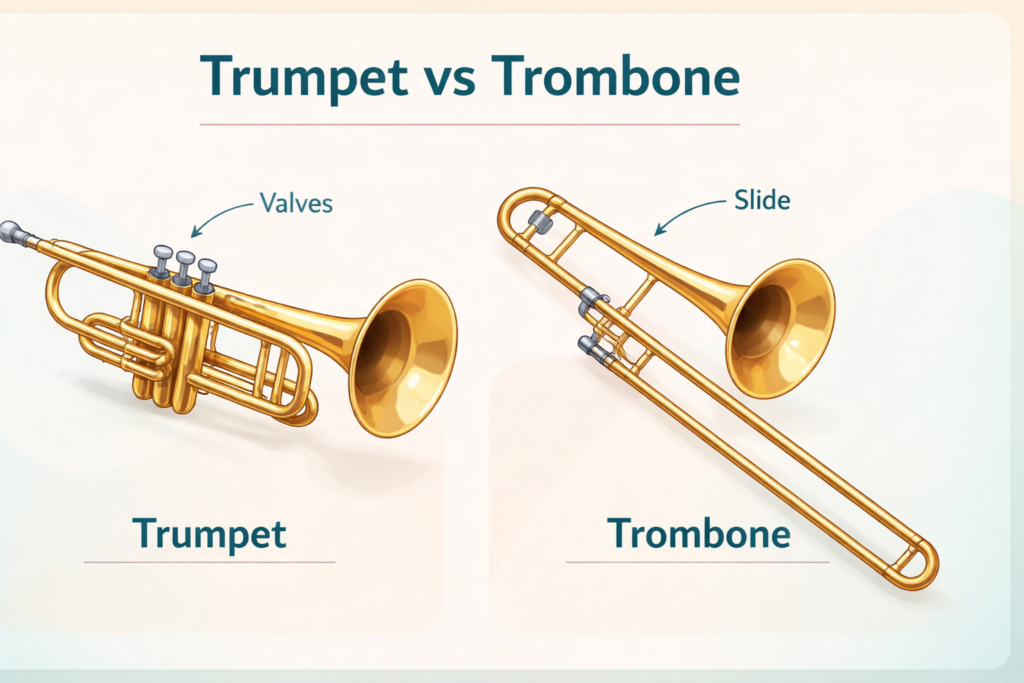
The trumpet and trombone are both brass instruments, but they differ in design and sound. The trumpet uses valves and produces a bright, sharp tone, while the trombone uses a slide and creates a deeper, smoother sound. Understanding these differences helps musicians choose the right instrument for their style and skill level.
Brass instruments have played a major role in music for centuries. From classical orchestras to jazz bands and modern music, instruments like the trumpet and trombone are widely used. While they may look similar at first, they are quite different in how they work and how they sound.
Many beginners often feel confused when choosing between the trumpet and trombone. Both instruments are popular in school bands and professional music settings, but each has unique features, playing styles, and sound qualities.
The trumpet is known for its bright and powerful tone, often used for melodies and solos. The trombone, on the other hand, produces a deeper and richer sound, often supporting harmony and rhythm.
Understanding the differences between trumpet vs trombone is important for students, musicians, and music enthusiasts. This guide will explain their structure, sound, advantages, disadvantages, real-world uses, and how to choose the right instrument.
Quick Overview
The trumpet and trombone are both brass instruments but differ in design, sound, and playing technique.
| Feature | Trumpet | Trombone |
|---|---|---|
| Size | Small and compact | Larger and longer |
| Pitch | Higher | Lower |
| Mechanism | Valves | Slide |
| Sound | Bright and sharp | Deep and smooth |
| Role | Melody and solos | Harmony and support |
| Learning Curve | Moderate | Slightly challenging due to slide |
Definition and Explanation
Trumpet
The trumpet is a brass instrument that produces sound through lip vibration into a mouthpiece. It uses three valves to change pitch. When the player presses different combinations of valves, the length of the air path changes, creating different notes.
The trumpet is one of the oldest musical instruments and is widely used in classical music, jazz, pop, and marching bands. Its sound is bright, clear, and powerful, making it ideal for leading melodies.
Trombone
The trombone is also a brass instrument but works differently. Instead of valves, it uses a slide mechanism to change pitch. The player moves the slide forward and backward to adjust the length of the tubing, which changes the note.
The trombone produces a deeper and more mellow sound compared to the trumpet. It is commonly used in orchestras, jazz bands, and brass ensembles, often playing supporting roles or smooth harmonies.
How Sound is Produced
Both instruments rely on the same basic principle. The player buzzes their lips into the mouthpiece, creating vibrations that travel through the instrument. However, the way pitch is controlled differs.
- Trumpet uses valves to redirect air through different tubing lengths
- Trombone uses a slide to physically change the length of the instrument
This difference gives each instrument its unique sound and playing experience.
Advantages and Disadvantages
Trumpet Advantages
- Compact and easy to carry
- Produces bright and powerful sound
- Ideal for solos and lead parts
- Widely used across many music genres
Trumpet Disadvantages
- Requires strong breath control
- High notes can be difficult for beginners
- Less flexibility in pitch bending
Trombone Advantages
- Rich and deep sound
- Smooth pitch transitions using slide
- Greater expressive control
- Unique gliding sound effect
Trombone Disadvantages
- Larger and harder to transport
- Slide requires precision and practice
- Not as commonly used for fast melodies
Real-World Examples
- In jazz music, the trumpet often plays the main melody, while the trombone supports with harmony
- In orchestras, trumpets are used for dramatic and powerful sections, while trombones provide depth
- In marching bands, trumpets are more mobile due to their size, while trombones require more space
- In film music, trombones are used for dramatic or emotional effects
Famous compositions often use both instruments together to create a balanced brass section.
Regional and Global Usage
The trumpet and trombone are used worldwide, but their roles can vary by region and musical tradition.
North America and Europe
Both instruments are essential in orchestras, jazz bands, and school music programs. Trumpets are often used for lead roles, while trombones provide harmony and depth.
Latin America
Trumpets are heavily used in mariachi and salsa music for bright melodies. Trombones are common in salsa bands, adding rhythm and richness.
Asia
In countries like Japan and South Korea, both instruments are popular in school bands and orchestras. Western classical music strongly influences their use.
Africa
Brass instruments are used in ceremonial and modern music. Trumpets are more common due to portability.
Global Trends
Online learning platforms and digital tutorials have increased access to learning both trumpet and trombone. Jazz and fusion genres continue to promote their global popularity.
Common Mistakes
- Choosing an instrument based only on appearance
- Underestimating the difficulty of the trombone slide
- Ignoring proper breathing techniques
- Not practicing regularly
- Using incorrect posture while playing
Correct practice and guidance can help avoid these mistakes and improve performance.
Exercises with Answers
Exercise 1: Identify the Instrument
- Uses valves to change pitch
- Uses a slide mechanism
- Produces a higher pitch
- Known for smooth gliding sound
Answers
- Trumpet
- Trombone
- Trumpet
- Trombone
Exercise 2: Match the Feature
| Feature | Trumpet | Trombone |
|---|---|---|
| Slide movement | No | Yes |
| Valve system | Yes | No |
| Deep tone | No | Yes |
| Bright tone | Yes | No |
Related Concepts and Comparisons
Trumpet vs Trombone vs French Horn
| Feature | Trumpet | Trombone | French Horn |
|---|---|---|---|
| Pitch | High | Medium to low | Warm and mid-range |
| Mechanism | Valves | Slide | Valves |
| Sound | Bright | Deep | Soft and mellow |
Trumpet vs Trombone in Jazz
- Trumpet leads melodies and solos
- Trombone adds rhythm and harmony
- Together they create a balanced brass sound
Choosing the Right Instrument
Choosing between trumpet vs trombone depends on several factors:
Choose Trumpet If
- You prefer bright and sharp sounds
- You want to play lead melodies
- You need a portable instrument
Choose Trombone If
- You enjoy deep and rich tones
- You want expressive pitch control
- You like harmony roles in music
Beginners should consider comfort, interest, and musical goals before making a decision.
Practice and Learning Tips
- Start with basic breathing exercises
- Practice scales daily
- Use a metronome for timing
- Take lessons from a trained instructor
- Listen to professional musicians for inspiration
Consistent practice is key to mastering both instruments.
FAQs
What is the main difference between trumpet and trombone?
The trumpet uses valves and produces a higher pitch, while the trombone uses a slide and produces a deeper sound.
Which is easier to learn, trumpet or trombone?
The trumpet is easier to start, but mastering high notes is challenging. The trombone requires slide accuracy.
Is trumpet louder than trombone?
Yes, the trumpet generally produces a louder and sharper sound.
Can beginners play trombone?
Yes, but it requires practice to control the slide properly.
Which instrument is better for jazz?
Both are important. Trumpet plays lead, while trombone supports harmony.
Is trombone harder than trumpet?
It depends. The slide makes trombone unique and slightly harder for beginners.
Can you switch from trumpet to trombone?
Yes, but it requires learning a new technique.
Which instrument is more portable?
The trumpet is smaller and easier to carry.
Do trumpet and trombone use the same mouthpiece?
No, they use different mouthpieces designed for their sound.
Which instrument sounds deeper?
The trombone produces a deeper and richer sound.
Conclusion
The trumpet and trombone are both essential brass instruments, each with its own unique sound and role in music. The trumpet is bright, sharp, and ideal for melodies and solos. The trombone is deep, smooth, and perfect for harmony and expressive playing.
Choosing between trumpet vs trombone depends on your musical goals, personal preference, and comfort level. Beginners who prefer a compact instrument with a strong presence may choose the trumpet. Those who enjoy rich tones and expressive control may prefer the trombone.
With proper practice, guidance, and dedication, both instruments can be mastered and enjoyed in various musical settings. Understanding their differences helps musicians make informed decisions and improves overall performance.
Discover More Related Articles:
- Cancun vs Tulum: Where to Stay, Eat and Explore in 2026
- Calm vs Headspace: Which Is Better for Sleep, Anxiety and Focus in 2026
- Sleeve vs Bypass: Which Weight Loss Surgery Is Right for You In 2026

Jonathan Reed is a dedicated grammar expert and language researcher at TalkNexs.com. With a strong passion for English structure, clarity and effective communication, he has spent years helping students, writers and professionals improve their grammar skills in simple and practical ways.