Definition
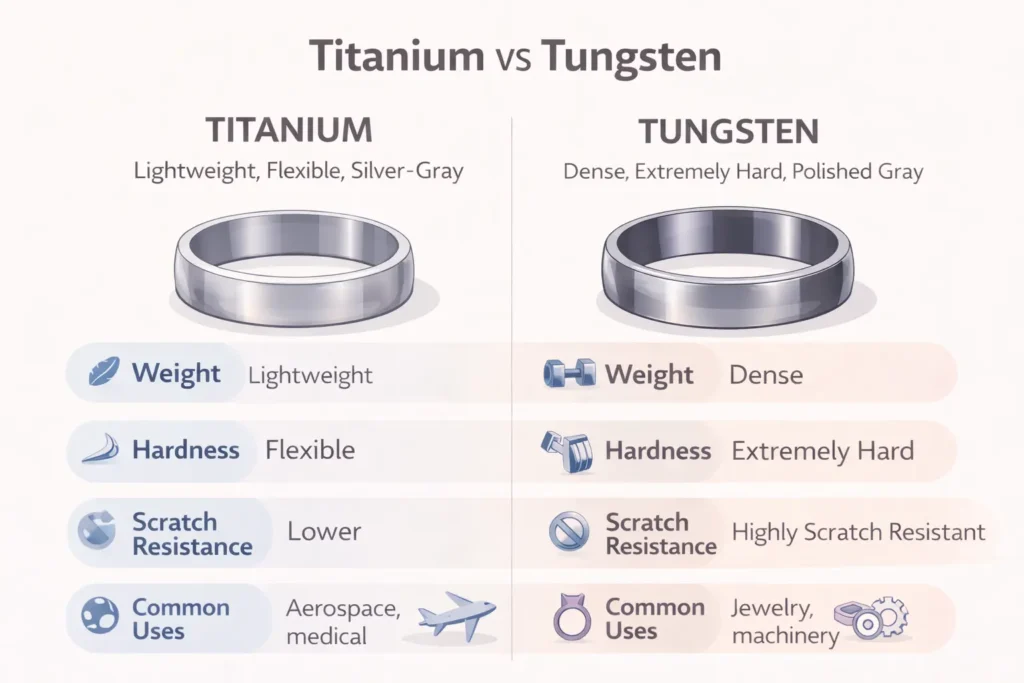
Titanium and tungsten are popular metals used in jewelry, industrial applications and technology. Titanium is lightweight and corrosion-resistant, while tungsten is extremely hard and durable. Understanding their differences helps in choosing the right metal for specific needs
They are popular in industries ranging from jewelry and watches to aerospace and electronics. Titanium is lightweight, corrosion-resistant and hypoallergenic, making it ideal for wearable items and medical devices.
Tungsten, on the other hand is extremely hard and scratch-resistant, which makes it ideal for industrial tools and jewelry that must withstand wear and tear.
In this article, we will explore the properties, advantages, disadvantages, uses, regional trends and practical tips for titanium and tungsten. We will also provide comparisons, exercises and FAQs to help you make informed decisions when choosing between these two metals.
Quick Overview
| Feature | Titanium | Tungsten |
|---|---|---|
| Density | Low, lightweight | High, heavy |
| Hardness | Moderate | Extremely hard |
| Scratch Resistance | Moderate | Very high |
| Corrosion Resistance | Excellent | Good, can oxidize |
| Flexibility | High, flexible | Low, brittle |
| Uses | Jewelry, aerospace, medical implants | Jewelry, industrial tools, electronics |
| Cost | Moderate | Moderate to high depending on purity |
Definition and Explanation
Titanium
Titanium is a chemical element with the symbol Ti. It is known for its lightweight and high strength-to-weight ratio. Titanium is corrosion-resistant and hypoallergenic, which makes it suitable for medical implants, aerospace components, and jewelry.
Its low density allows it to feel comfortable in wearable items like rings and watches. Common alloys include titanium-aluminum-vanadium, used in aircraft and high-performance applications.
Tungsten
Tungsten, symbol W, is one of the densest and hardest metals on Earth. It has a very high melting point of 3422°C, making it ideal for industrial applications such as cutting tools, electrical contacts, and heavy machinery.
Unlike titanium, tungsten is brittle. While it is extremely hard, it can crack or shatter under severe impact.
Physical and Mechanical Properties
| Property | Titanium | Tungsten |
|---|---|---|
| Density | 4.5 g/cm³ | 19.3 g/cm³ |
| Melting Point | 1668°C | 3422°C |
| Hardness (Mohs) | 6 | 7.5 – 8 |
| Tensile Strength | High | Moderate |
| Flexibility | High | Low |
| Corrosion Resistance | Excellent | Moderate, can oxidize |
Titanium’s lightweight and flexible nature makes it ideal for wearable and structural applications, while tungsten’s hardness and density make it ideal for scratch-resistant products and industrial use.
Advantages and Disadvantages
Titanium Advantages
- Lightweight and comfortable for wearable items
- Highly resistant to corrosion and rust
- Hypoallergenic and safe for sensitive skin
- Can be colored using anodization techniques
- Flexible and durable
Titanium Disadvantages
- Less scratch-resistant than tungsten
- Can bend under extreme pressure
- Slightly more expensive than common metals like stainless steel
Tungsten Advantages
- Extremely hard and scratch-resistant
- Retains polish for years
- High melting point suitable for industrial applications
- Dense and feels substantial in jewelry
Tungsten Disadvantages
- Brittle, can shatter if dropped
- Heavy, may feel uncomfortable in large rings or watches
- Cannot be resized easily when used in jewelry
Real-World Uses
Titanium
- Jewelry: Rings, bracelets, and watches for lightweight durability
- Aerospace: Aircraft frames, engines, and spacecraft components
- Medical: Implants, prosthetics, and surgical instruments
- Consumer Electronics: Laptop casings, phone frames
Tungsten
- Jewelry: Scratch-resistant rings, bracelets, and watches
- Industrial Tools: Drill bits, cutting tools, and filaments for lighting
- Electronics: Electrical contacts and heat-resistant components
- Defense: Armor-piercing ammunition and heavy-duty machinery
Titanium is preferred where weight and flexibility are important, while tungsten is ideal when hardness and scratch resistance are required.
Regional and Global Usage
Titanium and tungsten are used globally, but their applications vary by region based on industry and cultural preferences.
North America and Europe
Titanium is widely used in aerospace, medical implants, and jewelry. Tungsten is used for industrial tools, jewelry, and electronics. Jewelry preferences often lean towards tungsten for men’s rings due to its scratch resistance.
Asia
Countries like Japan, South Korea, and China have extensive industrial applications for both metals. Tungsten is mined and processed in China, which is the largest producer globally. Titanium is widely used in electronics, aircraft, and high-end jewelry.
Middle East
Titanium is preferred in aerospace and construction applications due to corrosion resistance. Tungsten is often used for heavy-duty tools and jewelry.
Latin America and Africa
Titanium and tungsten are used in industrial applications and jewelry. Tungsten jewelry is popular due to its scratch resistance, while titanium is favored for lightweight rings and medical applications.
Globally, trends show a rising preference for titanium in lightweight, wearable items, and tungsten in scratch-resistant, durable products.
Common Mistakes in Choosing Between Titanium and Tungsten
- Choosing tungsten for flexible needs: Tungsten is brittle and cannot bend easily.
- Choosing titanium for maximum scratch resistance: Titanium scratches more easily than tungsten.
- Ignoring weight considerations: Tungsten is dense and heavy; titanium is light and comfortable.
- Confusing melting points: Tungsten’s high melting point is suitable for industrial applications, not for jewelry modification.
Correct selection depends on application, weight preference, scratch resistance, and durability needs.
Exercises with Answers
Exercise 1: Identify which metal suits the situation best.
- A lightweight wedding band for daily wear.
- A scratch-resistant ring for heavy-duty use.
- Aircraft engine components.
- Drill bits for industrial cutting.
Answers:
- Titanium
- Tungsten
- Titanium
- Tungsten
Exercise 2: Match properties with the correct metal.
| Property | Titanium | Tungsten |
|---|---|---|
| Lightweight | ✅ | ❌ |
| Extremely hard | ❌ | ✅ |
| Flexible | ✅ | ❌ |
| Can shatter under impact | ❌ | ✅ |
| Corrosion-resistant | ✅ | Moderate |
Comparison: Titanium vs Tungsten Jewelry
| Feature | Titanium | Tungsten |
|---|---|---|
| Weight | Light | Heavy |
| Scratch Resistance | Moderate | High |
| Durability | Flexible, resistant to bending | Extremely hard, can crack if dropped |
| Comfort | Very comfortable | Can feel heavy |
| Resizing | Possible | Not possible |
| Cost | Moderate | Moderate to high |
Comparison: Titanium vs Tungsten Industrial Use
| Feature | Titanium | Tungsten |
|---|---|---|
| Aerospace | Used in engines, frames, spacecraft | Rarely used due to weight |
| Electronics | Phone frames, laptops | Electrical contacts, filaments |
| Industrial Tools | Moderate hardness | High hardness, cutting tools |
| Medical | Implants, prosthetics | Rare, due to brittleness |
| Heat Resistance | Good | Excellent |
Titanium’s lightweight strength makes it perfect for aerospace and medical use, while tungsten’s hardness and melting point make it ideal for industrial tools and electronics.
FAQs
What is the main difference between titanium and tungsten?
Titanium is lightweight, flexible, and corrosion-resistant, while tungsten is extremely hard, dense, and scratch-resistant.
Which metal is better for jewelry?
It depends. Titanium is comfortable and lightweight, while tungsten is highly scratch-resistant.
Can tungsten rings break?
Yes, tungsten is brittle and can shatter if dropped or struck hard.
Can titanium rings scratch?
Yes, titanium can scratch, but it is more flexible and durable against bending.
Which metal is heavier?
Tungsten is much denser and heavier than titanium.
Are titanium or tungsten rings hypoallergenic?
Titanium is hypoallergenic. Tungsten is generally safe but may contain cobalt, which can cause reactions in sensitive skin.
Is titanium more expensive than tungsten?
Titanium and tungsten have comparable costs, but titanium may be slightly more expensive in some jewelry applications.
Which metal is better for industrial tools?
Tungsten, due to its hardness and high melting point.
Which metal is better for aerospace applications?
Titanium, due to its lightweight and corrosion-resistant properties.
Conclusion
Titanium is lightweight, flexible, and corrosion-resistant, making it ideal for jewelry, aerospace, and medical applications. Tungsten is extremely hard, dense, and scratch-resistant, making it perfect for industrial tools and durable jewelry.
Choosing the right metal depends on the specific needs: comfort, scratch resistance, flexibility or industrial performance. By understanding their properties, advantages and disadvantages, you can make informed decisions for personal or professional use.
Both metals are strong, reliable and offer long-term value when selected appropriately.
Discover More Related Articles:
- Moonstone vs Opal: Which Gemstone Is More Valuable and Why in 2026
- Hashimoto vs Graves Disease: Which Thyroid Condition Is It? in 2026
- P790 vs P770: Which Taylor Made Iron Is Better for Your Golf Game? in 2026

Jonathan Reed is a dedicated grammar expert and language researcher at TalkNexs.com. With a strong passion for English structure, clarity and effective communication, he has spent years helping students, writers and professionals improve their grammar skills in simple and practical ways.