
Definition
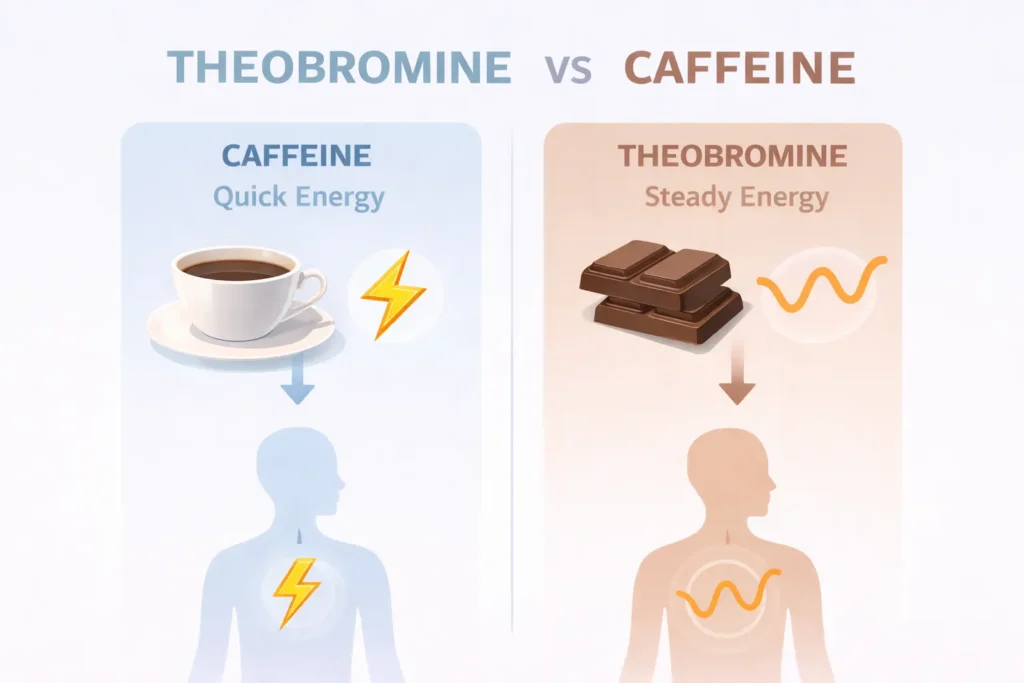
Theobromine and caffeine are natural stimulants found in plants, but they affect the body differently. Caffeine provides a quick energy boost and alertness, while theobromine offers a milder, longer-lasting effect with fewer side effects.
Many people rely on natural stimulants to stay awake, focused, and productive throughout the day. Two of the most common compounds used for this purpose are theobromine and caffeine. While caffeine is widely known for its presence in coffee and energy drinks, theobromine is often overlooked, even though it is found in chocolate and cacao products.
Despite their similarities, these compounds work in very different ways inside the body. Some people experience jitteriness, anxiety, or sleep issues from caffeine, while others prefer the smoother and more gentle effects of theobromine. This creates confusion when choosing between the two.
Understanding the difference between theobromine vs caffeine is important for making better dietary and lifestyle choices. Whether you want sustained energy, improved focus, or fewer side effects, knowing how these stimulants behave can help you decide which one suits your needs. This article will explain their differences, benefits, drawbacks, uses, and real-world applications in a simple and practical way.
Quick Overview
Theobromine and caffeine are both stimulants from the same chemical family, but they differ in strength, speed, and effects.
| Feature | Theobromine | Caffeine |
|---|---|---|
| Source | Cocoa, chocolate | Coffee, tea, energy drinks |
| Strength | Mild stimulant | Strong stimulant |
| Effect Duration | Long-lasting | Short and intense |
| Impact on Heart | Gentle increase | Rapid stimulation |
| Side Effects | Minimal | Jitters, anxiety, insomnia |
Quick Summary:
Caffeine gives fast energy and alertness, while theobromine provides a calm and steady boost.
Definition and Explanation
Theobromine
Theobromine is a natural compound found mainly in cacao beans, which are used to make chocolate. It belongs to a group of chemicals called methylxanthines, the same group as caffeine.
Unlike caffeine, theobromine works more gently. It stimulates the heart and relaxes blood vessels, leading to improved circulation. It does not strongly affect the central nervous system, which is why it produces a smoother energy effect.
Theobromine is commonly consumed through dark chocolate, cocoa powder, and some herbal products.
Caffeine
Caffeine is a well-known stimulant found in coffee, tea, soft drinks, and energy beverages. It works by blocking adenosine, a chemical in the brain that makes you feel tired.
This blockage increases alertness, focus, and energy levels. However, it can also lead to side effects such as nervousness, rapid heartbeat, and sleep problems when consumed in high amounts.
Caffeine is one of the most widely consumed psychoactive substances in the world.
How They Work in the Body
Both theobromine and caffeine affect the nervous system, but in different ways.
- Caffeine acts quickly on the brain, increasing alertness within minutes.
- Theobromine works more slowly, providing a steady and prolonged effect.
Caffeine has a stronger impact on the central nervous system, while theobromine mainly affects the cardiovascular system by improving blood flow.
Simple Analogy:
Caffeine is like a quick sprint, while theobromine is like a long, steady walk.
Advantages and Disadvantages
Advantages of Theobromine
- Provides long-lasting energy without sudden crashes
- Less likely to cause anxiety or jitters
- Supports heart health by improving blood flow
- May improve mood gently
Disadvantages of Theobromine
- Slower onset of effects
- Less powerful for immediate alertness
- Not suitable when quick energy is needed
Advantages of Caffeine
- Rapid increase in alertness and focus
- Improves physical performance
- Widely available and easy to consume
- Helps reduce fatigue quickly
Disadvantages of Caffeine
- Can cause anxiety and restlessness
- May disrupt sleep patterns
- Can lead to dependency
- May increase heart rate and blood pressure
Real-World Examples
- Morning Routine: Many people drink coffee for caffeine to wake up quickly.
- Evening Snack: Dark chocolate provides theobromine, offering mild energy without disturbing sleep.
- Work Productivity: Caffeine helps during deadlines, while theobromine supports steady focus over longer periods.
- Athletes: Some prefer caffeine for performance boosts, while others choose theobromine for endurance.
Research shows that moderate caffeine intake can improve reaction time and alertness, while theobromine may support cardiovascular health and mood stability.
Regional and Global Usage
The use of theobromine and caffeine varies across the world based on culture, diet, and lifestyle.
North America and Europe
Caffeine consumption is high due to coffee culture. Coffee shops, energy drinks, and tea are widely consumed. Theobromine is mainly consumed through chocolate products.
Asia
Tea is the primary source of caffeine in countries like China, Japan, and India. Matcha and green tea are popular for providing balanced energy. Theobromine intake is lower but present in cocoa-based products.
Latin America
Cacao has cultural significance, and traditional chocolate drinks provide theobromine. Coffee is also widely consumed, especially in countries known for coffee production.
Africa
Both coffee and cocoa are produced in many regions. Local diets include natural sources of caffeine and theobromine.
Global Trends
There is growing interest in natural and balanced energy sources. Many people are shifting toward lower caffeine intake and exploring alternatives like cacao-based drinks for smoother energy.
Common Mistakes
| Mistake | Why It Is Wrong | Correct Approach |
|---|---|---|
| Assuming both are the same | They have different effects | Understand their unique properties |
| Overconsuming caffeine | Leads to side effects | Limit intake to moderate levels |
| Ignoring theobromine | Misses a gentler option | Include cocoa-based products |
| Using caffeine late in the day | Disrupts sleep | Use earlier in the day |
Exercises with Answers
Exercise 1: Identify the stimulant
- Provides quick energy and alertness
- Found mainly in chocolate
- Has a long-lasting mild effect
- Common in coffee
Answers:
- Caffeine
- Theobromine
- Theobromine
- Caffeine
Exercise 2: Match the benefit
| Benefit | Theobromine | Caffeine |
|---|---|---|
| Quick alertness | No | Yes |
| Long-lasting energy | Yes | No |
| Lower anxiety risk | Yes | No |
| Strong stimulation | No | Yes |
Related Concepts and Comparisons
Theobromine vs Caffeine vs Sugar
| Feature | Theobromine | Caffeine | Sugar |
|---|---|---|---|
| Energy Type | Slow and steady | Fast and strong | Quick spike |
| Crash | Minimal | Moderate | High |
| Health Impact | Mild positive | Mixed | Often negative |
Natural vs Synthetic Energy
- Theobromine represents a natural and balanced energy source.
- Caffeine can be natural or added artificially in energy drinks.
Health Effects and Scientific Insights
Studies suggest that caffeine improves cognitive performance, memory, and reaction time. However, excessive intake can lead to dependence and sleep disturbances.
Theobromine has been linked to improved cardiovascular function, reduced inflammation, and mood enhancement. It does not overstimulate the nervous system, making it suitable for sensitive individuals.
Moderation is key for both compounds. Experts recommend limiting caffeine intake to around 200 to 400 milligrams per day for most adults.
Prevention and Safe Usage
- Limit caffeine intake to avoid dependency
- Avoid caffeine close to bedtime
- Choose dark chocolate for theobromine benefits
- Stay hydrated when consuming stimulants
- Balance intake with a healthy diet
FAQs
What is the main difference between theobromine and caffeine?
Caffeine provides quick and strong stimulation, while theobromine offers a milder and longer-lasting effect.
Is theobromine safer than caffeine?
Theobromine is generally considered gentler with fewer side effects compared to caffeine.
Can I replace caffeine with theobromine?
Yes, especially if you want smoother energy without jitters or anxiety.
Which lasts longer, theobromine or caffeine?
Theobromine lasts longer but works more slowly than caffeine.
Does chocolate contain caffeine or theobromine?
Chocolate contains both, but it has much higher levels of theobromine.
Can caffeine cause anxiety?
Yes, high doses of caffeine can increase anxiety and restlessness.
Is theobromine good for the heart?
Yes, it may support heart health by improving blood flow.
Which is better for studying?
Caffeine is better for short bursts of focus, while theobromine supports longer study sessions.
Can I consume both together?
Yes, many foods like chocolate naturally contain both compounds.
Does theobromine affect sleep?
It has a much lower impact on sleep compared to caffeine.
Conclusion
Theobromine and caffeine are both natural stimulants, but they serve different purposes. Caffeine is fast-acting and powerful, making it ideal for quick energy and alertness. However, it can cause side effects such as anxiety, jitters, and sleep disruption when consumed in excess.
Theobromine, on the other hand, provides a gentler and more sustained energy boost. It supports mood and heart health while minimizing the risk of overstimulation. This makes it a suitable alternative for individuals who are sensitive to caffeine or prefer a smoother experience.
Choosing between theobromine vs caffeine depends on your personal needs and lifestyle. For quick performance and focus, caffeine is effective. For long-lasting energy and balance, theobromine is a better choice. A combination of both, in moderate amounts, can also provide balanced benefits.
Discover More Related Articles:
- Apostille vs Notary: Which Is Required for International Use in 2026
- 5W30 vs 5W20: Which Oil Is Better for High Mileage Engines in 2026
- Dysphagia vs Dysphasia: What’s the Difference and Why It Matters in 2026

Christopher Hayes is a passionate language enthusiast and the lead content creator at TalkNexs.com, a platform dedicated to helping readers master the art of grammar, writing and effective communication. With years of experience in writing, editing and teaching language, Christopher’s mission is to make grammar simple, practical and engaging for everyone.