
Definition
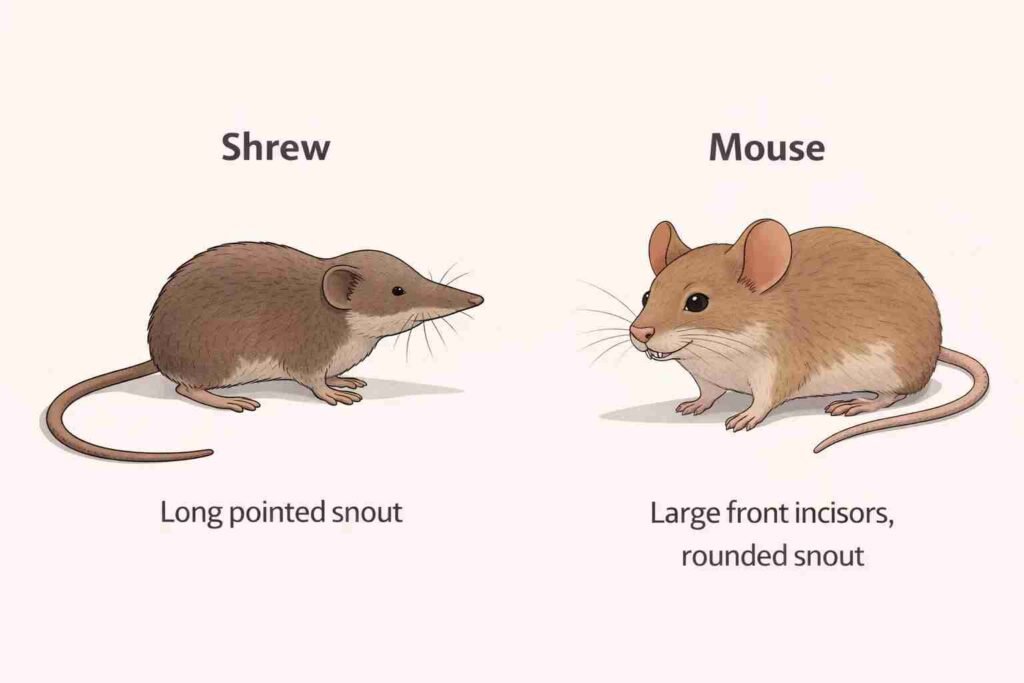
Shrews and mice may look similar, but they are very different animals. Shrews are insect-eating mammals with long pointed snouts and high metabolisms, while mice are rodents that eat grains and seeds. Knowing the difference helps with proper identification, pest control, and ecological understanding.
Many people confuse a shrew with a mouse. Both are small. And both move quickly. Both may appear in gardens, fields, or even homes. At first glance, they look almost the same. A shrew mouse is a small, insect-eating mammal resembling a mouse but belonging to the order Eulipotyphla, known for its high metabolism and sharp snout.
But shrew vs mouse is not a small difference. It is a major biological difference. A shrew is not a rodent. A mouse is a rodent. Their teeth are different. Their diet is different. Even their behavior is different. Do shrews eat mice.
Understanding the difference between a shrew and a mouse is important for homeowners, farmers, gardeners, and students. If you misidentify them, you may use the wrong control method. You may also misunderstand their role in nature.
This guide explains everything clearly. You will learn what a shrew is, what a mouse is, how to tell them apart, where they live, how they behave, and how to manage them if needed.
Quick Overview
The main difference in shrew vs mouse is classification and diet.
Shrews are insectivores. Mice are rodents.
| Feature | Shrew | Mouse |
|---|---|---|
| Animal Group | Insectivore mammal | Rodent |
| Snout | Long and pointed | Short and rounded |
| Teeth | Sharp, not rodent incisors | Large front incisors |
| Diet | Insects and worms | Seeds and grains |
| Eyes | Small | Larger |
| Tail | Shorter | Longer and thin |
| Odor | Strong musky smell | Mild rodent smell |
Definition and Explanation
What Is a Shrew
A shrew is a small mammal belonging to the family Soricidae. It is not a rodent. It is closely related to moles and hedgehogs.
Shrews have very high metabolisms. They must eat almost constantly. Some species eat up to twice their body weight daily.
They have long pointed snouts. Their teeth are sharp and designed for catching insects. Some species even have venom in their saliva, which helps them subdue prey.
Shrews are active day and night. They rarely stop moving.
What Is a Mouse
A mouse is a rodent belonging to the family Muridae. The most common species is the house mouse.
Mice have large front incisors that grow continuously. They must chew to keep their teeth from growing too long.
They eat grains, seeds, fruits, and sometimes human food. Unlike shrews, they do not primarily hunt insects.
Mice are adaptable. They live in homes, farms, forests, and cities.
Physical Differences in Shrew vs Mouse
Correct identification is important. Here are clear physical differences.
Snout
- Shrew: Long and narrow snout
- Mouse: Shorter and rounded snout
Eyes
- Shrew: Very small eyes
- Mouse: Larger visible eyes
Ears
- Shrew: Small and often hidden in fur
- Mouse: Larger and visible
Tail
- Shrew: Shorter, less prominent
- Mouse: Long, thin, often hairless
Teeth
- Shrew: Sharp pointed teeth
- Mouse: Two large front incisors
These small differences are important when identifying them in homes or gardens.
Behavior Differences
Understanding behavior helps in shrew vs mouse identification.
Activity Level
Shrews are extremely active. They move quickly and constantly search for food. If they stop eating for a few hours, they may die due to high metabolism.
Mice are active mainly at night. They store food and build nests.
Aggression
Shrews can be aggressive. They may bite if handled. Some even have toxic saliva.
Mice usually avoid confrontation. They prefer hiding.
Nesting
Shrews use tunnels made by other animals. They do not chew walls.
Mice chew through walls, wires, and packaging to create nests.
Diet Comparison
Diet is one of the biggest differences in shrew vs mouse.
| Food Type | Shrew | Mouse |
|---|---|---|
| Insects | Yes | Sometimes |
| Worms | Yes | Rarely |
| Seeds | No | Yes |
| Grains | No | Yes |
| Human food | Rarely | Often |
Shrews are beneficial in gardens because they eat pests like beetles and larvae.
Mice can damage crops and stored food.
Advantages and Disadvantages
Shrew Advantages
- Controls insect populations
- Rarely damages household items
- Beneficial in gardens
Shrew Disadvantages
- Strong odor
- May bite if handled
- Can invade basements occasionally
Mouse Advantages
- Important for ecosystem as prey species
- Easy to trap
Mouse Disadvantages
- Damages food supplies
- Chews wires and insulation
- Can spread diseases
Real World Examples
Garden Situation
If you see a small animal eating insects in soil, it is likely a shrew. This is helpful for pest control.
If you find gnawed grain bags in storage, it is likely a mouse.
Home Infestation
Scratching inside walls and chewed wires indicate mice.
A strong musky odor in a basement without chewing damage may suggest a shrew.
Regional and Global Usage
Shrews and mice are found worldwide, but their presence and impact vary by region.
North America
Both species are common. House mice frequently invade homes. Shrews are often found in gardens and wooded areas.
Europe
Mice are major agricultural pests. Shrews are protected in some areas because they help control insects.
Asia
High population density areas experience frequent mouse infestations. Rural areas see shrews in farmlands.
Africa
Field mice affect crops. Shrews are commonly found in grasslands and forests.
Global Impact
Mice cause billions of dollars in agricultural damage annually worldwide. Shrews contribute positively by controlling insect populations.
Common Identification Mistakes
- Assuming all small gray mammals are mice
- Ignoring snout shape
- Misjudging based on size alone
- Using wrong traps due to misidentification
Correct identification prevents unnecessary extermination of beneficial shrews.
Exercises With Answers
Exercise 1 Identify the Animal
- Long pointed nose and eats insects
- Chews wires and eats grain
- Strong musky odor
- Large front teeth
Answers
- Shrew
- Mouse
- Shrew
- Mouse
Exercise 2 True or False
- Shrews are rodents
- Mice eat mainly insects
- Shrews need constant food
- Mice chew to control tooth growth
Answers
- False
- False
- True
- True
Related Comparisons
Shrew vs Mouse vs Rat
| Feature | Shrew | Mouse | Rat |
|---|---|---|---|
| Size | Small | Small | Larger |
| Teeth Type | Sharp | Rodent incisors | Larger incisors |
| Diet | Insects | Grains | Grains and meat |
| Damage | Minimal | Moderate | Severe |
Shrew vs Mole
Moles dig tunnels. Shrews do not dig extensively. Both eat insects.
Prevention and Control
For Shrews
- Remove insect infestations
- Seal small entry points
- Reduce moisture
Avoid poison unless necessary because they help control pests.
For Mice
- Store food in sealed containers
- Seal cracks and holes
- Use traps
- Maintain cleanliness
Professional pest control may be needed for large infestations.
What is a Shrew Mouse? 🐭
A shrew mouse is a small, insect-eating mammal that looks like a mouse but actually belongs to the order Eulipotyphla, known for its pointed snout, tiny size, and very fast metabolism.
FAQs
What is the main difference between shrew and mouse?
A shrew is an insectivore with a pointed snout, while a mouse is a rodent with large front incisors.
Is a shrew a type of mouse?
No. Shrews are not rodents. They belong to a different mammal group.
Do shrews damage homes like mice?
No. Shrews rarely chew wires or walls like mice.
Are shrews dangerous to humans?
They may bite if handled, but they are not aggressive toward humans.
How can I tell shrew vs mouse in my house?
Look at the snout and teeth. A long pointed nose suggests a shrew. Chewing damage suggests a mouse.
Do mice carry diseases?
Yes. Mice can spread diseases through droppings and urine.
Are shrews beneficial?
Yes. They eat insects and help control pests.
Do shrews live in houses?
Occasionally, but they prefer outdoor environments.
Which is more common worldwide, shrew or mouse?
Mice are more commonly found in human environments worldwide.
Should I remove a shrew from my garden?
Usually no. They help reduce insect populations.
Conclusion
The difference between shrew vs mouse is more than appearance. It is biological, behavioral, and ecological. Shrews are insect-eating mammals with pointed snouts and high metabolism. Mice are rodents with strong incisors that chew constantly.
Correct identification prevents unnecessary harm to beneficial species and ensures proper pest control. If you notice chewing damage and stored food loss, you likely have mice. If you observe insect hunting and strong odor without damage, it may be a shrew.
Understanding these differences helps homeowners, farmers, and students make informed decisions. Proper identification leads to better management, reduced damage, and healthier ecosystems.

Jonathan Reed is a dedicated grammar expert and language researcher at TalkNexs.com. With a strong passion for English structure, clarity and effective communication, he has spent years helping students, writers and professionals improve their grammar skills in simple and practical ways.