Definition
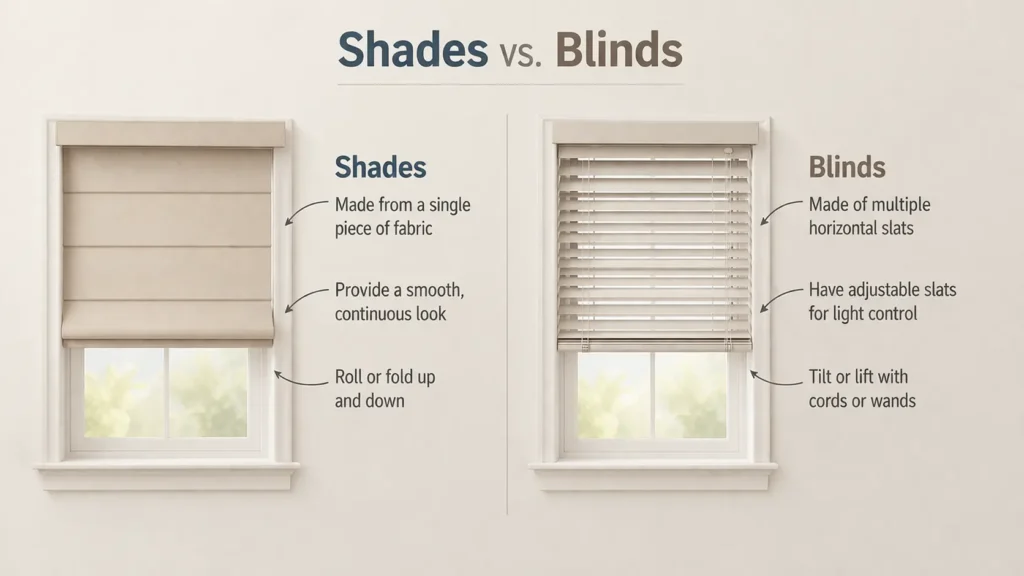
Shades and blinds are both popular window treatments, but they differ in structure and function. Shades are made from a single piece of fabric that rolls or folds, while blinds use slats that tilt to control light. Understanding these differences helps you choose the best option for privacy, light control, and style.
Window coverings are an essential part of any home or office. They do more than just block sunlight. They provide privacy, improve comfort, and enhance the overall look of a space. Among the most common options, shades and blinds are widely used, yet many people do not fully understand the difference between them.
At first glance, shades and blinds may seem similar. Both cover windows and control light. However, their design, operation, and functionality are quite different. Choosing the wrong type can affect your room’s lighting, energy efficiency, and even maintenance effort.
This is why understanding shades vs blinds is important. You are decorating a new home, upgrading your office, or simply improving your living space, selecting the right window covering can make a significant difference. In this guide, we will explore their definitions, features, advantages, disadvantages, real-world uses, and practical tips to help you make the best choice.
Quick Overview
Shades and blinds both serve the purpose of covering windows, but they function differently. Shades are made of continuous fabric, while blinds consist of adjustable slats.
| Feature | Shades | Blinds |
|---|---|---|
| Structure | Single piece of fabric | Multiple slats |
| Light Control | Limited adjustment | Adjustable slats for precise control |
| Appearance | Soft and smooth | Structured and modern |
| Materials | Fabric, bamboo, cellular material | Wood, metal, plastic |
| Maintenance | Harder to clean | Easier to clean |
| Cost | Often higher | Usually more affordable |
Definition and Explanation
What Are Shades
Shades are window coverings made from a continuous piece of fabric or material. They can be rolled up, folded, or stacked when raised and fully cover the window when lowered. Shades do not have slats, which means they provide a smooth and clean appearance.
There are several types of shades, including roller shades, Roman shades, cellular shades, and pleated shades. Each type offers a different level of light filtering and insulation.
For example, roller shades are simple and modern, while Roman shades provide a more decorative and elegant look. Cellular shades are designed to trap air and improve insulation, making them energy efficient.
What Are Blinds
Blinds are made up of horizontal or vertical slats that can be tilted, raised, or lowered. These slats allow users to control the amount of light entering a room without fully opening or closing the window covering.
Blinds are available in various materials such as wood, faux wood, aluminum, and vinyl. Horizontal blinds are commonly used for standard windows, while vertical blinds are often used for large windows or sliding doors.
The key feature of blinds is their flexibility. You can tilt the slats to allow partial light while maintaining privacy, which makes them highly practical for daily use.
Types of Shades and Blinds
Common Types of Shades
- Roller shades
- Roman shades
- Cellular shades
- Pleated shades
- Bamboo shades
Each type serves different purposes, from light filtering to insulation and decoration.
Common Types of Blinds
- Venetian blinds
- Vertical blinds
- Mini blinds
- Wood blinds
- Faux wood blinds
These options vary in durability, style, and cost, allowing users to choose based on their needs.
Advantages and Disadvantages
Advantages of Shades
- Provide a soft and elegant look
- Available in many colors and patterns
- Better insulation and energy efficiency
- Ideal for bedrooms and living spaces
Disadvantages of Shades
- Limited control over light direction
- Can be harder to clean
- May require replacement more often
Advantages of Blinds
- Excellent light control through adjustable slats
- Easy to clean and maintain
- Durable and long-lasting
- Suitable for offices and kitchens
Disadvantages of Blinds
- Less insulation compared to shades
- Can be noisy when adjusted
- May look less soft or decorative
Real-World Examples
- Bedroom Use: Shades are often preferred because they block light effectively and create a cozy environment.
- Office Spaces: Blinds are commonly used because they allow precise control of light during working hours.
- Kitchens and Bathrooms: Blinds are better due to their moisture resistance and easy cleaning.
- Living Rooms: Both shades and blinds can be used depending on style preference and lighting needs.
For example, a homeowner may choose cellular shades for energy savings in the bedroom, while installing aluminum blinds in the kitchen for durability.
Regional and Global Usage
Shades and blinds are used worldwide, but preferences vary based on climate, culture, and lifestyle.
North America and Europe
In these regions, both shades and blinds are widely used. Cellular shades are popular for energy efficiency, especially in colder climates. Blinds are commonly used in offices and modern homes for their practicality.
Asia
In countries like Japan and South Korea, minimalist designs are popular. Shades, especially roller and bamboo types, are preferred for their clean and simple look.
Middle East
Due to intense sunlight, blackout shades and heavy blinds are commonly used to reduce heat and improve indoor comfort.
Latin America
Both shades and blinds are used depending on climate. In warmer areas, blinds are preferred for ventilation and light control.
Africa
Blinds are often chosen for durability and ease of maintenance, while shades are used in urban homes for decorative purposes.
Globally, there is a growing trend toward smart window coverings that can be controlled remotely, improving convenience and energy efficiency.
Common Mistakes
- Choosing based only on appearance without considering functionality
- Ignoring maintenance requirements
- Selecting the wrong size for windows
- Not considering room purpose
- Overlooking energy efficiency
Correcting these mistakes helps ensure long-term satisfaction and better performance.
Exercises with Answers
Exercise 1: Identify the correct option
- A window covering with adjustable slats
- A fabric-based window covering
- Best for precise light control
- Best for insulation
Answers
- Blinds
- Shades
- Blinds
- Shades
Exercise 2: Match the feature
| Feature | Shades | Blinds |
|---|---|---|
| Soft appearance | Yes | No |
| Adjustable light control | No | Yes |
| Easy cleaning | No | Yes |
| Better insulation | Yes | No |
Related Concepts and Comparisons
Shades vs Blinds vs Curtains
| Feature | Shades | Blinds | Curtains |
|---|---|---|---|
| Material | Fabric | Slats | Fabric |
| Light Control | Moderate | High | Low to moderate |
| Style | Modern | Functional | Decorative |
| Maintenance | Medium | Easy | Medium |
Curtains offer a more traditional look, while shades and blinds provide modern functionality.
How to Choose Between Shades and Blinds
Choosing between shades and blinds depends on your needs.
- Choose shades if you want a soft, elegant look and better insulation
- Choose blinds if you need precise light control and easy maintenance
- Consider room type, climate, and budget
- Evaluate durability and cleaning requirements
For example, a bedroom benefits from blackout shades, while an office benefits from adjustable blinds.
Prevention and Maintenance Tips
- Clean blinds regularly using a dry or damp cloth
- Vacuum shades gently to remove dust
- Avoid excessive moisture exposure
- Check mechanisms regularly for smooth operation
- Use professional cleaning for delicate materials
Proper maintenance increases lifespan and keeps window coverings looking new.
FAQs
What is the main difference between shades and blinds?
Shades are made of fabric and roll up, while blinds have adjustable slats for light control.
Are shades better than blinds?
It depends on your needs. Shades are better for insulation and style, while blinds offer better light control.
Which is easier to clean, shades or blinds?
Blinds are generally easier to clean because of their slat design.
Do shades block more light than blinds?
Yes, especially blackout shades, which can block nearly all light.
Are blinds cheaper than shades?
In most cases, blinds are more affordable than shades.
Which is better for privacy?
Both provide privacy, but blinds allow adjustable privacy through slats.
Can shades and blinds be used together?
Yes, layering them improves both style and functionality.
Are shades more energy efficient?
Yes, especially cellular shades, which provide insulation.
Do blinds last longer than shades?
Blinds are generally more durable and long-lasting.
Which is better for modern homes?
Both can work well, but shades are often preferred for a clean, modern look.
Conclusion
Shades and blinds are both excellent window covering options, each with unique features and benefits. Shades offer a soft, elegant appearance and better insulation, making them ideal for bedrooms and living spaces. Blinds provide precise light control, durability and easy maintenance, making them suitable for offices, kitchens, and high-use areas.
Choosing between shades vs blinds depends on your specific needs, including light control, privacy, style, and budget. Understanding their differences allows you to make an informed decision that enhances comfort and functionality in your space.
For best results, consider combining both options in different rooms to take advantage of their strengths. With proper selection and maintenance, both shades and blinds can improve the overall look and efficiency of your home or office.
Discover More Related Articles:
- UGG Classic vs Ultra Mini: Which Style Should You Choose In 2026
- Angiosperms vs Gymnosperms: What Makes Them So Different In 2026
- Trumpet vs Trombone: Which One Should You Start Learning First In 2026

Jonathan Reed is a dedicated grammar expert and language researcher at TalkNexs.com. With a strong passion for English structure, clarity and effective communication, he has spent years helping students, writers and professionals improve their grammar skills in simple and practical ways.