
Definition
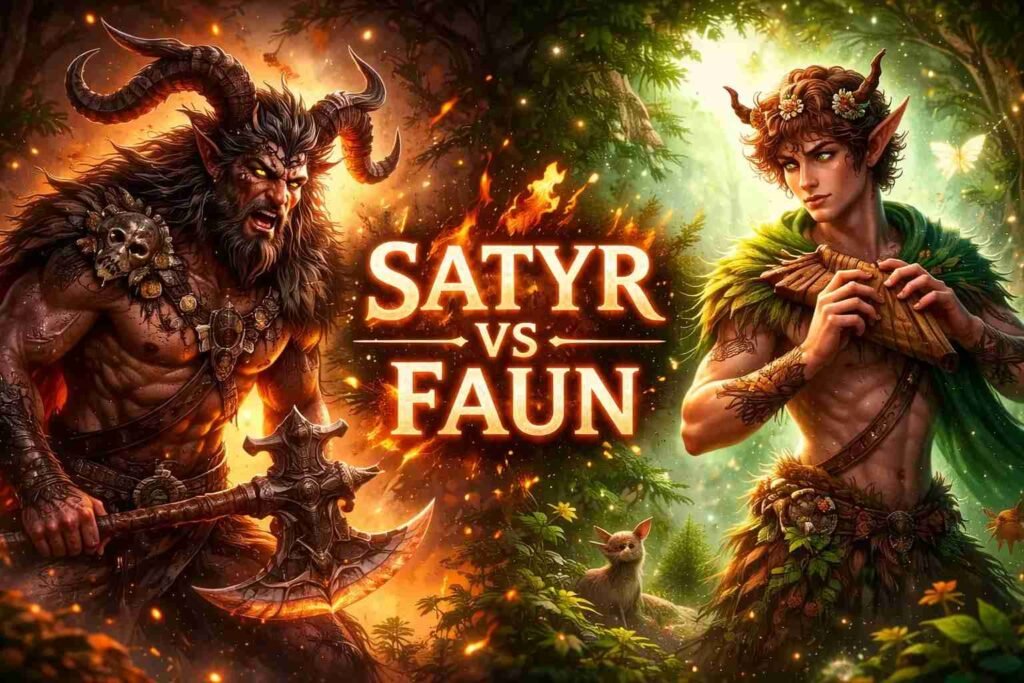
Satyrs and fauns are mythological creatures often associated with nature, music, and wild celebration. Satyrs originate from Greek mythology and are known for their unruly, mischievous behavior, while fauns come from Roman mythology and are typically portrayed as gentler, nature-loving spirits. Understanding the difference between satyr vs faun helps clarify their cultural origins and how they are represented in literature and art.
Mythology has long fascinated people across cultures and centuries. Among these mythological beings, satyrs and fauns are two figures that often confuse readers and enthusiasts.
The comparison of satyr vs faun is important for understanding how Greek and Roman mythologies evolved and influenced each other. Fauns, on the other hand, appear in Roman mythology as peaceful spirits of the countryside who guide and protect nature.
Because Roman culture borrowed many ideas from Greek traditions, the characteristics of satyrs and fauns sometimes overlap. However, their symbolic meanings, artistic representations, and cultural roles remain distinct. This article explores the origins, characteristics, differences, and cultural significance of satyrs and fauns in mythology, literature and art.
Quick Overview
Satyrs and fauns are both mythological creatures that combine human and animal traits.
| Feature | Satyr | Faun |
|---|---|---|
| Origin | Greek mythology | Roman mythology |
| Personality | Wild, playful, mischievous | Gentle, calm, protective |
| Association | Followers of Dionysus | Spirits of forests and fields |
| Appearance | Often more goat-like | Often more human-like |
| Symbolism | Chaos, pleasure, celebration | Nature, peace, fertility |
While they share similar physical features, their cultural roles and personalities differ significantly.
Definition and Explanation
Satyr
Satyrs are creatures from Greek mythology. They are known for their love of wine, music, dancing, and celebration. Satyrs are closely connected with the god Dionysus, the deity of wine, fertility, and festivity.
In ancient Greek stories, satyrs live in forests and mountains. They spend their time playing music, chasing nymphs, and participating in joyful celebrations. Because of their energetic and impulsive nature, satyrs often represent the untamed and instinctive side of human behavior.
Satyrs are usually depicted with a human upper body and goat-like lower body. They may have horns, pointed ears, and a tail. In many artworks from ancient Greece, they appear with exaggerated expressions that emphasize their playful and chaotic personality.
Faun
Fauns belong to Roman mythology. They are woodland spirits connected with nature, agriculture, and the countryside. Instead, they symbolize harmony between humans and the natural world.
In Roman art, fauns are often portrayed with human features combined with goat legs or small horns. Their appearance is generally softer and more peaceful compared to the energetic look of satyrs.
Origins in Greek and Roman Mythology
The difference between satyr vs faun begins with their cultural origins.
Greek Mythology
Satyrs were originally nature spirits in Greek mythology. Ancient Greek playwrights frequently included satyrs in comedic plays called satyr dramas, which were performed after serious tragedies to provide humor and relief.
Satyrs represented the wild side of nature and human instincts. They symbolized freedom, celebration, and the power of natural forces.
Roman Mythology
Fauns developed later in Roman mythology. The Roman god Faunus, who was connected with forests and fields, inspired the concept of fauns. These creatures were believed to protect farmers, livestock, and natural environments.
Over time, Roman writers adopted elements of Greek mythology, which led to similarities between satyrs and fauns.
Physical Appearance Comparison
Although satyrs and fauns look similar, artists often portray them differently.
| Feature | Satyr | Faun |
|---|---|---|
| Body Structure | Strong goat features | More human-like |
| Horns | Prominent horns | Smaller horns |
| Legs | Goat legs with hooves | Sometimes human legs with hooves |
| Expression | Energetic or mischievous | Calm or friendly |
| Artistic Style | Dramatic and lively | Graceful and peaceful |
These artistic differences reflect their contrasting personalities and cultural symbolism.
Cultural Meaning and Symbolism
Satyrs as Symbols of Wild Nature
Satyrs represent the uncontrolled forces of nature and human emotion. They embody joy, passion, music, and freedom. In Greek culture, they reminded people of the balance between civilization and natural instincts.
Satyrs also appeared in ancient theater as humorous characters who mocked serious situations.
Fauns as Symbols of Harmony
Fauns represent peaceful coexistence with nature. They symbolize fertility, rural life, and protection of forests and animals.
Roman culture valued agricultural success, so fauns often appeared as guardians of farmland and wildlife.
Real World Examples in Literature and Art
Satyrs and fauns have appeared in many famous works of art and literature.
Satyrs in Art
Ancient Greek pottery frequently depicts satyrs dancing, drinking wine, and playing musical instruments. Sculptures and murals also show satyrs participating in celebrations with Dionysus.
One famous sculpture is the Barberini Faun, which actually represents a satyr despite its name. The statue shows a sleeping creature with relaxed posture, highlighting the connection between satyrs and indulgent lifestyles.
Fauns in Literature
Fauns appear in many Roman poems and later European stories. In modern literature, the most well-known faun is Mr. Tumnus from the Chronicles of Narnia.
This depiction reflects the gentle characteristics traditionally associated with fauns.
Regional and Global Influence
The concept of satyrs and fauns spread across cultures through literature, art, and storytelling.
Europe
During the Renaissance, artists revived interest in classical mythology. Paintings and sculptures often included satyrs and fauns as symbols of nature and beauty.
Italian and French artists frequently depicted these creatures in pastoral scenes that celebrated the countryside.
Modern Western Culture
Today, satyrs and fauns appear in fantasy literature, films, and video games. They are often combined into a single type of character with goat legs and human bodies.
Fantasy worlds frequently portray them as forest dwellers who play musical instruments or guard magical lands.
Global Popular Culture
Modern storytelling has blended Greek and Roman mythology. As a result, many people use the terms satyr and faun interchangeably, even though they originally described different mythological beings.
Common Mistakes
Many readers misunderstand the difference between satyr vs faun. Here are some common mistakes.
| Mistake | Explanation | Correction |
|---|---|---|
| Thinking satyrs and fauns are identical | They come from different mythologies | Satyrs are Greek, fauns are Roman |
| Assuming both are wild creatures | Fauns are generally calm spirits | Only satyrs are known for wild behavior |
| Confusing artistic representations | Art styles changed over time | Study cultural context for accuracy |
Understanding these distinctions helps appreciate mythology more clearly.
Exercises with Answers
Exercise 1
Identify the following description refers to a satyr or a faun.
1 A creature associated with Dionysus and wine
2 A peaceful forest spirit from Roman mythology
3 A mischievous character known for dancing and music
4 A gentle guardian of fields and forests
Answers
1 Satyr
2 Faun
3 Satyr
4 Faun
Exercise 2
Match the mythology with the creature.
| Mythology | Creature |
|---|---|
| Greek | Satyr |
| Roman | Faun |
Related Mythological Creatures
Satyrs and fauns are not the only creatures connected with nature.
Nymphs
Nymphs are female nature spirits who inhabit forests, rivers, and mountains. They are often companions of satyrs in Greek mythology.
Centaurs
Centaurs are creatures with the upper body of a human and the lower body of a horse. Like satyrs, they represent the tension between civilization and wild instincts.
Pan
Pan is a Greek god of the wild, shepherds, and nature. His goat-like appearance influenced the later depiction of satyrs and fauns.
FAQs
Are satyrs and fauns the same creature?
They are similar but not identical. Satyrs belong to Greek mythology and fauns belong to Roman mythology.
Why do satyrs have goat legs?
Goat features symbolize wild nature, fertility, and untamed instincts in Greek mythology.
Do fauns appear in modern stories?
Yes. Many fantasy novels and films include faun characters inspired by Roman mythology.
What god are satyrs associated with?
Satyrs are companions of Dionysus, the Greek god of wine and celebration.
What is the origin of fauns?
Fauns originate from Roman mythology and are linked to the god Faunus.
Are satyrs dangerous?
In mythology they are mischievous and chaotic but not always dangerous.
Are fauns friendly creatures?
Yes. Fauns are usually portrayed as peaceful and helpful spirits of nature.
Why do people confuse satyrs and fauns?
Roman culture adopted many Greek myths, which caused the two creatures to appear similar in later stories.
Do satyrs and fauns appear in fantasy games?
Yes. Many games include them as forest dwellers, musicians, or magical beings.
Conclusion
Satyrs and fauns are fascinating mythological creatures that reflect the beliefs and values of ancient cultures. Satyrs come from Greek mythology and represent wild nature, celebration, and instinctive behavior. They are energetic companions of Dionysus who enjoy music, dancing, and festivals. Fauns, on the other hand, originate from Roman mythology and symbolize harmony with nature, peace, and protection of forests and fields.
Although these creatures share similar physical features such as horns and hooves, their personalities and symbolic meanings differ greatly. Satyrs embody chaos and excitement, while fauns represent calmness and balance.
Understanding the difference between satyr vs faun allows readers to appreciate the unique traditions of Greek and Roman mythology. By recognizing their origins, symbolism, and cultural roles, we gain deeper insight into how ancient civilizations explained nature, human behavior, and the mysteries of the world.
Discover More Related Articles:
- Larkspur vs Delphinium in Gardens: Which One Should You Grow? in 2026
- Concrete vs Asphalt: Making the Right Choice for Your Project in 2026
- Iron vs Steamer: Which Is Better for Wrinkle-Free Clothes? in 2026

Christopher Hayes is a passionate language enthusiast and the lead content creator at TalkNexs.com, a platform dedicated to helping readers master the art of grammar, writing and effective communication. With years of experience in writing, editing and teaching language, Christopher’s mission is to make grammar simple, practical and engaging for everyone.