
Definition
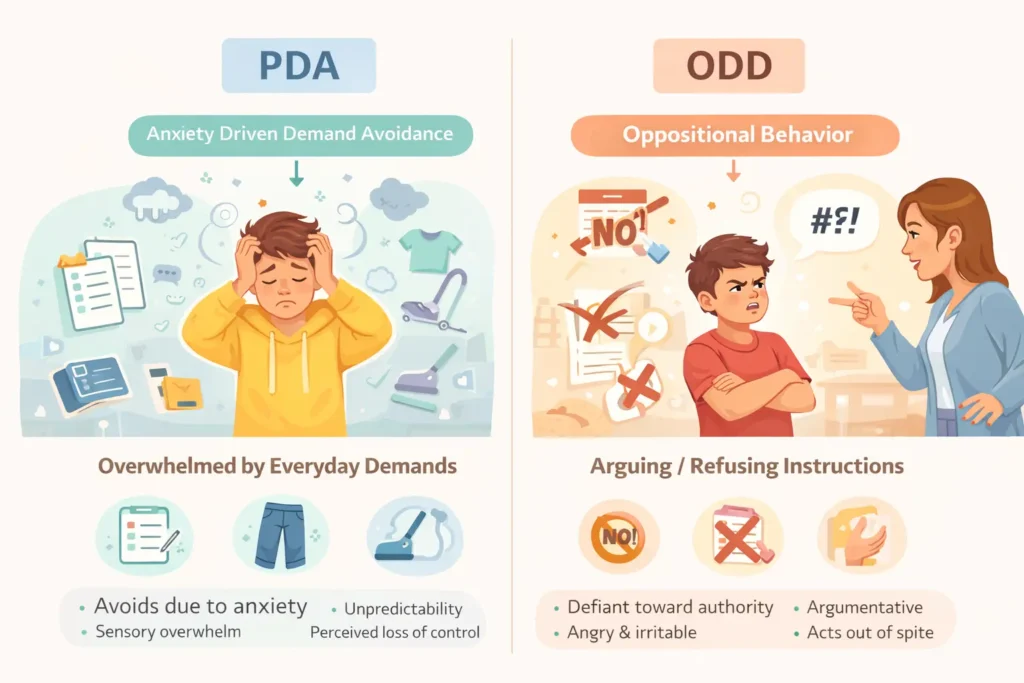
PDA vs ODD refers to two behavioral patterns that can look similar but have different causes and treatments. Pathological Demand Avoidance is linked to the autism spectrum and involves anxiety driven resistance to everyday demands, while Oppositional Defiant Disorder is a behavioral disorder characterized by persistent defiance and hostility toward authority.
Children sometimes refuse instructions, argue with adults, or avoid tasks they do not enjoy. While these behaviors can be part of normal development, persistent patterns may indicate an underlying condition. Two conditions often confused with each other are Pathological Demand Avoidance and Oppositional Defiant Disorder.
At first glance, the behaviors may appear similar. A child may refuse instructions, avoid schoolwork, or resist everyday routines. However, the reasons behind these behaviors are very different. Oppositional Defiant Disorder, on the other hand, is classified as a behavioral disorder characterized by anger, defiance, and conflict with authority figures.
Understanding the differences between PDA and ODD is important for parents, teachers, and mental health professionals. Misidentifying the condition can lead to ineffective strategies that increase stress for both the child and caregivers. This article explores definitions, causes, symptoms, treatment approaches, real world examples, and practical strategies to better understand PDA vs ODD.
Quick Overview
PDA and ODD both involve resistance to demands or authority, but the motivations and underlying mechanisms differ.
| Feature | PDA | ODD |
|---|---|---|
| Full Name | Pathological Demand Avoidance | Oppositional Defiant Disorder |
| Category | Autism spectrum profile | Behavioral disorder |
| Main Driver | Anxiety about demands | Anger and defiance |
| Behavior Pattern | Avoidance and negotiation | Argumentative and hostile |
| Response to Authority | Avoids demands indirectly | Directly challenges authority |
| Treatment Approach | Flexible and low demand strategies | Behavior therapy and structured discipline |
In simple terms, PDA behavior is usually an anxiety response, while ODD behavior is more about defiance and emotional regulation problems.
Definition and Explanation
Pathological Demand Avoidance
Pathological Demand Avoidance is a behavioral profile sometimes associated with autism spectrum conditions. Individuals with PDA experience extreme anxiety when faced with everyday demands.
The key feature of PDA is the need to remain in control of situations. Demands from others can create a feeling of losing control, which leads to avoidance strategies such as distraction, negotiation, or refusal.
Common PDA behaviors include:
- Avoiding tasks through excuses or distractions
- Negotiating or bargaining to delay demands
- Using humor or role play to escape instructions
- Sudden emotional outbursts when pressure increases
These responses are usually anxiety based rather than intentionally defiant.
Oppositional Defiant Disorder
Oppositional Defiant Disorder is a behavioral condition characterized by ongoing patterns of anger, irritability, and defiance toward authority figures. Children with ODD frequently argue with parents, teachers, and other adults.
Unlike PDA, the resistance is not primarily driven by anxiety about demands. Instead, it often involves frustration, emotional regulation problems, and conflict with authority.
Typical ODD behaviors include:
- Frequent temper tantrums
- Arguing with adults
- Deliberately refusing to follow rules
- Blaming others for mistakes
- Acting spitefully or seeking revenge
For a diagnosis of ODD, these behaviors usually persist for at least six months and interfere with daily functioning.
Causes and Contributing Factors
Causes of PDA
Research suggests that PDA is linked to neurological differences associated with autism spectrum conditions. Several factors may contribute:
- High levels of anxiety
- Sensory sensitivities
- Need for control and predictability
- Difficulty managing uncertainty
Children with PDA may appear socially skilled but struggle internally with anxiety related to expectations and demands.
Causes of ODD
Oppositional Defiant Disorder often develops through a combination of biological and environmental factors.
Common contributing factors include:
- Difficult temperament
- Family conflict or inconsistent discipline
- Exposure to stressful environments
- Genetic predisposition toward behavioral problems
Studies indicate that approximately 3 to 5 percent of children are affected by ODD.
Advantages and Challenges
PDA Characteristics
Some traits associated with PDA can also bring strengths.
Advantages may include:
- Creativity and imagination
- Strong social awareness
- Ability to negotiate and communicate
- High emotional sensitivity
Challenges include:
- High anxiety levels
- Difficulty with routine tasks
- Emotional meltdowns under pressure
ODD Characteristics
Children with ODD may also have strengths despite behavioral challenges.
Advantages may include:
- Strong independence
- Confidence in expressing opinions
- Leadership potential
Challenges include:
- Frequent conflicts with adults
- Difficulty following rules
- Problems in school or social relationships
Real World Examples
Example of PDA
A child is asked to start homework. Instead of directly refusing, the child may begin joking, changing the subject, or suggesting another activity. As the demand increases, anxiety builds, possibly leading to emotional distress or shutdown.
The child is not trying to challenge authority intentionally but is attempting to reduce anxiety caused by the demand.
Example of ODD
A teacher asks a student to complete a worksheet. The student responds by arguing, refusing directly, and possibly blaming the teacher or classmates. The refusal is accompanied by anger and defiance.
In this situation, the behavior is less about anxiety and more about resistance to authority.
Regional and Global Recognition
The understanding and diagnosis of PDA and ODD vary across different regions.
United Kingdom
PDA is widely recognized as a behavioral profile related to autism. Many specialists and educational professionals provide targeted strategies for children with PDA traits.
United States
ODD is formally recognized in psychiatric diagnostic manuals and widely diagnosed. PDA awareness is growing but remains less formally recognized.
Europe and Australia
Professionals are increasingly acknowledging PDA characteristics and researching supportive interventions.
Globally, awareness of neurodevelopmental differences is increasing, which improves early identification and support.
Common Misdiagnosis and Mistakes
Many children with PDA are mistakenly diagnosed with ODD due to similar outward behaviors.
Common mistakes include:
- Assuming avoidance equals defiance
- Using strict discipline strategies for anxiety driven behavior
- Ignoring underlying emotional distress
- Misinterpreting negotiation as manipulation
Correct assessment requires careful observation of motivation behind the behavior.
Exercises With Answers
Exercise 1
Identify whether the behavior is more likely related to PDA or ODD.
- A child distracts the teacher with jokes to avoid homework.
- A child argues loudly and refuses instructions from a parent.
- A child negotiates repeatedly to delay a task.
- A child intentionally breaks rules to challenge authority.
Answers
- PDA
- ODD
- PDA
- ODD
Exercise 2
Match the description with the condition.
| Description | PDA | ODD |
|---|---|---|
| Anxiety driven avoidance | Yes | No |
| Persistent defiance toward authority | No | Yes |
| Linked to autism spectrum traits | Yes | No |
| Frequent arguments and hostility | No | Yes |
Related Concepts and Comparisons
PDA vs ODD vs Autism
| Feature | PDA | ODD | Autism |
|---|---|---|---|
| Anxiety about demands | High | Low | Moderate |
| Defiance toward authority | Low | High | Variable |
| Social understanding | Often good | Normal | Often limited |
| Core condition type | Autism profile | Behavioral disorder | Neurodevelopmental condition |
Support and Management Strategies
Support for PDA
Effective strategies include:
- Using indirect requests instead of direct commands
- Providing choices to maintain a sense of control
- Reducing pressure during tasks
- Building trust and collaboration
Flexible approaches often reduce anxiety and improve cooperation.
Support for ODD
Interventions for ODD focus on behavior management.
Effective methods include:
- Consistent rules and consequences
- Positive reinforcement for good behavior
- Parent training programs
- Cognitive behavioral therapy
These strategies help improve emotional regulation and reduce conflict.
FAQs
What is the main difference between PDA and ODD?
PDA is anxiety driven avoidance related to autism traits, while ODD involves persistent defiance and anger toward authority figures.
Can PDA be mistaken for ODD?
Yes. Because both involve refusal of demands, children with PDA are sometimes misdiagnosed with ODD.
Is PDA part of autism?
Many professionals consider PDA a behavioral profile associated with the autism spectrum.
What causes Oppositional Defiant Disorder?
ODD is influenced by genetic factors, family environment, emotional regulation difficulties, and behavioral patterns.
Can children have both PDA and ODD?
In some cases, overlapping behaviors may occur, but proper evaluation is required to determine the primary condition.
How is PDA treated?
Support strategies focus on reducing anxiety, offering choices, and avoiding excessive demands.
How is ODD treated?
Treatment often includes behavioral therapy, structured discipline, and parent training programs.
Does PDA improve with age?
With appropriate support and understanding, many individuals learn coping strategies that reduce anxiety related to demands.
Is ODD a serious condition?
If untreated, ODD can affect relationships, school performance, and emotional development.
When should parents seek professional help?
If defiant or avoidance behaviors persist for several months and interfere with daily life, professional assessment is recommended.
Conclusion
Understanding the differences between PDA and ODD is essential for providing the right support to children and adolescents who struggle with demand related behaviors. Although both conditions may involve resistance to instructions, their underlying causes are very different.
Strategies that reduce pressure and encourage collaboration are usually more effective. Oppositional Defiant Disorder, in contrast, involves persistent defiance and emotional regulation difficulties, which respond better to structured behavioral interventions.
Accurate identification helps parents, teachers, and clinicians avoid misdiagnosis and choose appropriate support methods. With the right approach, children with PDA or ODD can develop healthier coping skills, improve relationships, and achieve better outcomes in school and daily life.
Discover More Related Articles:
- Coniferous vs Deciduous: The Big Tree Difference in 2026
- Iron vs Steamer: Which Is Better for Wrinkle-Free Clothes? in 2026
- Satyr vs Faun: Are They the Same Mythological Creature? in 2026

Christopher Hayes is a passionate language enthusiast and the lead content creator at TalkNexs.com, a platform dedicated to helping readers master the art of grammar, writing and effective communication. With years of experience in writing, editing and teaching language, Christopher’s mission is to make grammar simple, practical and engaging for everyone.