
Definition
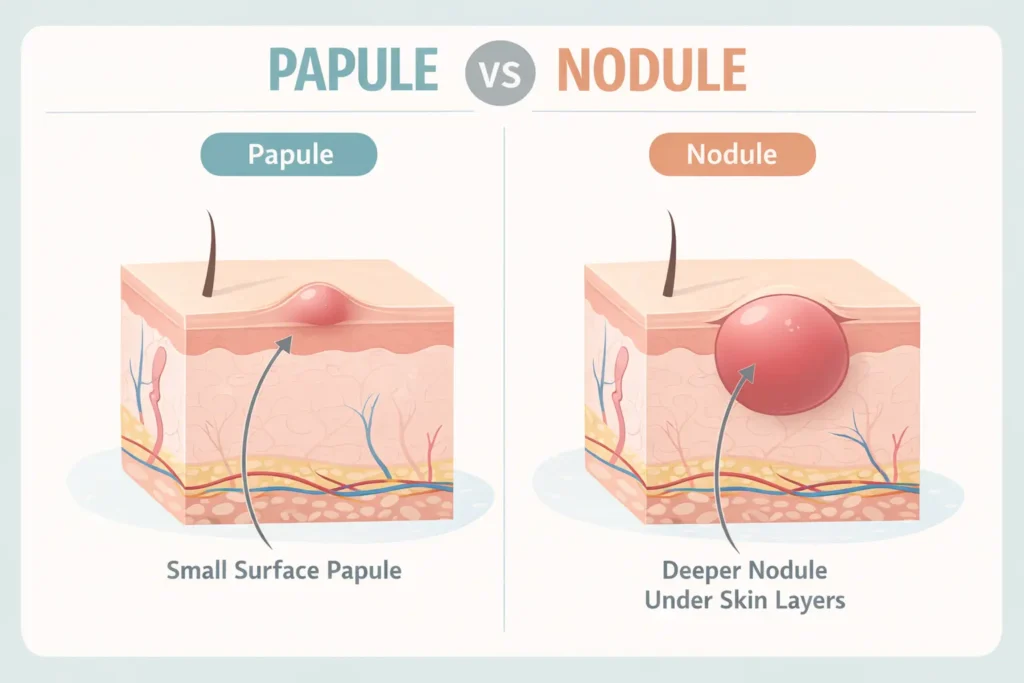
Nodules and papules are both types of skin lesions, but they differ in size, depth, and severity. Papules are small, raised bumps that form on the surface of the skin, while nodules are larger, deeper and often more painful.
Skin conditions can appear in many forms, from tiny bumps to deeper lumps under the skin. Among the most commonly confused skin lesions are nodules and papules. At first glance they may look similar, but they are very different in structure, depth, and severity.
Papules are small raised bumps that usually appear on the surface of the skin. They are often associated with acne, allergic reactions, and minor infections. Nodules, on the other hand, form deeper in the skin and are usually larger, firmer, and sometimes painful.
Understanding the difference between nodule vs papule is important for proper diagnosis and treatment. Using the wrong treatment approach may worsen the condition or delay healing. Dermatologists rely on the size, depth, and appearance of skin lesions to determine the appropriate care.
In this guide, we will explore what nodules and papules are, how they form, their causes, treatments, prevention methods, and common mistakes people make when dealing with them. By the end, you will clearly understand how to recognize these two skin lesions and manage them effectively.
Quick Overview
Nodules and papules are both solid skin lesions, but they differ in size, depth, and severity.
| Feature | Papule | Nodule |
|---|---|---|
| Size | Small, usually less than 1 cm | Larger than 1 cm |
| Depth | Surface of the skin | Deeper in the skin layers |
| Texture | Firm but small | Hard and solid |
| Pain | Usually mild or none | Often painful |
| Healing | Heals faster | Takes longer to heal |
| Common Causes | Acne, allergies, infections | Severe acne, cystic conditions |
Papules are more common and usually harmless. Nodules often indicate a deeper skin issue and may require medical treatment.
Definition and Explanation
What Is a Papule
A papule is a small, raised, solid bump on the skin. It does not contain pus and is usually less than one centimeter in diameter. Papules form when hair follicles become inflamed or when skin cells accumulate in a localized area.
Papules can appear in many skin conditions including acne, dermatitis, and insect bites. They may appear red, pink, brown, or skin colored depending on the skin type and underlying cause.
Papules usually develop on the face, chest, back, and arms. They often appear in clusters and may cause mild itching or irritation.
Common examples of papules include acne bumps that have not yet developed pus.
What Is a Nodule
A nodule is a larger and deeper skin lesion. It forms beneath the surface of the skin and feels firm or hard to the touch. Nodules are typically larger than one centimeter and may cause pain or tenderness.
Unlike papules, nodules form deeper in the dermis or subcutaneous layers of the skin. This makes them harder to treat and slower to heal.
Nodules are commonly associated with severe acne, infections, cysts, and certain inflammatory skin diseases. Because they develop deep in the skin, they may require medical treatment such as prescription medication or professional procedures.
Causes and Contributing Factors
Both papules and nodules can develop due to several underlying factors.
Excess Oil Production
Overactive oil glands produce excess sebum. This can clog pores and lead to inflammation, resulting in papules or deeper nodules.
Bacterial Growth
Bacteria inside clogged pores can trigger inflammation and immune responses, leading to raised skin lesions.
Hormonal Changes
Hormonal fluctuations during puberty, pregnancy, or stress can increase oil production and contribute to acne lesions.
Skin Irritation
Harsh skincare products, friction from clothing, or environmental pollutants may irritate the skin and trigger papules.
Immune System Response
Certain infections or immune reactions may cause nodules to form deeper in the skin.
Studies suggest that nearly 80 percent of adolescents experience papular acne, while nodular acne tends to occur in more severe cases.
Advantages and Disadvantages
Papules Advantages
- Usually mild and less painful
- Often heal quickly with proper skincare
- Rarely cause deep scarring
Papules Disadvantages
- Can appear in large numbers
- May develop into pustules or inflammatory acne
- Can cause cosmetic concerns
Nodules Advantages
- Less common compared to mild acne lesions
- Can sometimes resolve with medical treatment
Nodules Disadvantages
- Often painful and inflamed
- Heal slowly due to depth in the skin
- Higher risk of scarring
Real World Examples
Understanding how papules and nodules appear in everyday situations can help with identification.
Teenagers often experience papular acne on the forehead and cheeks due to hormonal changes.
Adults with hormonal acne may develop nodules along the jawline or chin.
People with allergic reactions may develop clusters of small papules on the arms or chest.
Certain infections or inflammatory conditions can produce painful nodules under the skin.
Dermatologists often classify acne severity based on the presence of papules and nodules.
Regional and Global Usage
Skin conditions such as papules and nodules occur worldwide, but regional climate, lifestyle, and skincare practices influence their prevalence and treatment.
North America and Europe
In these regions, dermatologists commonly treat papules with topical retinoids, benzoyl peroxide, and antibiotics. Nodules often require stronger prescription medications or clinical procedures.
Asia
Skincare routines in countries such as South Korea and Japan emphasize prevention. Multi step routines, gentle cleansers, and hydrating treatments help prevent papules and deeper lesions.
Middle East
Hot climates and increased sweating can contribute to clogged pores and acne. Lightweight skincare products and regular cleansing are commonly recommended.
Latin America
Humidity and heat may increase oil production. Exfoliation and dermatologist guided treatments are commonly used to manage acne lesions.
Africa
Natural ingredients such as clay masks and plant extracts are often used alongside modern dermatology treatments.
Globally, awareness of skin health is increasing through online education and dermatology services.
Common Mistakes in Treatment
Many people make mistakes when dealing with skin lesions like papules and nodules.
Picking or squeezing
Squeezing lesions can push bacteria deeper into the skin and cause scarring.
Using harsh skincare products
Strong scrubs or chemicals may irritate the skin and worsen inflammation.
Ignoring early symptoms
Small papules may develop into more severe nodules if not treated early.
Self diagnosis
Misidentifying skin lesions can lead to incorrect treatments.
Overusing acne medications
Excessive use of acne treatments can damage the skin barrier.
Exercises With Answers
Exercise 1
Identify whether the following description refers to a papule or a nodule.
- A small raised bump on the surface of the skin
- A deep firm lump under the skin
- A lesion smaller than one centimeter
- A painful lesion deeper in the skin
Answers
1 Papule
2 Nodule
3 Papule
4 Nodule
Exercise 2
Match the characteristic to the correct lesion type.
| Characteristic | Papule | Nodule |
|---|---|---|
| Small surface bump | Yes | No |
| Deep painful lump | No | Yes |
| Usually mild acne | Yes | No |
| Severe inflammatory acne | No | Yes |
Related Concepts and Comparisons
Understanding related skin lesions can help clarify the difference between nodules and papules.
| Skin Lesion | Description |
|---|---|
| Papule | Small raised solid bump |
| Nodule | Large deep solid lump |
| Pustule | Bump containing pus |
| Cyst | Fluid filled lesion under the skin |
Papules are usually early stage acne lesions. Nodules are deeper inflammatory lesions that may require medical care.
Prevention Strategies
Preventing papules and nodules involves maintaining healthy skin habits.
Cleanse the skin twice daily with a gentle cleanser.
Use non comedogenic skincare products that do not clog pores.
Avoid excessive touching of the face.
Maintain a balanced diet and proper hydration.
Manage stress levels to reduce hormonal imbalances.
Seek dermatological advice if lesions become painful or persistent.
Regular skincare routines significantly reduce the risk of developing severe acne lesions.
FAQs
What is the main difference between nodule vs papule?
Papules are small raised bumps on the skin surface, while nodules are larger and form deeper within the skin layers.
Are papules painful?
Papules usually cause mild discomfort or itching but are generally not very painful.
Are nodules dangerous?
Most nodules are not dangerous but they may indicate severe acne or inflammation that requires medical treatment.
Can papules turn into nodules?
In some cases, untreated papules may progress into deeper inflammatory lesions.
How are papules treated?
Papules are usually treated with topical creams, gentle cleansers, and anti inflammatory products.
How are nodules treated?
Nodules often require prescription medication, dermatologist treatments, or specialized skincare routines.
Can nodules cause scars?
Yes, nodules have a higher risk of causing scars because they form deep in the skin.
Do papules go away on their own?
Many papules resolve naturally within a few days with proper skincare.
Can stress cause papules or nodules?
Stress can trigger hormonal changes that increase oil production and acne formation.
Should nodules be squeezed?
No, squeezing nodules can worsen inflammation and lead to permanent scars.
Conclusion
Understanding the difference between nodule vs papule is essential for identifying skin conditions and choosing appropriate treatments. Papules are small raised bumps that appear on the surface of the skin and usually represent mild inflammation. Nodules, however, develop deeper in the skin and are larger, firmer, and often painful.
Because nodules form beneath the surface, they require more careful treatment and may need professional medical care. Papules are typically easier to manage with proper skincare routines and topical treatments.
Maintaining a consistent skincare routine, using non comedogenic products, and avoiding harsh treatments can significantly reduce the risk of both papules and nodules. Early recognition and proper care are key to preventing complications such as scarring.
If skin lesions become persistent, painful, or severe, consulting a dermatologist is the best approach. Professional guidance ensures accurate diagnosis and effective treatment, helping maintain healthy and clear skin.
Discover More Related Articles:
- Perception vs Reality: Why What We See Isn’t Always the Truth in 2026
- GLD vs GLDM: Key Differences Every Investor Should Know in 2026

Jonathan Reed is a dedicated grammar expert and language researcher at TalkNexs.com. With a strong passion for English structure, clarity and effective communication, he has spent years helping students, writers and professionals improve their grammar skills in simple and practical ways.