
Definition
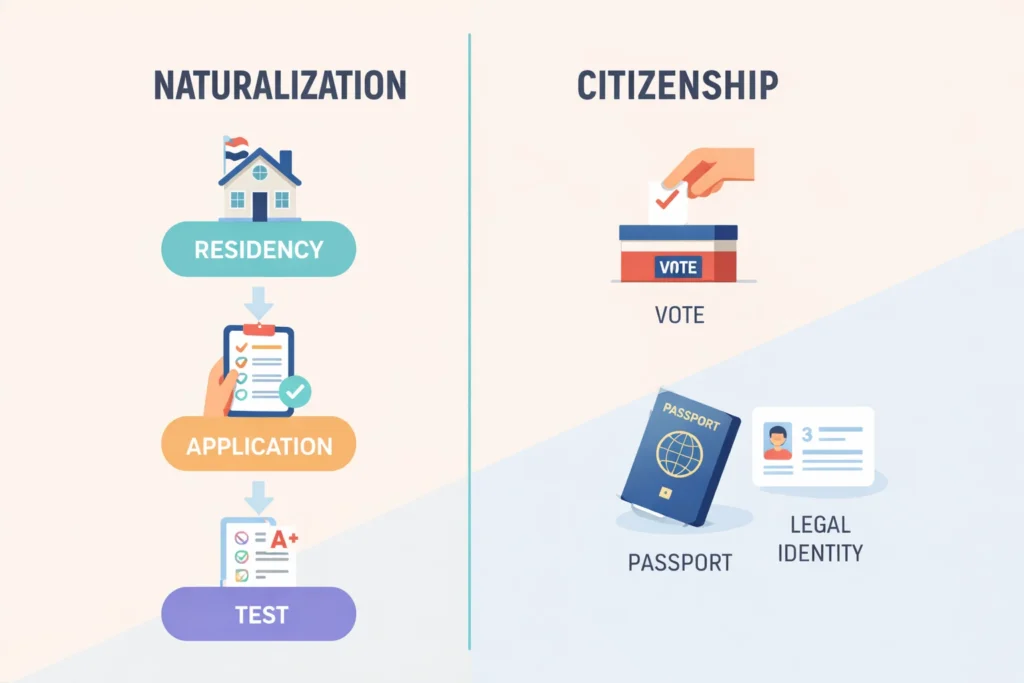
Naturalization and citizenship are closely related but not the same. Citizenship is a legal status that grants full rights in a country, while naturalization is the process through which a non citizen becomes a citizen. Understanding this difference helps clarify legal rights, responsibilities and eligibility requirements.
Citizenship is one of the most important legal identities a person can have. It determines where you belong, your rights, and your responsibilities within a country. However, many people confuse citizenship with naturalization. While they are connected, they are not identical concepts.
Citizenship refers to the legal status of being a recognized member of a country. It can be acquired by birth, descent, or naturalization. Naturalization, on the other hand, is the process through which a foreign national becomes a citizen after meeting certain requirements set by the government.
This distinction is important because it affects immigration decisions, legal rights, and eligibility for services such as voting, employment, and travel. Many countries have specific laws and procedures for naturalization, making it a structured and often lengthy process.
In this article, we will explore naturalization vs citizenship in detail, including definitions, differences, advantages, disadvantages, real world examples, global practices and common mistakes. By the end, you will have a clear and practical understanding of both terms and how they apply in real life.
Quick Overview
Naturalization is the legal process by which a non citizen becomes a citizen of a country. Citizenship is the final legal status that grants a person full rights and responsibilities within that country.
| Feature | Naturalization | Citizenship |
|---|---|---|
| Definition | Process of becoming a citizen | Legal status of belonging to a country |
| Eligibility | Foreign nationals | Anyone who meets legal criteria |
| Requirement | Residency, language, legal status | Can be by birth, descent, or naturalization |
| Process | Formal application and approval | Status granted automatically or through process |
| Rights | Limited during process | Full rights and privileges |
Definition and Explanation
What is Citizenship
Citizenship is a legal status that defines a person as a member of a country. It comes with rights and responsibilities, including the right to vote, work, and receive government protection. Citizenship can be acquired in three main ways.
- By Birth: Also called birthright citizenship, where a person is automatically a citizen if born in a country.
- By Descent: Citizenship inherited from parents or ancestors.
- By Naturalization: Citizenship granted after meeting legal requirements.
Citizenship ensures full participation in the social, political, and economic systems of a country.
What is Naturalization
Naturalization is the legal process through which a foreign national becomes a citizen of a country. It usually involves several steps, including residency, background checks, language proficiency, and a citizenship test.
For example, in countries like the United States and Canada, applicants must live in the country for a certain number of years before applying for citizenship. They must also demonstrate good moral character and knowledge of the country’s laws and history.
Naturalization is not automatic. It requires application, approval, and often an oath of allegiance to the country.
Causes and Requirements
Citizenship Requirements
- Birth within the country
- Having parents who are citizens
- Legal recognition by the government
- Compliance with national laws
Naturalization Requirements
- Minimum residency period
- Legal permanent residency status
- Knowledge of language and culture
- Clean criminal record
- Passing a citizenship or civics test
- Taking an oath of allegiance
Different countries have different rules, but the core principles remain similar.
Advantages and Disadvantages
Advantages of Citizenship
- Full legal rights and protections
- Right to vote and participate in government
- Freedom to live and work without restrictions
- Access to public services and benefits
Disadvantages of Citizenship
- Responsibilities such as taxes and legal obligations
- Potential dual citizenship restrictions in some countries
Advantages of Naturalization
- Provides a pathway to citizenship
- Offers legal security and stability
- Allows access to full rights once completed
- Enables long term residency without visa concerns
Disadvantages of Naturalization
- Lengthy and complex process
- Requires documentation and background checks
- May involve tests and interviews
- Not guaranteed approval
Real World Examples
- A person born in the United States automatically becomes a citizen due to birthright citizenship.
- A person moving to Canada must live there for several years, pass language requirements, and apply for naturalization to become a citizen.
- In countries like Germany or Japan, naturalization requires strict conditions, including language fluency and cultural integration.
These examples show how citizenship and naturalization operate differently depending on the country’s laws.
Regional and Global Usage
North America
In the United States and Canada, citizenship can be obtained through birth or naturalization. The naturalization process includes residency requirements, interviews, and tests.
Europe
European countries like Germany, France, and the United Kingdom have structured naturalization processes. Requirements often include language proficiency, cultural integration, and legal residency.
Asia
Countries such as Japan and China have stricter naturalization laws. Applicants must demonstrate strong cultural integration and meet rigorous requirements. Citizenship by descent is more common than naturalization.
Middle East and Africa
Many countries in these regions have limited pathways to naturalization. Citizenship is often based on descent rather than naturalization, making it more difficult for foreigners to become citizens.
Global Trends
Globally, naturalization is becoming more standardized with clear requirements and procedures. Many countries now offer pathways for skilled workers and long term residents to apply for citizenship.
Common Mistakes
- Confusing citizenship with residency
- Assuming naturalization happens automatically
- Ignoring eligibility requirements
- Submitting incomplete applications
- Not preparing for language or civics tests
Avoiding these mistakes can significantly improve the chances of successful naturalization.
Exercises with Answers
Exercise 1
Identify the following is citizenship or naturalization
- A person born in a country
- A foreigner applying to become a citizen
- A person receiving citizenship from parents
- A resident passing a citizenship test
Answers
- Citizenship
- Naturalization
- Citizenship
- Naturalization
Exercise 2
Match the correct requirement
| Requirement | Citizenship | Naturalization |
|---|---|---|
| Born in country | Yes | No |
| Pass citizenship test | No | Yes |
| Inherit from parents | Yes | No |
| Apply formally | No | Yes |
Related Concepts and Comparisons
Citizenship vs Residency
| Feature | Citizenship | Residency |
|---|---|---|
| Legal Status | Full member of country | Temporary or permanent stay |
| Rights | Full rights including voting | Limited rights |
| Duration | Lifetime | Time based permit |
Naturalization vs Permanent Residency
Naturalization grants full citizenship, while permanent residency allows living in a country without full rights like voting.
FAQs
What is the difference between naturalization and citizenship?
Naturalization is the process of becoming a citizen, while citizenship is the legal status that grants rights and responsibilities.
Can you have citizenship without naturalization?
Yes, citizenship can be obtained by birth or descent without naturalization.
How long does naturalization take?
It varies by country but usually takes several years of residency before applying.
Is naturalization the same in every country?
No, each country has its own rules and requirements for naturalization.
Can citizenship be revoked?
In some cases, yes, especially if it was obtained fraudulently.
Do all countries allow naturalization?
Most countries do, but the process and requirements differ significantly.
Is dual citizenship allowed after naturalization?
It depends on the laws of the country involved. Some allow it, others do not.
What is required for naturalization?
Usually residency, language proficiency, background checks, and a citizenship test.
What are the benefits of citizenship?
Full legal rights, voting, access to public services, and protection by the government.
Can children apply for naturalization?
Yes, in some cases children can apply or acquire citizenship through parents.
Conclusion
Naturalization and citizenship are closely related but represent different concepts. Citizenship is the legal status of belonging to a country, while naturalization is the process of obtaining that status.
Understanding the difference is important for anyone dealing with immigration, legal rights, or international travel. Citizenship can be acquired by birth, descent, or naturalization, while naturalization requires meeting specific legal requirements and completing an application process.
By knowing these differences, individuals can better navigate immigration systems and understand their rights and responsibilities. For those seeking citizenship through naturalization, it is important to follow legal guidelines, prepare thoroughly, and meet all eligibility criteria.
Discover More Related Articles:
- UGG Classic vs Ultra Mini: Which Style Should You Choose In 2026
- Rhombus vs Diamond: The Surprising Differences You Never Knew In 2026
- Shades vs Blinds: Which One Looks Better & Lasts Longer In 2026

Christopher Hayes is a passionate language enthusiast and the lead content creator at TalkNexs.com, a platform dedicated to helping readers master the art of grammar, writing and effective communication. With years of experience in writing, editing and teaching language, Christopher’s mission is to make grammar simple, practical and engaging for everyone.