
Definition
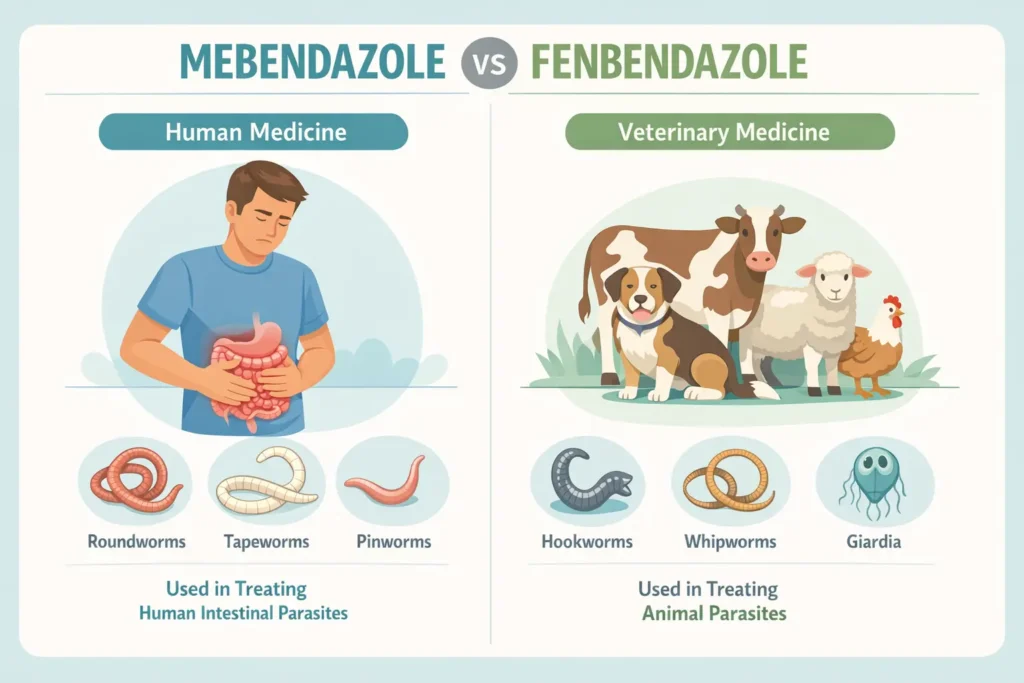
Mebendazole and fenbendazole are antiparasitic medications used to treat worm infections. Mebendazole is commonly prescribed for humans, while fenbendazole is mainly used in veterinary medicine for animals.
Parasitic infections caused by worms affect millions of people and animals worldwide. These infections can occur through contaminated food, soil, water, or contact with infected animals. To treat these infections, doctors and veterinarians rely on antiparasitic medications such as mebendazole and fenbendazole.
Mebendazole is widely used in human medicine to treat intestinal worm infections, while fenbendazole is primarily used in veterinary care for animals such as dogs, cats, cattle and horses.
Many people searching for information about mebendazole vs fenbendazole want to understand their differences, effectiveness, safety, and proper usage. Confusion often arises because the two drugs share similar chemical structures and mechanisms.
This guide explains the differences between mebendazole and fenbendazole in simple terms. It explores their uses, benefits, risks, global usage patterns, treatment examples, common mistakes, and frequently asked questions to help readers make informed decisions.
Quick Overview
Mebendazole and fenbendazole belong to a class of drugs called benzimidazole anthelmintics. These medications work by preventing parasites from absorbing glucose, which deprives them of energy and causes them to die.
| Feature | Mebendazole | Fenbendazole |
|---|---|---|
| Main Use | Human parasite infections | Animal parasite infections |
| Drug Class | Benzimidazole anthelmintic | Benzimidazole anthelmintic |
| Common Targets | Pinworms, roundworms, whipworms | Hookworms, roundworms, tapeworms in animals |
| Availability | Prescription or over the counter in some countries | Veterinary medicine |
| Typical Users | Humans | Dogs, cats, livestock |
Although their mechanism of action is similar, their approved medical uses are different.
What is Mebendazole
Mebendazole is a medication used to treat intestinal worm infections in humans. Doctors commonly prescribe it to eliminate parasites that live in the digestive tract.
This medication interferes with the parasite’s ability to absorb glucose. Without glucose, the worms lose energy and eventually die.
Mebendazole is widely used to treat the following infections:
- Pinworm infection
- Roundworm infection
- Whipworm infection
- Hookworm infection
It is often taken as a tablet or chewable tablet and is usually given as a short course of treatment.
One reason mebendazole is commonly used is its safety profile. The medication is designed to act mainly within the intestines rather than being heavily absorbed into the bloodstream.
What is Fenbendazole
Fenbendazole is an antiparasitic medication primarily used in veterinary medicine. Veterinarians prescribe it to treat worm infections in animals.
Fenbendazole works similarly to mebendazole by disrupting the parasite’s energy metabolism. The worms lose the ability to absorb nutrients and eventually die.
Common uses of fenbendazole include treatment of parasites in:
- Dogs
- Cats
- Horses
- Cattle
- Sheep
- Goats
Fenbendazole is highly effective against several animal parasites, including roundworms, hookworms, whipworms, and certain tapeworm species.
Key Differences Between Mebendazole and Fenbendazole
Although these medications are related chemically, there are important differences between them.
| Category | Mebendazole | Fenbendazole |
|---|---|---|
| Intended Use | Human treatment | Veterinary treatment |
| Approval | Approved for human medical use | Approved mainly for animals |
| Availability | Pharmacies and prescriptions | Veterinary supply stores |
| Common Dosage | Short human treatment course | Multi-day animal dosing |
| Safety Research | Extensively studied in humans | Primarily studied in animals |
The biggest difference is the target population.
Advantages and Disadvantages
Advantages of Mebendazole
- Approved for human medical treatment
- Well studied in clinical research
- Effective against several intestinal parasites
- Easy to take as tablets
Disadvantages of Mebendazole
- May require repeated doses for some infections
- Mild side effects may occur
- Not effective for all parasite types
Advantages of Fenbendazole
- Broad spectrum treatment for animal parasites
- Highly effective in veterinary medicine
- Easy to mix with animal food
- Widely used in livestock management
Disadvantages of Fenbendazole
- Not primarily designed for human use
- Limited clinical studies in humans
- Dosing differences between animal species
How These Medications Work
Both drugs target the parasite’s internal structure known as microtubules.
Microtubules are essential for the parasite’s ability to absorb nutrients. By disrupting these structures, the drugs block glucose absorption.
Without energy from glucose, the parasite cannot survive.
This mechanism explains why both medications are effective against many intestinal worms.
Real World Examples
Example 1 Human Infection
A child infected with pinworms may experience itching around the anal area at night. A doctor may prescribe mebendazole to eliminate the parasites.
After treatment, the worms die and the infection resolves.
Example 2 Veterinary Treatment
A veterinarian may prescribe fenbendazole for a dog with roundworms. The medication is mixed with the dog’s food for several days.
The parasites die and the animal’s digestive health improves.
Example 3 Livestock Management
Farmers commonly treat cattle with fenbendazole to prevent parasite outbreaks. This improves animal health and productivity.
Regional and Global Usage
Parasitic infections vary widely around the world. Access to medications such as mebendazole and fenbendazole also differs between regions.
North America and Europe
In developed countries, mebendazole is widely available for treating human intestinal worms. Healthcare providers use laboratory testing and proper diagnosis before prescribing medication.
Asia
Countries with higher parasite prevalence often include mebendazole in public health programs. Schools sometimes administer preventive treatments to reduce worm infections among children.
Veterinary use of fenbendazole is also common in livestock farming.
Africa
Parasitic infections remain a significant health concern in many African regions. Public health programs often distribute antiparasitic medications to control infections.
Veterinary medicine also uses fenbendazole to protect livestock, which supports agricultural economies.
Latin America
Both human and veterinary antiparasitic treatments are widely used. Community health programs often focus on preventing soil transmitted helminth infections.
Common Mistakes and Misconceptions
Assuming Both Drugs Are Interchangeable
Although they belong to the same drug family, they are not always interchangeable.
Self Treating Without Medical Advice
Using antiparasitic medication without proper diagnosis may lead to ineffective treatment.
Ignoring Hygiene Practices
Medication alone cannot prevent reinfection. Hygiene and sanitation are essential.
Using Incorrect Dosages
Proper dosage varies depending on species, age, and infection severity.
Exercises with Answers
Exercise 1 Identify the Drug
- A medication commonly prescribed for human pinworm infections.
- A veterinary drug used for dogs and livestock.
- A benzimidazole drug approved for human intestinal worms.
Answers
- Mebendazole
- Fenbendazole
- Mebendazole
Exercise 2 True or False
- Fenbendazole is primarily used in veterinary medicine.
- Mebendazole is widely used to treat human intestinal parasites.
- Both drugs belong to the same medication family.
Answers
- True
- True
- True
Related Concepts and Comparisons
Mebendazole vs Albendazole
Albendazole is another antiparasitic medication used to treat human worm infections. It is often used when infections spread beyond the intestines.
Fenbendazole vs Other Veterinary Dewormers
Veterinarians may also use medications such as ivermectin or praziquantel depending on the parasite species.
Each medication targets different parasites.
Prevention Strategies
Preventing worm infections requires good hygiene and sanitation practices.
Important strategies include
- Washing hands regularly
- Cooking food thoroughly
- Drinking clean water
- Avoiding contaminated soil
- Regular veterinary checkups for pets
- Proper livestock parasite control
These practices significantly reduce infection risks.
FAQs
What is the main difference between mebendazole and fenbendazole?
Mebendazole is designed for treating human intestinal worm infections, while fenbendazole is mainly used in veterinary medicine for animals.
Can humans take fenbendazole?
Fenbendazole is primarily formulated for animals and is not typically prescribed for humans. Medical guidance is necessary before using any medication.
Is mebendazole effective against all worms?
Mebendazole treats many intestinal worms but may not work against all parasite species.
How long does mebendazole take to work?
Most infections begin improving within a few days after treatment, although complete parasite elimination may take longer.
Is fenbendazole safe for pets?
Fenbendazole is widely considered safe for pets when used according to veterinary instructions.
Can parasites return after treatment?
Yes. Reinfection can occur if hygiene and environmental precautions are not maintained.
Are side effects common with mebendazole?
Side effects are usually mild and may include stomach discomfort or diarrhea.
Why are antiparasitic medications important?
They help eliminate harmful parasites that can cause digestive problems, malnutrition, and other health issues.
Can children take mebendazole?
Doctors often prescribe it for children with worm infections, but dosage depends on age and medical guidance.
How can people prevent worm infections?
Good hygiene, safe food preparation, and clean living environments are essential for prevention.
Conclusion
Mebendazole and fenbendazole are important antiparasitic medications that belong to the same drug family but serve different purposes.
Understanding the difference between these medications helps prevent misuse and ensures effective treatment. Both drugs work by disrupting the parasite’s ability to absorb nutrients, leading to parasite death.
For human infections, medical professionals usually recommend mebendazole or other approved treatments. For animals, veterinarians rely on fenbendazole as a trusted and effective deworming medication.
Maintaining proper hygiene, safe food practices, and regular health checkups are key strategies to prevent parasitic infections. With the right knowledge and medical guidance, both medications play a vital role in protecting human and animal health.
Discover More Related Articles:
- Perception vs Reality: Why What We See Isn’t Always the Truth in 2026
- GLD vs GLDM: Key Differences Every Investor Should Know in 2026

David Thompson is the grammar expert behind TalkNexs.com. He believes that learning English grammar doesn’t have to be boring or complicated. Through practical examples and easy explanations, David helps readers understand confusing grammar rules and use them correctly in daily communication. His goal is to make grammar simple, clear and enjoyable for everyone.