
Definition
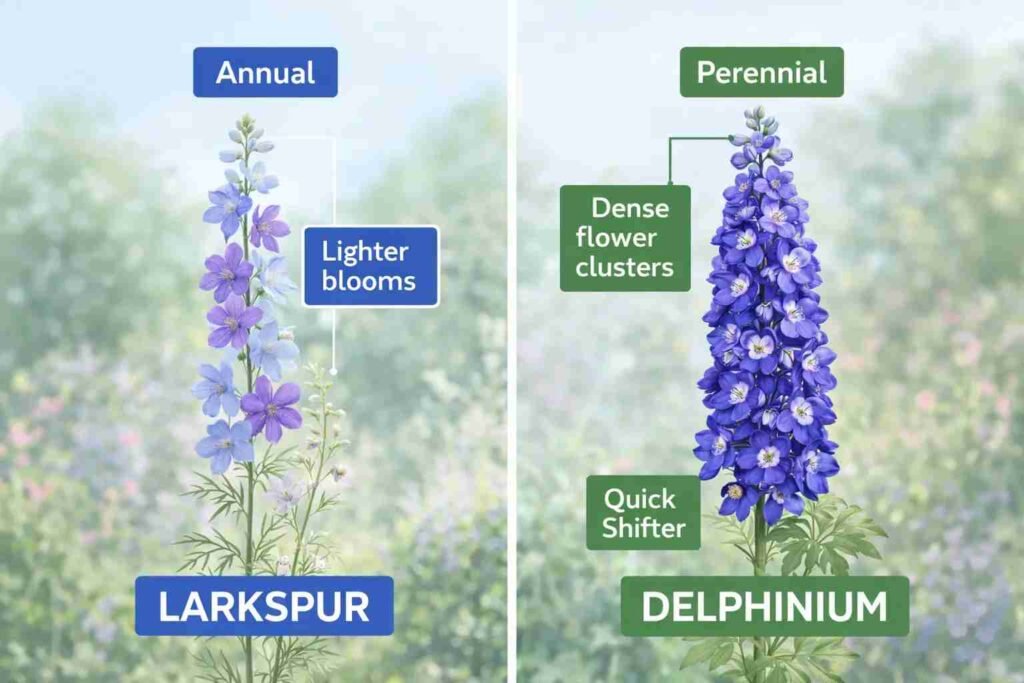
Larkspur and delphinium are flowering plants known for their tall spikes of colorful blooms. Larkspur is typically an annual plant with delicate flowers, while delphinium is a perennial with larger, more structured blooms. Knowing the difference helps gardeners choose the right plant for their climate and garden design.
Gardeners often confuse larkspur and delphinium because they look very similar. Both plants produce tall, elegant spikes covered in vibrant flowers. They are popular in cottage gardens, borders, and floral arrangements. However, despite their similar appearance, they are not exactly the same.
The confusion between larkspur and delphinium is common among beginners and even experienced gardeners. Some people use the names interchangeably, which can lead to planting mistakes. For example, someone may expect a plant to return every year, only to discover it was an annual that dies after one season.
Understanding the difference between larkspur and delphinium helps with plant selection, care, and long-term garden planning. In this article, we will explore their definitions, characteristics, advantages, disadvantages, growing requirements, regional use, common mistakes, and practical exercises to strengthen your understanding.
Quick Overview
Larkspur and delphinium belong to the same plant family but differ in life cycle and growth habits.
| Feature | Larkspur | Delphinium |
|---|---|---|
| Botanical Group | Annual species of Delphinium genus | Perennial species of Delphinium genus |
| Life Cycle | Annual | Perennial |
| Flower Size | Smaller, delicate blooms | Larger, fuller blooms |
| Height | 2 to 4 feet | 3 to 6 feet or more |
| Bloom Time | Late spring to early summer | Early to mid summer |
| Maintenance | Low to moderate | Moderate to high |
The key difference is that larkspur is generally grown as an annual, while delphinium is a perennial that returns year after year in suitable climates.
Definition and Explanation
Larkspur
Larkspur refers to annual flowering plants within the Delphinium genus. They produce tall stems lined with delicate, often loosely arranged flowers. The blooms come in shades of blue, purple, pink, and white.
Larkspur is typically grown from seeds and completes its life cycle in one growing season. It blooms in late spring or early summer and then dies back. Because it grows easily from seed, it is popular in cottage gardens and wildflower mixes.
Larkspur flowers are lighter and more airy compared to delphinium. They give a natural and informal look to garden spaces.
Delphinium
Delphinium refers to perennial species within the same genus. These plants are known for their dramatic flower spikes and dense clusters of blooms. Delphinium flowers are usually larger and more structured than larkspur.
Perennial delphiniums can grow quite tall, sometimes reaching six feet or more. They bloom in early to mid summer and may rebloom with proper care. Unlike larkspur, they return each year if planted in the right conditions.
Delphiniums are often used as focal points in garden borders due to their height and bold presence.
Botanical Background
Both larkspur and delphinium belong to the Ranunculaceae family, commonly known as the buttercup family.
The name delphinium comes from the Greek word for dolphin, as the flower buds resemble a dolphin’s shape. Larkspur gets its name from the flower’s spur, which resembles a lark’s claw.
Although all larkspur are technically part of the Delphinium genus, gardeners use the term larkspur mainly for annual varieties, while delphinium refers to perennial types.
Advantages and Disadvantages
Larkspur Advantages
- Easy to grow from seed
- Requires less maintenance
- Ideal for wildflower gardens
- Tolerates cooler temperatures
Larkspur Disadvantages
- Blooms for a shorter period
- Does not return the next year
- Less dramatic compared to delphinium
Delphinium Advantages
- Returns each year in suitable climates
- Produces tall, striking flower spikes
- Suitable for formal garden designs
- Offers multiple bloom cycles with care
Delphinium Disadvantages
- Requires staking due to height
- Sensitive to heat and humidity
- More prone to pests and diseases
- Requires fertile, well drained soil
Growing Requirements
Soil
Both larkspur and delphinium prefer well drained soil. However, delphinium demands richer soil with organic matter to support its perennial growth.
Sunlight
- Larkspur prefers full sun to partial shade.
- Delphinium thrives in full sun but benefits from afternoon shade in hot climates.
Water
Consistent watering is essential for delphinium. Larkspur is slightly more drought tolerant once established.
Climate
Delphinium performs best in cooler climates such as USDA zones 3 to 7. Larkspur can grow in a wider range because it completes its life cycle quickly before extreme heat.
Real World Examples
- A cottage garden in England often uses larkspur for its soft, romantic appearance.
- A formal border garden in the United States may use delphinium as a tall background plant.
- Home gardeners in cooler regions plant perennial delphinium for long term garden structure.
- Gardeners in warmer climates prefer larkspur because it tolerates early season growth before summer heat arrives.
According to horticultural surveys, delphiniums are among the top ten most popular perennial border plants in temperate climates.
Regional and Global Usage
Europe
In the United Kingdom and northern Europe, delphinium is a classic perennial border plant. The cool summers support strong growth and long bloom periods. Larkspur is often grown in cottage style gardens.
North America
In cooler states such as Washington and New York, delphinium performs well. In warmer southern regions, gardeners often choose larkspur because delphiniums struggle in high heat and humidity.
Asia
In temperate regions of China and Japan, delphinium is cultivated in botanical gardens and decorative landscapes. Larkspur is commonly used in seasonal flower displays.
Australia and New Zealand
Gardeners in cooler parts of New Zealand grow delphinium successfully. In warmer Australian regions, larkspur is favored due to its shorter life cycle.
Globally, both plants are popular in cut flower markets because their tall spikes add vertical interest to arrangements.
Common Mistakes
- Assuming larkspur will return the following year
- Planting delphinium in hot, humid climates without shade
- Failing to stake tall delphinium plants
- Overwatering in poorly drained soil
- Confusing seed packets labeled Delphinium and expecting perennial growth
Understanding plant labels and climate compatibility prevents disappointment.
Comparison Table
| Aspect | Larkspur | Delphinium |
|---|---|---|
| Life Span | One season | Multiple years |
| Maintenance Level | Low | Moderate to high |
| Garden Style | Informal | Formal or structured |
| Heat Tolerance | Moderate | Low |
| Flower Density | Light and airy | Dense and dramatic |
Exercises with Answers
Exercise 1
Identify whether the description matches larkspur or delphinium.
- A perennial that grows six feet tall.
- An annual grown from seed.
- Requires staking due to heavy flower spikes.
- Completes its life cycle in one season.
Answers:
- Delphinium
- Larkspur
- Delphinium
- Larkspur
Exercise 2
True or False
- All larkspur are perennials.
- Delphinium prefers cooler climates.
- Larkspur and delphinium belong to different plant families.
Answers:
- False
- True
- False
Related Concepts and Comparisons
Larkspur vs Delphinium vs Monkshood
Monkshood is another tall flowering plant in the same family. However, it has hood shaped flowers and blooms later in the season.
Annual vs Perennial Plants
Annual plants complete their life cycle in one year. Perennial plants live for multiple years. Larkspur is usually annual, while delphinium is perennial.
FAQs
What is the main difference between larkspur and delphinium?
The main difference is life cycle. Larkspur is typically annual, while delphinium is perennial.
Are larkspur and delphinium the same plant?
They belong to the same genus, but gardeners use different names to distinguish annual and perennial types.
Which is easier to grow, larkspur or delphinium?
Larkspur is generally easier because it requires less maintenance.
Does delphinium come back every year?
Yes, in suitable climates with proper care.
Can larkspur survive winter?
No, most larkspur varieties complete their life cycle in one season.
Which plant is better for hot climates?
Larkspur is more tolerant of warm conditions than delphinium.
Are both plants good for cut flowers?
Yes, both are popular in floral arrangements.
Do they require staking?
Delphinium often requires staking due to its height. Larkspur may not.
Are larkspur and delphinium toxic?
Yes, both contain compounds that can be toxic if ingested.
Which plant has larger flowers?
Delphinium typically has larger and denser blooms.
Conclusion
Larkspur and delphinium are closely related flowering plants that share similar beauty but differ in life cycle and care requirements. Larkspur is an annual plant that offers soft, airy blooms and easy maintenance. Delphinium is a perennial that provides bold, dramatic flower spikes and long term garden structure.
Choosing between larkspur and delphinium depends on climate, garden style, and maintenance preferences. Gardeners in cooler climates may benefit from perennial delphinium, while those in warmer areas often prefer annual larkspur.
Understanding their differences prevents planting mistakes and ensures successful growth. With proper care and planning, both plants can add height, color, and elegance to any garden.
Discover More Related Articles:
- Bunion vs Gout: What Foot Pain Is Really Telling You in 2026
- Philosophy vs Psychology: Are Thinkers Smarter Than Therapists? in 2026
- Dreads vs Braids: Which Protective Style Lasts Longer? in 2026

Christopher Hayes is a passionate language enthusiast and the lead content creator at TalkNexs.com, a platform dedicated to helping readers master the art of grammar, writing and effective communication. With years of experience in writing, editing and teaching language, Christopher’s mission is to make grammar simple, practical and engaging for everyone.