
Definition
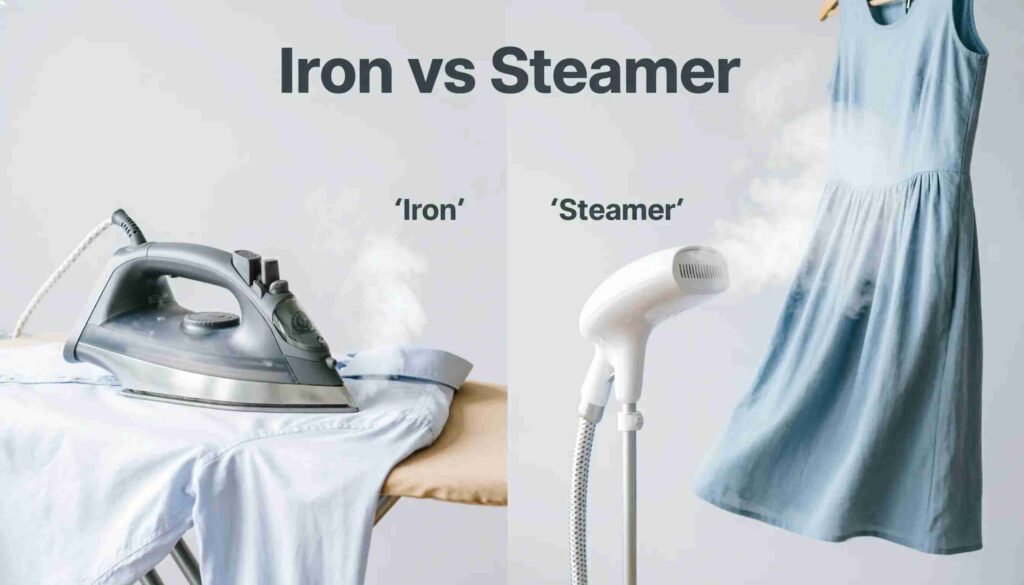
Iron vs steamer is a common comparison when choosing the best way to remove wrinkles from clothes. An iron uses direct heat and pressure to flatten fabric, while a steamer uses hot steam to relax fibers gently. The right choice depends on fabric type, convenience, and the level of crispness you need.
Wrinkled clothes can make even the best outfit look untidy. Preparing for work, school or a special event, smooth clothing helps create a neat and confident appearance. When it comes to removing wrinkles, most people choose between two tools: an iron or a steamer.
The debate around iron vs steamer is common because both tools serve the same purpose but work in different ways. Some people prefer the sharp, crisp finish of an iron. Others enjoy the quick and gentle convenience of a steamer. Choosing the wrong tool for the wrong fabric can damage clothes or waste time.
Understanding the differences between an iron and a steamer helps you protect your garments, save time, and achieve better results. In this guide, we will explore definitions, advantages, disadvantages, real-world uses, global trends, common mistakes, and expert recommendations to help you decide which option suits your needs best.
Quick Overview
Both irons and steamers remove wrinkles, but they work differently.
An iron presses fabric between a heated metal plate and an ironing board. A steamer releases hot steam to relax fabric fibers without direct pressure.
| Feature | Iron | Steamer |
|---|---|---|
| Method | Heat + Pressure | Hot Steam |
| Surface Needed | Ironing board | No board required |
| Best For | Cotton, denim, formal wear | Delicate fabrics, quick refresh |
| Finish | Crisp and sharp | Soft and natural |
| Portability | Moderate | Highly portable |
Definition and Explanation
What Is an Iron
An iron is a household appliance with a heated flat metal plate. When pressed against fabric, it uses direct heat and pressure to remove wrinkles. Most modern irons include adjustable temperature settings and steam functions.
Irons are ideal for creating sharp creases in shirts, trousers, and uniforms. They are especially effective for thick fabrics like cotton and linen.
What Is a Steamer
A steamer is a device that heats water to produce steam. The steam penetrates fabric fibers, relaxing them and allowing wrinkles to fall out naturally. Steamers can be handheld or standing models.
Steamers are commonly used for delicate fabrics such as silk, chiffon, satin, and synthetic blends. They are also convenient for refreshing clothes quickly without removing them from hangers.
How Iron and Steamer Work
Iron Working Mechanism
- The heating element warms the soleplate.
- Heat transfers directly to the fabric.
- Pressure flattens fibers.
- Steam option adds moisture for stubborn wrinkles.
This method is powerful and precise.
Steamer Working Mechanism
- Water heats into steam.
- Steam flows through a nozzle.
- Fabric fibers absorb moisture and relax.
- Wrinkles fall out without pressing.
This method is gentle and quick.
Advantages and Disadvantages
Iron Advantages
- Produces crisp and professional finish.
- Ideal for structured garments.
- Creates sharp pleats and creases.
- Works well on thick fabrics.
Iron Disadvantages
- Requires ironing board.
- Takes more time for setup.
- Risk of burning delicate fabrics.
- Can leave shine marks if used improperly.
Steamer Advantages
- Quick and easy to use.
- Safe for delicate fabrics.
- Portable and lightweight.
- No ironing board required.
Steamer Disadvantages
- Does not create sharp creases.
- Less effective on heavy fabrics.
- May require multiple passes for deep wrinkles.
- Water refilling may be frequent.
Real-World Examples
Office Professional
An office worker who wears cotton shirts daily may prefer an iron. The crisp collar and sleeve creases create a polished look suitable for business settings.
College Student
A student living in a dorm room might prefer a handheld steamer due to limited space and easy storage.
Fashion Designer
A designer working with silk gowns and delicate fabrics often chooses a steamer to avoid fabric damage.
Traveler
Frequent travelers often carry a portable steamer for quick wrinkle removal in hotel rooms.
Fabric Suitability Comparison
| Fabric Type | Iron | Steamer |
|---|---|---|
| Cotton | Excellent | Good |
| Linen | Excellent | Moderate |
| Silk | Risky if hot | Excellent |
| Wool | Good | Excellent |
| Polyester | Good | Good |
| Denim | Excellent | Limited |
Regional and Global Usage
Iron vs steamer preferences vary worldwide depending on climate, lifestyle, and fashion habits.
North America and Europe
In the United States and many European countries, irons are common household appliances. Many families own steam irons that combine both methods. Formal office wear increases demand for crisp finishes.
Asia
In countries such as South Korea and Japan, compact steamers are popular due to smaller living spaces. Quick garment refreshing aligns with fast-paced urban lifestyles.
Middle East
High temperatures and frequent washing make steamers popular for refreshing garments without repeated ironing.
Latin America
Both tools are commonly used. Families often prefer traditional irons, while younger generations adopt portable steamers.
Africa
Traditional irons remain common, but portable steamers are growing in popularity in urban areas.
Globally, rising travel and fast fashion trends are increasing demand for portable garment steamers.
Cost Comparison
| Factor | Iron | Steamer |
|---|---|---|
| Initial Cost | Affordable | Moderate |
| Electricity Use | Moderate | Moderate |
| Maintenance | Minimal | Descaling required |
| Longevity | Long-lasting | Moderate lifespan |
Basic irons are usually cheaper. High-end garment steamers can cost more but offer convenience.
Common Mistakes
Using high heat on delicate fabrics can burn material. Always adjust temperature settings.
Overfilling a steamer may cause water leakage.
Not cleaning mineral buildup reduces performance for both tools.
Using an iron without checking fabric labels may cause permanent damage.
Skipping distilled water in steamers can cause scaling.
Exercises with Answers
Exercise 1
Identify the better option.
- Removing wrinkles from silk dress.
- Creating sharp crease in trousers.
- Quick refresh before meeting.
- Flattening thick denim jacket.
Answers:
- Steamer
- Iron
- Steamer
- Iron
Exercise 2
Match the feature.
| Feature | Iron | Steamer |
|---|---|---|
| Requires board | Yes | No |
| Creates sharp crease | Yes | No |
| Portable | Limited | Yes |
| Best for delicate fabric | No | Yes |
Related Comparisons
Iron vs Steamer vs Dry Cleaning
Dry cleaning is professional cleaning using chemicals. It removes stains and deep dirt, not just wrinkles.
Ironing focuses on pressing fabric.
Steaming focuses on relaxing fibers and refreshing garments.
Steam Iron vs Garment Steamer
A steam iron combines pressing and steaming. A garment steamer focuses only on steam without pressure.
When to Choose an Iron
Choose an iron if you:
- Wear formal clothing regularly.
- Need crisp creases.
- Work with thick fabrics.
- Prefer professional finish.
When to Choose a Steamer
Choose a steamer if you:
- Travel frequently.
- Own delicate garments.
- Want quick wrinkle removal.
- Have limited space.
Maintenance Tips
For Irons:
- Empty water tank after use.
- Clean soleplate regularly.
- Avoid storing with water inside.
For Steamers:
- Use distilled water.
- Descale monthly.
- Store upright after cooling.
Proper maintenance increases lifespan and efficiency.
FAQs
Which is better, iron or steamer?
The better choice depends on your needs. An iron provides crisp results, while a steamer offers quick and gentle wrinkle removal.
Can a steamer replace an iron?
A steamer can replace an iron for light wrinkles and delicate fabrics, but it cannot create sharp creases.
Is steaming safer than ironing?
Yes, steaming is generally safer for delicate fabrics since it does not apply direct pressure.
Does steaming kill bacteria?
High-temperature steam can reduce bacteria and odors on clothes.
Can I use tap water in a steamer?
Distilled water is recommended to prevent mineral buildup.
Which is better for travel?
A handheld steamer is usually more portable and convenient for travel.
Can ironing damage clothes?
Yes, incorrect heat settings may burn or shine fabrics.
Is steaming faster than ironing?
Steaming is often faster for quick wrinkle removal but less precise.
Do professionals use steamers?
Yes, fashion professionals use steamers for delicate and high-end garments.
Which is more energy efficient?
Both use similar energy, but steaming may consume less time for quick tasks.
Conclusion
The iron vs steamer debate depends on personal needs, fabric types and lifestyle. An iron delivers sharp, structured results and is ideal for formal wear and thick fabrics. A steamer provides convenience, speed and safety for delicate materials and quick refreshes.
If you prioritize crisp creases and professional presentation, an iron is the better investment. If you value portability, fabric safety and ease of use, a steamer may suit you better. Many households benefit from owning both tools to cover all garment care needs.
Understanding how each device works ensures better clothing maintenance, longer garment life and a polished appearance every day.
Discover More Related Articles:
- Philosophy vs Psychology: Are Thinkers Smarter Than Therapists? in 2026
- ZX4R vs ZX4RR: The Ultimate 400cc Super Sport Showdown in 2026
- Larkspur vs Delphinium in Gardens: Which One Should You Grow? in 2026

Jonathan Reed is a dedicated grammar expert and language researcher at TalkNexs.com. With a strong passion for English structure, clarity and effective communication, he has spent years helping students, writers and professionals improve their grammar skills in simple and practical ways.