Definition
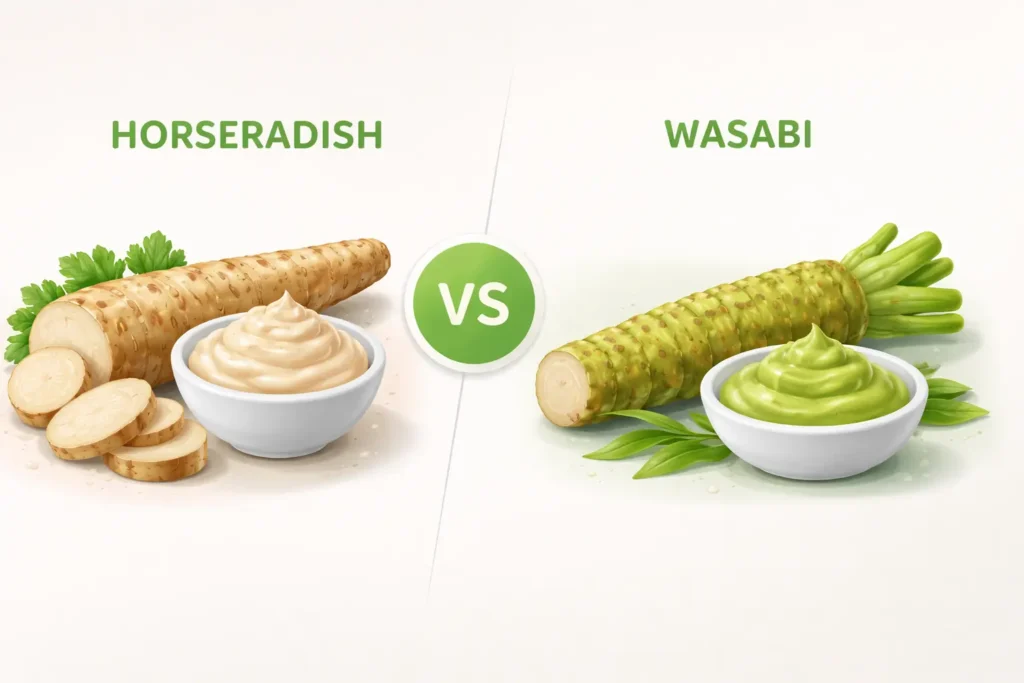
Horseradish and wasabi are both spicy condiments known for their sharp heat, but they come from different plants and have distinct flavors. Horseradish delivers a strong, lingering burn, while wasabi offers a cleaner, more aromatic heat that fades quickly.
Spicy condiments are loved across the world, and two of the most popular are horseradish and wasabi. While they may seem similar at first, especially in their sharp and nose-tingling heat, they are quite different in origin, flavor, and usage. Many people assume that the green paste served with sushi is always wasabi, but in reality, it is often a blend of horseradish, mustard, and coloring.
This confusion makes it important to understand the real difference between horseradish and wasabi. Both belong to the same plant family and share a similar spicy effect, yet their taste, appearance, and culinary roles vary greatly. Knowing these differences can improve your cooking, enhance your dining experience, and help you make informed choices when buying or using these condiments.
In this article, we will explore horseradish vs wasabi in detail, including their definitions, taste profiles, health benefits, global usage, common mistakes, and practical examples. By the end, you will clearly understand how and when to use each one effectively.
Quick Answer and Overview
Horseradish and wasabi are both pungent condiments made from plant roots, but they differ in flavor, intensity, and authenticity.
- Horseradish is stronger, harsher, and lasts longer.
- Wasabi is smoother, fresher, and fades quickly.
- Real wasabi is rare and expensive, while horseradish is widely available.
| Feature | Horseradish | Wasabi |
|---|---|---|
| Origin | Europe | Japan |
| Plant Type | Root vegetable | Rhizome |
| Flavor | Sharp and strong | Fresh and mild |
| Heat Duration | Long-lasting | Short-lived |
| Common Use | Sauces, meats | Sushi, sashimi |
| Availability | Common | Rare and expensive |
Definition and Explanation
Horseradish
Horseradish is a root vegetable native to Europe. It belongs to the Brassicaceae family, which includes mustard, cabbage, and broccoli. The root is grated and used as a condiment, often mixed with vinegar to preserve its flavor and potency.
When cut or crushed, horseradish releases compounds that create a sharp, spicy sensation. This heat is strong and can last for several minutes. It is commonly used with meats such as roast beef and in sauces like cocktail sauce.
Wasabi
Wasabi comes from a plant native to Japan. It grows naturally in cool, running water environments, making it difficult to cultivate. The part used is the rhizome, which is grated into a paste.
Real wasabi has a bright green color and a fresh, slightly sweet taste. Its heat is quick and intense but fades rapidly. Due to its rarity and high cost, most wasabi served outside Japan is actually a mixture of horseradish, mustard, and green coloring.
Taste and Sensory Experience
The difference in taste between horseradish and wasabi is one of the most important factors.
- Horseradish has a strong, sharp, and sometimes bitter flavor. It creates a burning sensation that lingers.
- Wasabi has a cleaner, fresher taste with slight sweetness. Its heat rises quickly and disappears just as fast.
Both affect the sinuses more than the tongue, unlike chili peppers that create a burning sensation on the tongue.
Advantages and Disadvantages
Horseradish Advantages
- Widely available and affordable
- Strong flavor suitable for bold dishes
- Long shelf life when preserved
Horseradish Disadvantages
- Can overpower delicate foods
- Heat may feel harsh for some people
- Less refined taste compared to wasabi
Wasabi Advantages
- Fresh and balanced flavor
- Enhances delicate foods like sushi
- Short heat duration makes it pleasant
Wasabi Disadvantages
- Expensive and hard to find
- Short shelf life when fresh
- Often replaced with imitation products
Real World Examples
- Sushi Restaurants: Most serve imitation wasabi made from horseradish due to cost.
- Steakhouses: Horseradish sauce is commonly served with roast beef.
- Japanese Cuisine: Real wasabi is used with sashimi for its clean flavor.
- Home Cooking: Horseradish is more common due to availability and price.
A survey of global restaurants shows that over 90 percent of wasabi served outside Japan is not real wasabi.
Regional and Global Usage
Japan
Wasabi is an essential part of traditional cuisine. It is freshly grated and served with sushi and sashimi. Authentic wasabi enhances flavor without overpowering the dish.
Europe
Horseradish is widely used in countries like Germany, Poland, and the United Kingdom. It is often served with meats and incorporated into sauces.
North America
Horseradish is popular in sauces and condiments. Imitation wasabi is widely used in sushi restaurants.
Asia Outside Japan
Both horseradish-based wasabi and real wasabi are used. However, imitation products dominate due to cost.
Global Trend
There is growing awareness about authentic wasabi. High-end restaurants now emphasize using real wasabi for better flavor and quality.
Common Mistakes
- Assuming all green paste is real wasabi
- Using too much horseradish, overpowering dishes
- Storing wasabi improperly, causing loss of flavor
- Not understanding heat differences
- Mixing them without adjusting quantities
Correct use involves understanding their strength and applying them appropriately to enhance flavor rather than dominate it.
Exercises with Answers
Exercise 1: Identify whether the condiment is horseradish or wasabi.
- Strong, long-lasting heat
- Fresh, quick fading heat
- Commonly used with roast beef
- Traditionally served with sushi
Answers:
- Horseradish
- Wasabi
- Horseradish
- Wasabi
Exercise 2: Match the feature to the correct condiment.
| Feature | Horseradish | Wasabi |
|---|---|---|
| Expensive and rare | No | Yes |
| Long-lasting heat | Yes | No |
| Mild and fresh flavor | No | Yes |
| Common in Western cuisine | Yes | No |
Related Concepts and Comparisons
Horseradish vs Wasabi vs Mustard
| Feature | Horseradish | Wasabi | Mustard |
|---|---|---|---|
| Heat Type | Sharp | Clean | Tangy |
| Usage | Meats | Sushi | Sandwiches |
| Origin | Europe | Japan | Global |
Heat Mechanism
Both horseradish and wasabi release compounds that stimulate the sinuses. This is different from chili peppers, which contain capsaicin and affect the tongue.
Health Benefits
Both horseradish and wasabi offer health benefits:
- Rich in antioxidants
- Support digestion
- Have antibacterial properties
- May help clear sinuses
Wasabi also contains compounds that may reduce inflammation, while horseradish is known for boosting immunity.
Prevention and Proper Usage Tips
- Use small amounts to avoid overpowering dishes
- Store properly in airtight containers
- Choose real wasabi when possible for authentic taste
- Pair horseradish with strong meats and wasabi with delicate foods
- Check ingredient labels to identify real vs imitation products
FAQs
What is the main difference between horseradish and wasabi?
Horseradish has a strong, lasting heat, while wasabi offers a fresh, short-lived heat.
Is wasabi just horseradish?
No, real wasabi comes from a different plant, but many products use horseradish as a substitute.
Why is real wasabi expensive?
It is difficult to grow and requires specific conditions, making it rare.
Can I substitute horseradish for wasabi?
Yes, but the flavor will be stronger and less refined.
Which is healthier, horseradish or wasabi?
Both offer health benefits, including antioxidants and antibacterial properties.
Why does wasabi burn the nose?
It releases compounds that stimulate nasal passages rather than the tongue.
Is all sushi wasabi real?
No, most sushi restaurants use imitation wasabi made from horseradish.
How long does wasabi last after preparation?
Fresh wasabi loses flavor quickly and should be used immediately.
Can children consume horseradish or wasabi?
In small amounts, yes, but the strong heat may be uncomfortable.
Does cooking reduce their heat?
Yes, heat reduces the intensity of both horseradish and wasabi.
Conclusion
Horseradish and wasabi may seem similar, but they are distinct in origin, flavor, and usage. Horseradish is bold, strong, and long-lasting, making it ideal for hearty dishes. Wasabi is fresh, delicate and short-lived, perfect for enhancing subtle flavors like sushi.
Understanding these differences allows you to choose the right condiment for each dish. While horseradish is more accessible and affordable, real wasabi offers a unique and refined experience worth trying when available. Proper usage, storage and awareness of authenticity can greatly improve your culinary experience.
By recognizing their characteristics and applications, you can use horseradish and wasabi effectively, enhancing both taste and presentation in your meals.
Discover More Related Articles:
- Highlight vs Balayage: Complete Hair Coloring Comparison Guide in 2026
- SureSmile vs Invisalign: Which Is More Affordable and Effective in 2026
- Tracking vs Kerning: Understanding Letter Spacing in Typography in 2026

David Thompson is the grammar expert behind TalkNexs.com. He believes that learning English grammar doesn’t have to be boring or complicated. Through practical examples and easy explanations, David helps readers understand confusing grammar rules and use them correctly in daily communication. His goal is to make grammar simple, clear and enjoyable for everyone.