Definition
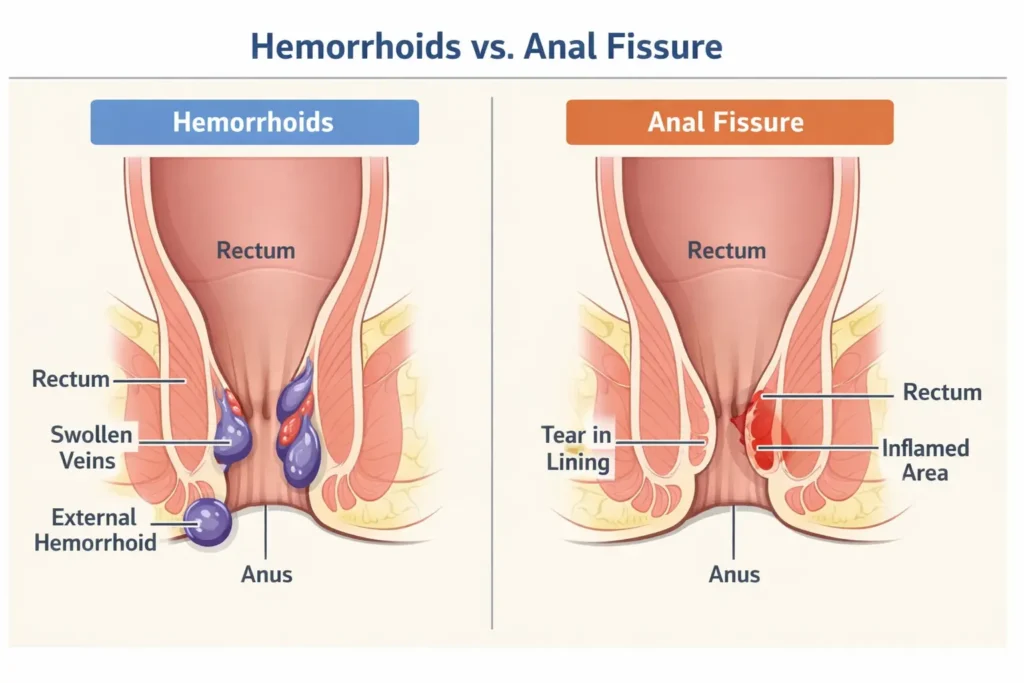
Hemorrhoids and fissures are common anal conditions that cause pain, discomfort, and bleeding during bowel movements. Hemorrhoids occur when veins in the rectum or anus become swollen, while anal fissures are small tears in the lining of the anus. Understanding the difference between hemorrhoids and fissures helps people choose the right treatment and avoid complications.
Pain or bleeding during bowel movements can be frightening and uncomfortable. Two common causes of these symptoms are hemorrhoids and anal fissures. Many people confuse these conditions because they affect the same area of the body and share similar symptoms. However, they are very different in terms of causes, appearance and treatment.
Hemorrhoids are swollen veins located in the rectum or around the anus. They can develop internally or externally and may cause itching, pain, or bleeding. Anal fissures, on the other hand, are small cuts or tears in the delicate skin of the anus. These tears can cause sharp pain and discomfort, especially during bowel movements.
Knowing the difference between hemorrhoids and fissures is important for proper treatment and prevention. Misidentifying the condition can lead to ineffective remedies and prolonged discomfort. In this article, we will explore the causes, symptoms, treatments, prevention methods and real world examples of hemorrhoids vs fissure. By the end, readers will have a clear understanding of how these conditions differ and how they can be managed effectively.
Quick Overview
Hemorrhoids and anal fissures both affect the anal region but have different causes and symptoms.
| Feature | Hemorrhoids | Anal Fissure |
|---|---|---|
| Condition Type | Swollen veins in the rectum or anus | Small tear in the anal lining |
| Main Cause | Increased pressure on rectal veins | Hard stools or trauma during bowel movement |
| Pain Level | Mild to moderate | Often sharp and severe |
| Bleeding | Usually painless bright red blood | Bright red blood with pain |
| Common Age Group | Adults over 30 | Can occur at any age |
| Healing Time | Weeks with treatment | Days to weeks depending on severity |
Definition and Explanation
What Are Hemorrhoids
Hemorrhoids are swollen and inflamed veins located in the lower rectum or around the anus. They develop when pressure builds up in the veins, causing them to enlarge and become irritated.
There are two main types of hemorrhoids.
Internal hemorrhoids develop inside the rectum. They are usually painless but may cause bleeding.
External hemorrhoids develop under the skin around the anus. They can be painful, itchy, and swollen.
Hemorrhoids are extremely common. Studies estimate that nearly 50 percent of adults experience hemorrhoids by the age of 50.
What Is an Anal Fissure
An anal fissure is a small tear in the thin lining of the anus. It often occurs when a person passes large or hard stools. The tear can cause intense pain and bleeding during bowel movements.
Unlike hemorrhoids, fissures involve damaged skin tissue rather than swollen veins.
Anal fissures are common in infants, young adults, and individuals who frequently suffer from constipation.
Causes and Risk Factors
Causes of Hemorrhoids
Several factors increase pressure in the rectal veins and contribute to hemorrhoid development.
Common causes include
Constipation and straining during bowel movements
Sitting for long periods on the toilet
Pregnancy and childbirth
Obesity
Chronic diarrhea
Low fiber diet
When pressure continues over time, the veins enlarge and form hemorrhoids.
Causes of Anal Fissures
Anal fissures typically occur when the anal canal stretches too far.
Common causes include
Passing large or hard stools
Chronic constipation
Frequent diarrhea
Anal injury or trauma
Inflammatory bowel disease
When the skin tears, it creates a fissure that may cause severe pain.
Symptoms Comparison
Although hemorrhoids and fissures share some symptoms, there are noticeable differences.
| Symptom | Hemorrhoids | Anal Fissure |
|---|---|---|
| Pain | Mild to moderate | Severe sharp pain |
| Bleeding | Painless bleeding | Painful bleeding |
| Itching | Common | Less common |
| Visible Lump | Possible external swelling | Usually no lump |
| Burning Sensation | Sometimes | Often present |
A key indicator is pain level. Anal fissures often cause intense pain during and after bowel movements, while hemorrhoids usually cause mild discomfort.
Advantages and Disadvantages of Early Detection
Advantages of Early Diagnosis
Early diagnosis of hemorrhoids or fissures offers several benefits.
Faster healing
Reduced pain and discomfort
Lower risk of complications
Less need for surgical treatment
Disadvantages of Ignoring Symptoms
Ignoring symptoms can lead to serious problems.
Chronic pain
Infection
Worsening bleeding
Possible surgical intervention
Seeking medical advice early greatly improves recovery.
Real World Examples
Understanding real life situations helps clarify the difference between hemorrhoids and fissures.
Example 1
A person experiences painless bleeding after bowel movements but no severe pain. This is often a sign of internal hemorrhoids.
Example 2
Another individual feels sharp pain during bowel movements followed by small amounts of blood. This pattern commonly indicates an anal fissure.
Example 3
A pregnant woman develops itching and swelling around the anus due to increased pressure on veins. This is typically hemorrhoids.
Example 4
A person with chronic constipation experiences sudden tearing pain when passing stool. This may indicate a fissure.
Regional and Global Prevalence
Hemorrhoids and anal fissures occur worldwide, but their prevalence varies depending on diet, lifestyle, and healthcare access.
North America and Europe
In developed countries, hemorrhoids are extremely common due to sedentary lifestyles and low fiber diets. Office work and prolonged sitting increase pressure on rectal veins. Many individuals rely on over the counter medications and medical procedures for treatment.
Asia
In many Asian countries, diets rich in vegetables and fiber reduce the risk of constipation. However, spicy foods and irregular eating patterns may contribute to digestive issues that lead to fissures.
Middle East
High temperatures and dehydration can lead to constipation, increasing the risk of fissures and hemorrhoids. Increasing water intake and fiber consumption is commonly recommended.
Africa and Developing Regions
Limited access to healthcare sometimes delays diagnosis and treatment. Traditional remedies and dietary adjustments are often used for symptom relief.
Globally, improved awareness of digestive health and fiber intake has helped reduce the severity of these conditions.
Common Mistakes People Make
Many individuals misunderstand hemorrhoids and fissures, which leads to ineffective treatment.
Mistake one
Assuming all anal pain is caused by hemorrhoids.
Mistake two
Ignoring bleeding because it seems minor.
Mistake three
Using harsh remedies or excessive wiping, which worsens irritation.
Mistake four
Avoiding medical consultation out of embarrassment.
Correct diagnosis and proper care are essential for healing.
Exercises with Answers
These exercises help reinforce the key differences.
Exercise 1
Identify whether the condition is hemorrhoids or fissure.
- Swollen veins around the anus
- Small tear in the anal lining
- Painful bowel movement with sharp pain
- Painless bleeding after stool
Answers
1 Hemorrhoids
2 Anal fissure
3 Anal fissure
4 Hemorrhoids
Exercise 2
Match the symptom with the condition.
| Symptom | Hemorrhoids | Fissure |
|---|---|---|
| Swelling | Yes | No |
| Tear in skin | No | Yes |
| Severe pain | Rare | Common |
| Itching | Common | Rare |
Related Medical Conditions
Understanding related conditions helps clarify the differences.
Hemorrhoids vs Fissure vs Fistula
| Condition | Description |
|---|---|
| Hemorrhoids | Swollen veins in rectum |
| Anal Fissure | Tear in anal lining |
| Anal Fistula | Abnormal tunnel between anus and skin |
Hemorrhoids vs Rectal Prolapse
Rectal prolapse occurs when part of the rectum slips out of the anus. It is more serious and requires medical treatment.
Prevention Strategies
Many cases of hemorrhoids and fissures can be prevented with lifestyle changes.
Increase fiber intake through fruits, vegetables, and whole grains
Drink plenty of water daily
Exercise regularly to improve digestion
Avoid prolonged sitting on the toilet
Respond quickly to the urge to have a bowel movement
Studies show that individuals consuming 25 to 30 grams of fiber per day experience significantly lower rates of constipation and related conditions.
FAQs
What is the main difference between hemorrhoids and fissure?
Hemorrhoids are swollen veins in the rectum or anus, while fissures are small tears in the anal lining.
Which condition is more painful?
Anal fissures usually cause sharper and more intense pain compared to hemorrhoids.
Can hemorrhoids turn into fissures?
No. They are different conditions, although both can occur in the same person.
Do hemorrhoids and fissures cause bleeding?
Yes. Both may cause bright red bleeding during bowel movements.
How long does an anal fissure take to heal?
Most acute fissures heal within a few weeks with proper treatment and diet changes.
Are hemorrhoids dangerous?
Most hemorrhoids are not dangerous but can cause discomfort if untreated.
Can diet prevent hemorrhoids and fissures?
Yes. High fiber diets and proper hydration help prevent constipation and reduce risk.
When should someone see a doctor?
If bleeding persists, pain becomes severe, or symptoms do not improve after a few weeks.
Can both conditions occur at the same time?
Yes. A person may develop hemorrhoids and fissures simultaneously.
Do these conditions require surgery?
Most cases heal with lifestyle changes and medication. Surgery is only required in severe cases.
Conclusion
Hemorrhoids and anal fissures are common conditions that affect the anal region but arise from different causes. Hemorrhoids occur when veins in the rectum become swollen, while fissures are small tears in the anal lining. Although both conditions may cause bleeding and discomfort, fissures typically cause sharper pain during bowel movements.
Understanding the difference between hemorrhoids and fissures helps individuals choose the correct treatment and avoid complications. Simple lifestyle changes such as increasing fiber intake, drinking adequate water, and maintaining healthy bowel habits can significantly reduce the risk of these conditions.
Early diagnosis and proper care are essential for quick recovery. Individuals experiencing persistent symptoms should consult a healthcare professional for proper evaluation and treatment. With the right knowledge and preventive strategies, most cases of hemorrhoids and fissures can be managed effectively.
Discover More Related Articles:
- Titanium vs Tungsten: Which Metal Is Best for Jewelry and Rings? in 2026
- Alternately vs Alternatively: Which One Should You Use in Writing in 2026
- Moles vs Freckles: What Your Skin Is Really Saying in 2026

Christopher Hayes is a passionate language enthusiast and the lead content creator at TalkNexs.com, a platform dedicated to helping readers master the art of grammar, writing and effective communication. With years of experience in writing, editing and teaching language, Christopher’s mission is to make grammar simple, practical and engaging for everyone.