
Definition
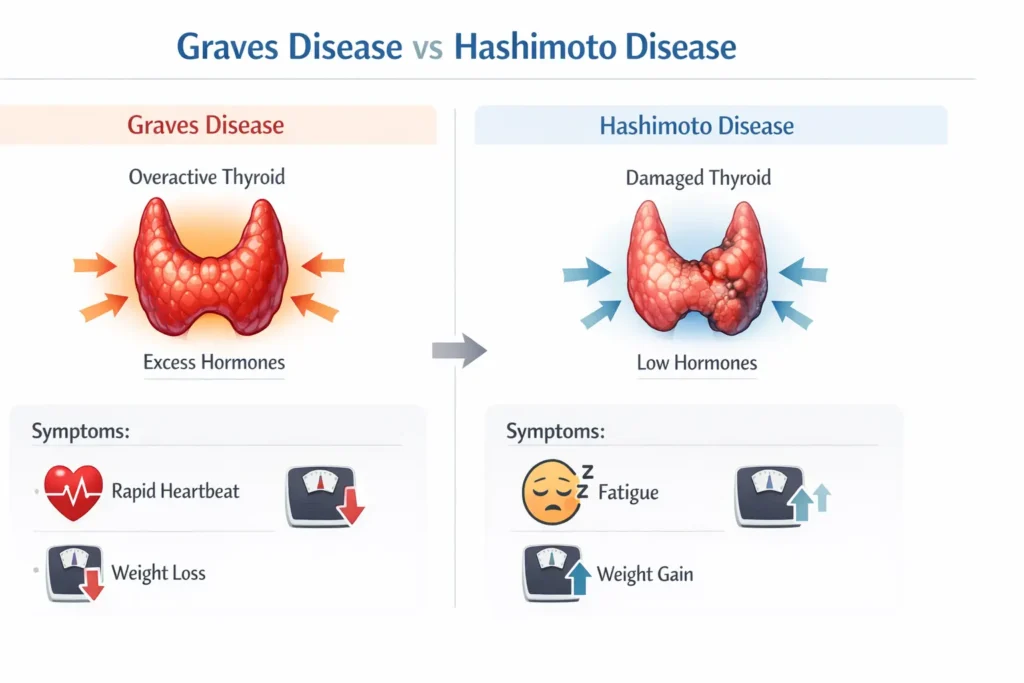
Graves disease and Hashimoto thyroiditis are two common autoimmune thyroid disorders. Graves disease causes the thyroid to produce too much hormone, leading to hyperthyroidism, while Hashimoto disease damages the thyroid and usually results in hypothyroidism. Understanding the difference helps with proper diagnosis, treatment, and long term health management.
The thyroid is a small butterfly shaped gland located in the neck. Despite its small size, it plays a major role in controlling the body’s metabolism, energy levels, heart rate and temperature. When the thyroid does not function properly, it can lead to serious health issues.
Two of the most common thyroid disorders are Graves disease and Hashimoto thyroiditis. Both conditions are autoimmune diseases. This means the immune system mistakenly attacks the thyroid gland. However, the way these diseases affect the thyroid is very different.
Graves disease causes the thyroid gland to become overactive and produce too much thyroid hormone. This leads to a condition called hyperthyroidism. Hashimoto disease, on the other hand, slowly damages the thyroid gland and often causes hypothyroidism, a condition where the body does not produce enough thyroid hormone.
Because both disorders affect the same gland but in opposite ways, people often confuse them. Understanding the differences between Graves vs Hashimoto is essential for proper diagnosis, treatment, and long term health management. This guide explains their causes, symptoms, treatments, and prevention strategies in simple and clear terms.
Quick Overview
Graves disease and Hashimoto disease are both autoimmune thyroid disorders, but they affect thyroid hormone production differently.
| Feature | Graves Disease | Hashimoto Disease |
|---|---|---|
| Type of Condition | Autoimmune | Autoimmune |
| Thyroid Activity | Overactive thyroid | Underactive thyroid |
| Hormone Production | Too much thyroid hormone | Too little thyroid hormone |
| Common Result | Hyperthyroidism | Hypothyroidism |
| Immune System Action | Stimulates thyroid | Attacks and damages thyroid |
| Common Symptoms | Weight loss, anxiety, fast heartbeat | Fatigue, weight gain, cold sensitivity |
Both diseases require medical evaluation and long term management to maintain healthy hormone levels.
Definition and Explanation
Graves Disease
Graves disease is an autoimmune disorder that causes the thyroid gland to become overactive. The immune system produces antibodies called thyroid stimulating immunoglobulins. These antibodies stimulate the thyroid gland to produce excessive thyroid hormones.
This excessive hormone production leads to hyperthyroidism, which speeds up the body’s metabolism. As a result, many body systems begin to work faster than normal.
Graves disease is one of the most common causes of hyperthyroidism worldwide. It affects women more often than men and usually appears between the ages of 20 and 40.
Hashimoto Disease
Hashimoto thyroiditis is another autoimmune disorder that affects the thyroid gland. Instead of stimulating the thyroid, the immune system attacks and damages thyroid tissue.
Over time, this damage reduces the gland’s ability to produce thyroid hormones. This leads to hypothyroidism, where the body slows down due to a lack of hormones.
Hashimoto disease is the most common cause of hypothyroidism in many countries. It can develop gradually and may take years before symptoms become noticeable.
Causes and Risk Factors
Both Graves disease and Hashimoto disease occur when the immune system mistakenly targets the thyroid gland. However, several factors increase the risk of developing these conditions.
Genetic Factors
Family history plays an important role. People with relatives who have thyroid disease or autoimmune conditions are more likely to develop these disorders.
Hormonal Influences
Women are much more likely to develop autoimmune thyroid disorders. Hormonal changes during pregnancy, menopause, or puberty may contribute to this risk.
Environmental Factors
Certain environmental triggers may increase the likelihood of thyroid autoimmunity. These include
- Stress
- Viral infections
- Smoking
- Excess iodine intake
- Radiation exposure
Immune System Imbalance
An overactive immune response can cause antibodies to attack or stimulate thyroid cells, leading to Graves disease or Hashimoto disease.
Research shows that autoimmune thyroid disorders affect millions of people worldwide, with women accounting for nearly 80 percent of cases.
Symptoms Comparison
Because Graves disease and Hashimoto disease affect thyroid hormone levels differently, their symptoms also differ.
Symptoms of Graves Disease
Graves disease increases metabolism and body activity.
Common symptoms include
- Rapid heartbeat
- Weight loss despite normal eating
- Anxiety and nervousness
- Sweating
- Heat intolerance
- Tremors in hands
- Enlarged thyroid gland
- Bulging eyes in some cases
Symptoms of Hashimoto Disease
Hashimoto disease slows metabolism.
Common symptoms include
- Fatigue and weakness
- Weight gain
- Cold sensitivity
- Dry skin
- Hair thinning
- Depression
- Slow heart rate
- Memory problems
- Puffy face
Because symptoms develop gradually, Hashimoto disease can go unnoticed for years.
Diagnosis
Doctors use several tests to diagnose thyroid disorders.
Blood Tests
Blood tests measure hormone levels including
- Thyroid stimulating hormone (TSH)
- Thyroxine (T4)
- Triiodothyronine (T3)
In Graves disease, TSH levels are low while T3 and T4 are high. In Hashimoto disease, TSH levels are usually high and thyroid hormones are low.
Antibody Tests
Specific antibodies help identify autoimmune thyroid disease.
- TSI antibodies are common in Graves disease.
- TPO antibodies are commonly found in Hashimoto disease.
Imaging Tests
Doctors may also use ultrasound scans or radioactive iodine uptake tests to examine thyroid activity.
Advantages and Challenges of Each Condition
Graves Disease
Advantages
- Often detected earlier because symptoms appear quickly
- Several effective treatment options are available
Challenges
- Symptoms can affect heart health and eye health
- Requires long term management
- Risk of relapse after treatment
Hashimoto Disease
Advantages
- Easily managed with thyroid hormone replacement
- Treatment is generally simple once diagnosed
Challenges
- Symptoms develop slowly and may go unnoticed
- Lifelong medication is often required
- May cause complications if untreated
Real World Examples
Example 1
A 30 year old woman experiences rapid weight loss, anxiety, and heart palpitations. Blood tests show high thyroid hormone levels. She is diagnosed with Graves disease and begins treatment with medication to reduce thyroid activity.
Example 2
A 45 year old man experiences fatigue, weight gain, and cold sensitivity. Blood tests show low thyroid hormone levels and high TSH levels. Doctors diagnose Hashimoto disease and prescribe thyroid hormone replacement therapy.
These examples show how the two disorders affect the body in opposite ways.
Regional and Global Usage
Thyroid disorders occur worldwide, but diagnosis and treatment approaches may vary across regions.
North America and Europe
In developed healthcare systems, thyroid disorders are usually diagnosed through routine blood testing. Endocrinologists often manage these conditions with medication, radioactive iodine therapy, or surgery.
Asia
Countries such as Japan and South Korea have advanced thyroid screening programs. Early detection helps manage Graves disease and Hashimoto disease more effectively.
Middle East
In some Middle Eastern countries, iodine intake and dietary habits influence thyroid health. Awareness campaigns are increasing understanding of thyroid disorders.
Africa and Developing Regions
Access to diagnostic testing may be limited in some areas. However, international health programs and telemedicine are improving detection and treatment of thyroid disorders.
Globally, improved awareness and medical research have significantly improved outcomes for people living with thyroid diseases.
Common Mistakes and Misunderstandings
Confusing the Two Disorders
Many people assume Graves disease and Hashimoto disease are the same condition. In reality, they affect the thyroid in opposite ways.
Ignoring Early Symptoms
Symptoms like fatigue or anxiety are often ignored or blamed on lifestyle factors.
Self Diagnosis
People sometimes rely on internet searches rather than medical testing. Proper diagnosis requires blood tests and professional evaluation.
Stopping Medication Early
Some patients stop treatment once symptoms improve. This can cause hormone levels to become unstable again.
Exercises with Answers
Exercise 1
Identify whether the condition describes Graves disease or Hashimoto disease.
1 Rapid metabolism and weight loss
2 Underactive thyroid gland
3 Autoimmune attack causing hypothyroidism
4 Excess thyroid hormone production
Answers
1 Graves disease
2 Hashimoto disease
3 Hashimoto disease
4 Graves disease
Exercise 2
Match the symptom to the correct condition.
| Symptom | Graves | Hashimoto |
|---|---|---|
| Rapid heartbeat | Yes | No |
| Weight gain | No | Yes |
| Heat intolerance | Yes | No |
| Fatigue | No | Yes |
Related Concepts and Comparisons
| Feature | Graves Disease | Hashimoto Disease | Goiter |
|---|---|---|---|
| Cause | Autoimmune stimulation | Autoimmune destruction | Thyroid enlargement |
| Hormone Level | High | Low | Variable |
| Main Condition | Hyperthyroidism | Hypothyroidism | Structural change |
Another related condition is thyroid nodules, which are lumps that may develop in the thyroid gland.
Treatment Options
Graves Disease Treatment
Treatment aims to reduce thyroid hormone production.
Common treatments include
- Anti thyroid medications
- Radioactive iodine therapy
- Beta blockers to control symptoms
- Surgery to remove part of the thyroid gland
Hashimoto Disease Treatment
Treatment focuses on replacing missing thyroid hormones.
The most common treatment is
- Levothyroxine hormone replacement therapy
Regular blood tests ensure hormone levels remain balanced.
Prevention and Lifestyle Support
Although autoimmune thyroid disorders cannot always be prevented, healthy habits can support thyroid health.
Helpful lifestyle practices include
- Balanced nutrition
- Adequate iodine intake
- Stress management
- Regular exercise
- Routine medical checkups
- Avoiding smoking
Early diagnosis and treatment greatly improve quality of life.
FAQs
What is the main difference between Graves vs Hashimoto?
Graves disease causes an overactive thyroid and excess hormone production, while Hashimoto disease damages the thyroid and leads to reduced hormone production.
Can a person have both Graves and Hashimoto?
In rare cases, individuals may develop features of both conditions because both involve autoimmune activity affecting the thyroid.
Which condition is more common?
Hashimoto disease is generally more common and is the leading cause of hypothyroidism in many countries.
Is Graves disease life threatening?
Graves disease is usually manageable with treatment, but untreated hyperthyroidism can cause serious complications such as heart problems.
Is Hashimoto disease curable?
Hashimoto disease cannot be cured, but hormone replacement therapy effectively manages symptoms.
Do these diseases affect women more than men?
Yes. Women are significantly more likely to develop autoimmune thyroid disorders.
Can diet help thyroid disorders?
A healthy diet supports overall health, but medical treatment is usually necessary to control thyroid hormone levels.
How are these diseases diagnosed?
Doctors use blood tests to measure thyroid hormones and detect specific antibodies.
Can stress trigger thyroid disease?
Stress may contribute to immune system imbalance, which can increase the risk of autoimmune thyroid conditions.
Do thyroid disorders require lifelong treatment?
Most patients need long term monitoring and medication to maintain stable hormone levels.
Conclusion
Graves disease and Hashimoto disease are two important autoimmune thyroid disorders that affect millions of people worldwide. Although they involve the same gland, they produce opposite effects on the body.
Graves disease stimulates the thyroid gland and leads to hyperthyroidism, which speeds up metabolism and body processes. Hashimoto disease gradually damages the thyroid and results in hypothyroidism, slowing down many bodily functions.
Early diagnosis is essential for both conditions. Blood tests, medical evaluation and proper treatment allow individuals to manage symptoms and maintain a healthy lifestyle.
With the right treatment, regular monitoring, and healthy habits, most people with thyroid disorders can live full and active lives. Understanding the difference between Graves vs Hashimoto helps patients make informed decisions and seek appropriate medical care.
Discover More Related Articles:
- Coniferous vs Deciduous: The Big Tree Difference in 2026
- PDA vs ODD: Why These Two Conditions Are Often Confused in 2026
- Moonstone vs Opal: Which Gemstone Is More Valuable and Why in 2026

Jonathan Reed is a dedicated grammar expert and language researcher at TalkNexs.com. With a strong passion for English structure, clarity and effective communication, he has spent years helping students, writers and professionals improve their grammar skills in simple and practical ways.