
Definition
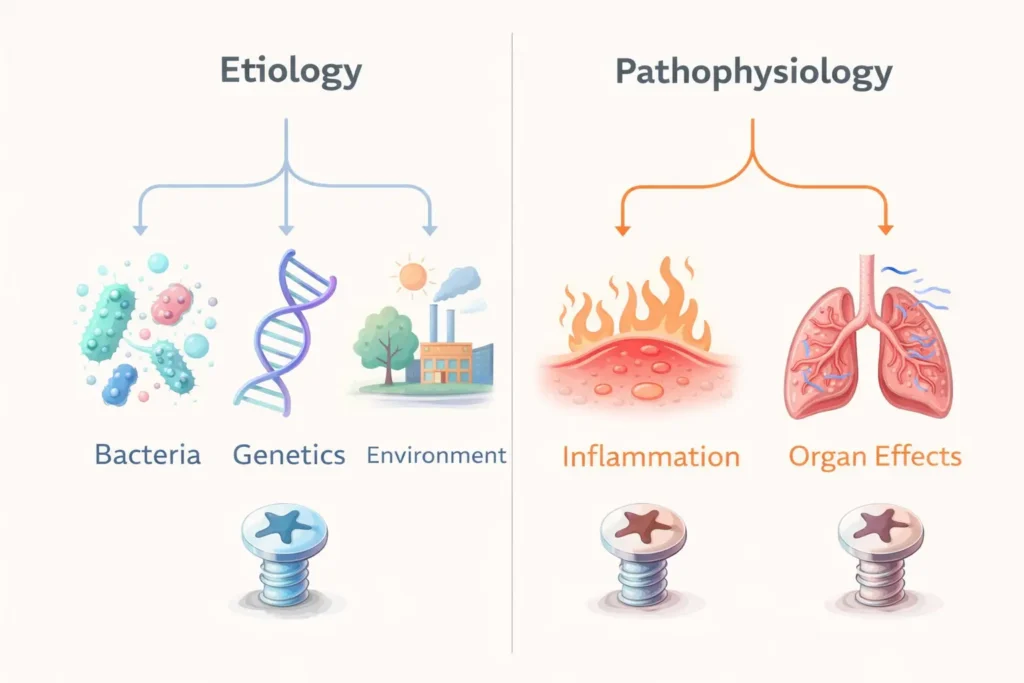
Etiology and pathophysiology are key medical concepts used to understand diseases. Etiology explains the cause or origin of a disease, while pathophysiology describes how the disease develops and affects the body. Knowing both helps in accurate diagnosis, treatment, and prevention.
In medicine and healthcare, understanding diseases requires more than just knowing symptoms. Doctors and healthcare professionals must identify what causes a disease and how it affects the body. This is where the concepts of etiology and pathophysiology become important.
Many people, including students and beginners, often confuse these two terms. They may think both mean the same thing. However, they serve different but connected roles in medical science. Etiology focuses on the cause of a disease, while pathophysiology explains the process and changes that occur inside the body due to that disease.
Understanding the difference between etiology and pathophysiology helps in better learning, accurate diagnosis, and effective treatment planning. You are a student, healthcare worker, or simply curious about health, this guide will help you clearly understand both concepts with simple explanations, real-life examples, and practical exercises.
Quick Answer and Overview
Etiology and pathophysiology are closely related but distinct concepts in medicine.
- Etiology refers to the cause or origin of a disease.
- Pathophysiology explains how the disease develops and what changes it causes in the body.
| Feature | Etiology | Pathophysiology |
|---|---|---|
| Meaning | Cause of disease | Mechanism of disease |
| Focus | Why disease occurs | How disease progresses |
| Example | Bacteria causing infection | Inflammation and tissue damage |
| Use | Prevention and risk factors | Treatment and management |
Definition and Explanation
Etiology
Etiology is the study of causes or origins of diseases. It answers the question: Why did this disease occur?
The causes can be:
- Biological agents such as bacteria, viruses, and fungi
- Genetic factors
- Environmental exposure
- Lifestyle habits like smoking or poor diet
- Physical injury or trauma
For example, the etiology of tuberculosis is infection by Mycobacterium tuberculosis bacteria.
Understanding etiology helps in identifying risk factors and preventing diseases before they develop.
Pathophysiology
Pathophysiology explains the functional changes that occur in the body due to a disease. It answers the question: How does the disease affect the body?
It involves:
- Cellular changes
- Tissue damage
- Organ dysfunction
- Body responses such as inflammation or immune reactions
For example, in tuberculosis, pathophysiology includes lung inflammation, tissue destruction, and formation of lesions that affect breathing.
Pathophysiology helps doctors understand symptoms and choose the right treatment.
Causes and Contributing Factors
Etiological Factors
Etiology can be divided into several categories:
- Infectious Causes
Bacteria, viruses, fungi, and parasites - Genetic Causes
Inherited disorders such as sickle cell disease - Environmental Causes
Pollution, toxins, radiation - Lifestyle Causes
Smoking, alcohol use, unhealthy diet - Idiopathic Causes
Unknown origin
Pathophysiological Processes
Pathophysiology includes different processes such as:
- Inflammation
- Immune system activation
- Cellular injury
- Hormonal imbalance
- Organ failure
According to global health data, non-communicable diseases like diabetes and heart disease are largely influenced by lifestyle-related etiology, while their complications are explained through pathophysiology.
Advantages and Disadvantages
Etiology Advantages
- Helps in disease prevention
- Identifies risk factors
- Supports public health planning
- Enables early diagnosis
Etiology Disadvantages
- Sometimes causes are unknown
- Multiple causes may complicate understanding
- Requires extensive research
Pathophysiology Advantages
- Explains symptoms clearly
- Helps in choosing correct treatment
- Improves patient management
- Guides clinical decisions
Pathophysiology Disadvantages
- Can be complex to understand
- Requires detailed medical knowledge
- May vary between individuals
Real-World Examples
1 Example: Diabetes
- Etiology: Poor diet, obesity, genetic factors
- Pathophysiology: Insulin resistance and high blood sugar levels
2 Example: Asthma
- Etiology: Allergens, pollution, genetics
- Pathophysiology: Airway inflammation and narrowing
3 Example: Heart Disease
- Etiology: Smoking, high cholesterol, lack of exercise
- Pathophysiology: Blocked arteries and reduced blood flow
4 Example: COVID-19
- Etiology: Viral infection
- Pathophysiology: Lung inflammation, immune response, breathing difficulty
These examples show how etiology explains the cause, while pathophysiology explains the effects on the body.
Regional and Global Usage
Etiology and pathophysiology are studied and applied worldwide, but approaches may vary based on healthcare systems, resources, and disease patterns.
North America and Europe
Advanced diagnostic tools are used to identify both causes and mechanisms of diseases. Research focuses on genetic and molecular etiology, along with detailed pathophysiological studies.
Asia
Focus is placed on both modern medicine and traditional practices. Preventive healthcare is emphasized, especially in identifying etiological factors such as diet and environment.
Africa
Infectious diseases play a major role. Etiology often focuses on infections, while pathophysiology helps manage complications due to limited resources.
Middle East
Lifestyle diseases such as diabetes are common. Etiology studies focus on diet and lifestyle, while pathophysiology guides treatment strategies.
Global Trends
- Increased use of technology in diagnosis
- Growing focus on preventive healthcare
- Integration of genetics and personalized medicine
- Expansion of telemedicine for better access
Understanding both etiology and pathophysiology globally improves disease management and healthcare outcomes.
Common Mistakes
| Mistake | Explanation | Correction |
|---|---|---|
| Confusing etiology with symptoms | Etiology is cause, not symptoms | Focus on origin |
| Ignoring pathophysiology | Leads to poor treatment | Study disease mechanisms |
| Using terms interchangeably | They are different concepts | Learn definitions clearly |
| Overlooking multiple causes | Many diseases have multiple etiologies | Consider all factors |
Exercises with Answers
Exercise 1: Identify the statement refers to etiology or pathophysiology.
- Bacterial infection causing disease
- Inflammation in lungs
- Genetic mutation leading to disorder
- Organ damage due to disease
Answers:
- Etiology
- Pathophysiology
- Etiology
- Pathophysiology
Exercise 2: Match the following
| Situation | Etiology | Pathophysiology |
|---|---|---|
| Smoking causes lung cancer | Yes | No |
| Tumor growth affecting organs | No | Yes |
| Virus causing flu | Yes | No |
| Fever due to immune response | No | Yes |
Related Concepts and Comparisons
Etiology vs Pathogenesis
- Etiology explains the cause
- Pathogenesis explains the development of disease
Etiology vs Diagnosis
- Etiology identifies cause
- Diagnosis identifies the disease itself
Pathophysiology vs Symptoms
- Pathophysiology explains internal changes
- Symptoms are external signs experienced by patients
| Concept | Focus |
|---|---|
| Etiology | Cause |
| Pathophysiology | Mechanism |
| Pathogenesis | Development |
| Diagnosis | Identification |
Prevention and Practical Application
- Identify risk factors early
- Maintain healthy lifestyle
- Use medical screening tests
- Follow treatment plans based on disease mechanisms
- Educate patients about causes and prevention
Healthcare professionals use both concepts together to improve patient care and outcomes.
FAQs
What is the difference between etiology and pathophysiology?
Etiology explains the cause of a disease, while pathophysiology explains how the disease affects the body.
Why is etiology important in medicine?
It helps identify causes and risk factors, allowing prevention and early treatment.
Why is pathophysiology important?
It helps understand symptoms and guides treatment decisions.
Can a disease have multiple etiologies?
Yes, many diseases have multiple causes such as genetic and environmental factors.
Is pathophysiology the same as symptoms?
No, it explains internal processes, while symptoms are visible or felt effects.
How do doctors use etiology and pathophysiology together?
They identify the cause and understand the mechanism to provide effective treatment.
What is an example of etiology and pathophysiology?
In flu, the virus is the etiology, while fever and inflammation are part of pathophysiology.
Can pathophysiology change between patients?
Yes, different individuals may respond differently to the same disease.
Is etiology always known?
No, some diseases have unknown causes and are called idiopathic.
How can students remember the difference?
Think of etiology as why and pathophysiology as how.
Conclusion
Etiology and pathophysiology are fundamental concepts in understanding diseases. Etiology focuses on the causes, such as infections, genetics, or lifestyle factors, while pathophysiology explains how these causes affect the body and lead to symptoms.
Both concepts work together to provide a complete understanding of diseases. Etiology helps in prevention and identifying risk factors, while pathophysiology guides treatment and management. Without understanding both, it is difficult to diagnose or treat diseases effectively.
For students and healthcare professionals, mastering these concepts is essential. For general readers, knowing the difference improves awareness and supports better health decisions. By combining knowledge of causes and mechanisms, individuals can take proactive steps toward prevention, early diagnosis, and effective treatment.
Discover More Related Articles:
- Obsidian vs Onyx: Which One Should You Choose and Why in 2026
- Pathfinder vs DnD: Which Tabletop RPG Should You Choose in 2026
- Breech vs Breach: Common Confusion and Correct Usage Guide in 2026

Christopher Hayes is a passionate language enthusiast and the lead content creator at TalkNexs.com, a platform dedicated to helping readers master the art of grammar, writing and effective communication. With years of experience in writing, editing and teaching language, Christopher’s mission is to make grammar simple, practical and engaging for everyone.