Definition
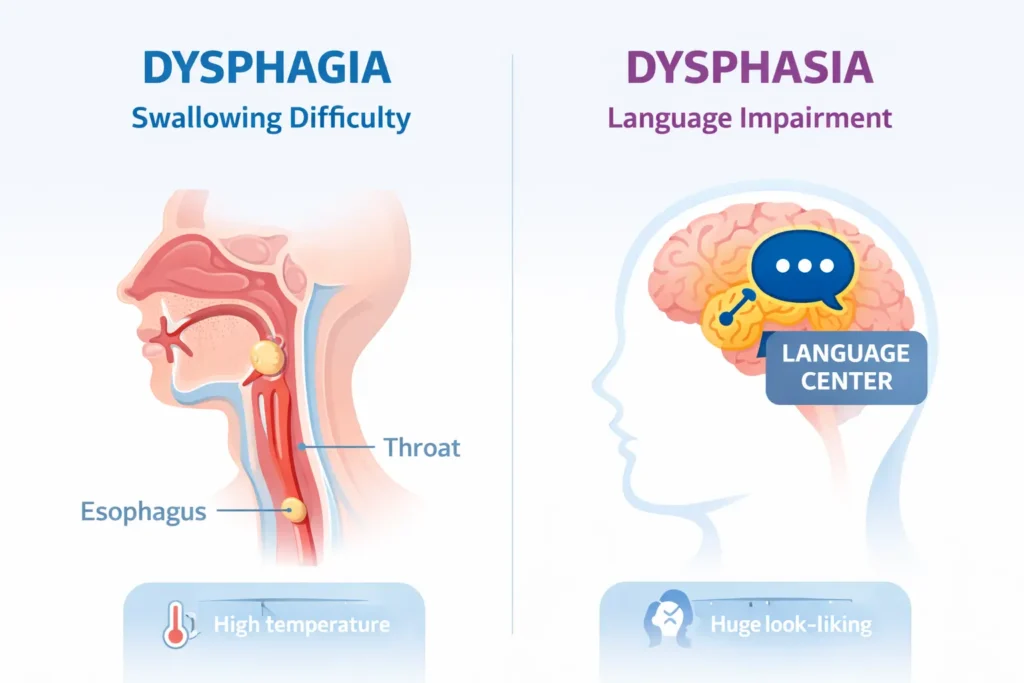
Dysphagia and dysphasia are medical conditions that affect different body functions but are often confused because of their similar names. Dysphagia refers to difficulty swallowing, while dysphasia is a language disorder that affects speaking, understanding, reading or writing.
Medical terms can sometimes sound very similar even though they describe completely different conditions. Dysphagia and dysphasia are perfect examples. Because their names look and sound alike, many people mistakenly believe they refer to the same health problem. In reality, they affect different systems of the body and require different types of treatment.
Dysphagia affects swallowing. People with this condition may have trouble moving food or liquid from the mouth to the stomach. This can make eating uncomfortable or even dangerous if food enters the airway.
Dysphasia, on the other hand, affects communication. It occurs when a person has difficulty understanding language or expressing thoughts through speech, writing, or reading. Dysphasia often happens after brain injuries such as stroke.
Understanding the difference between dysphagia and dysphasia is important for patients, caregivers, and healthcare professionals. Accurate identification allows doctors to provide the correct therapy and prevent complications. In this article, we will explore definitions, causes, symptoms, treatments, real world examples, global perspectives, and frequently asked questions related to dysphagia vs dysphasia.
Quick Overview
Dysphagia and dysphasia affect different systems of the body. Dysphagia affects swallowing, while dysphasia affects language and communication abilities.
| Feature | Dysphagia | Dysphasia |
|---|---|---|
| Meaning | Difficulty swallowing | Difficulty using or understanding language |
| Body System | Digestive and muscular system | Brain and nervous system |
| Common Cause | Neurological or muscular problems | Brain injury or stroke |
| Main Symptoms | Choking, coughing while eating | Trouble speaking or understanding speech |
| Treatment | Swallow therapy, diet modification | Speech and language therapy |
Both conditions may occur in patients with neurological disorders, but they require very different treatment strategies.
Definition and Explanation
Dysphagia
Dysphagia refers to difficulty swallowing food, liquids, or even saliva. The swallowing process normally involves many muscles and nerves working together. When any part of this process fails, swallowing becomes difficult or painful.
Swallowing happens in three stages.
- Oral stage where food is chewed and prepared for swallowing.
- Pharyngeal stage where food moves through the throat.
- Esophageal stage where food travels down the esophagus into the stomach.
If a problem occurs in any of these stages, dysphagia may develop.
People with dysphagia may feel as if food is stuck in their throat or chest. They may cough or choke during meals. Severe cases can lead to malnutrition or aspiration pneumonia, which occurs when food enters the lungs.
Dysphasia
Dysphasia is a language disorder caused by damage to parts of the brain responsible for communication. It affects a person’s ability to speak, understand speech, read, or write.
Dysphasia often occurs after a stroke, traumatic brain injury, or neurological condition. It may affect different aspects of communication depending on which part of the brain is damaged.
For example, some individuals understand language but struggle to speak clearly. Others may speak fluently but produce words that do not make sense.
Dysphasia can vary from mild communication problems to severe language impairment. Speech therapy and rehabilitation play a key role in recovery.
Causes of Dysphagia and Dysphasia
Causes of Dysphagia
Dysphagia may result from many medical conditions affecting the muscles, nerves, or structure involved in swallowing.
Common causes include
- Stroke
- Parkinson disease
- Multiple sclerosis
- Esophageal disorders
- Head and neck cancers
- Gastroesophageal reflux disease
- Aging related muscle weakness
Stroke is one of the most common causes. Studies show that nearly 50 percent of stroke patients experience temporary dysphagia during recovery.
Causes of Dysphasia
Dysphasia occurs when the brain’s language centers are damaged.
Common causes include
- Stroke
- Brain tumors
- Traumatic brain injury
- Neurodegenerative diseases
- Brain infections
- Epilepsy related brain damage
Stroke is again the most frequent cause. Research suggests that about one third of stroke survivors experience some degree of language impairment.
Symptoms Comparison
| Symptom | Dysphagia | Dysphasia |
|---|---|---|
| Difficulty swallowing | Yes | No |
| Trouble speaking clearly | No | Yes |
| Choking during meals | Yes | No |
| Difficulty understanding speech | No | Yes |
| Food stuck in throat | Yes | No |
| Problems forming sentences | No | Yes |
Recognizing these symptoms helps doctors determine which condition a patient is experiencing.
Types of Dysphagia
There are two main types of dysphagia.
Oropharyngeal Dysphagia
This occurs when muscles in the mouth or throat do not function properly. It often results from neurological disorders such as stroke or Parkinson disease.
Symptoms include coughing, choking, or nasal regurgitation while eating.
Esophageal Dysphagia
This type occurs when food cannot move smoothly through the esophagus.
Common causes include esophageal strictures, tumors, or motility disorders.
Patients often feel food getting stuck in the chest area.
Types of Dysphasia
Dysphasia is classified based on the communication ability affected.
Expressive Dysphasia
People understand language but struggle to speak or express thoughts.
Receptive Dysphasia
People have difficulty understanding spoken or written language.
Global Dysphasia
Both speaking and comprehension abilities are severely affected.
Each type requires different therapy approaches from speech language specialists.
Real World Examples
Example 1
An older people patient who had a stroke may cough every time they try to swallow water. Doctors diagnose dysphagia and recommend swallow therapy and a modified diet.
Example 2
A patient recovering from brain injury may struggle to form complete sentences even though they understand others. This condition is diagnosed as dysphasia.
Example 3
Some stroke patients may experience both dysphagia and dysphasia because the brain injury affects multiple functions.
These examples show why accurate diagnosis is essential.
Regional and Global Usage
The awareness and management of dysphagia and dysphasia vary around the world depending on healthcare systems, medical education, and access to specialists.
North America and Europe
In countries such as the United States, Canada, Germany, and the United Kingdom, hospitals have specialized speech language pathologists who evaluate both swallowing and language disorders. Early screening for dysphagia after stroke is common practice.
Rehabilitation programs often include swallow therapy, communication therapy, and assistive technology.
Asia
Countries like Japan, South Korea, and China emphasize rehabilitation medicine. Hospitals often use multidisciplinary teams consisting of neurologists, dietitians, and speech therapists.
Technology such as swallowing assessment imaging and digital speech therapy programs is increasingly used.
Middle East
Healthcare systems in the Middle East are rapidly expanding stroke rehabilitation services. Speech therapy and swallow therapy programs are becoming more available in major hospitals.
Africa and Developing Regions
Access to specialized therapy may be limited in some areas. However, awareness campaigns and telemedicine are helping improve diagnosis and treatment.
Global Trends
Worldwide, telehealth and digital therapy tools are improving access to care. Online speech therapy platforms and remote swallow assessments are becoming increasingly common.
Common Mistakes
Many people misunderstand the difference between dysphagia and dysphasia.
| Mistake | Explanation | Correction |
|---|---|---|
| Assuming both conditions are the same | They affect different systems | Dysphagia involves swallowing while dysphasia involves language |
| Ignoring swallowing problems | Can lead to choking or pneumonia | Seek medical evaluation immediately |
| Delaying speech therapy | Early treatment improves recovery | Start therapy as soon as possible |
| Self diagnosing | Symptoms may overlap with other conditions | Consult healthcare professionals |
Understanding these mistakes can prevent serious health complications.
Exercises With Answers
Exercise 1
Identify whether the condition described is dysphagia or dysphasia.
- A person coughs while drinking water.
- A patient struggles to understand spoken sentences.
- Food feels stuck in the throat.
- A patient cannot form clear sentences after a stroke.
Answers
1 Dysphagia
2 Dysphasia
3 Dysphagia
4 Dysphasia
Exercise 2
Match the symptom with the condition.
| Symptom | Condition |
|---|---|
| Difficulty swallowing | Dysphagia |
| Language comprehension problems | Dysphasia |
| Choking during meals | Dysphagia |
| Trouble speaking | Dysphasia |
Related Medical Concepts
Dysphagia vs Aphagia
Aphagia is a complete inability to swallow, which is more severe than dysphagia.
Dysphasia vs Aphasia
Aphasia is a more severe form of language impairment where communication ability is almost completely lost.
Dysphagia vs Odynophagia
Odynophagia refers specifically to painful swallowing, while dysphagia refers to difficulty swallowing.
Understanding these related terms helps clarify medical diagnoses.
Prevention and Management Strategies
Although not all cases can be prevented, certain strategies can reduce risks.
For dysphagia
- Maintain good oral health
- Treat acid reflux early
- Follow swallow therapy exercises
- Eat slowly and chew food properly
For dysphasia
- Control stroke risk factors such as high blood pressure
- Seek immediate medical care for stroke symptoms
- Begin speech therapy early
- Practice communication exercises regularly
Early intervention greatly improves recovery outcomes.
FAQs
What is the main difference between dysphagia and dysphasia?
Dysphagia refers to difficulty swallowing, while dysphasia is a disorder affecting speech and language abilities.
Can a person have both dysphagia and dysphasia?
Yes. Patients with stroke or brain injury may experience both conditions simultaneously.
Is dysphagia dangerous?
Yes. Severe dysphagia can cause choking, malnutrition, or aspiration pneumonia if untreated.
What causes dysphasia most often?
Stroke is the most common cause of dysphasia because it damages language areas of the brain.
Can dysphagia be treated?
Yes. Treatments include swallow therapy, diet changes, and medical procedures depending on the cause.
Can dysphasia improve over time?
Many patients improve with speech and language therapy, especially when treatment begins early.
How is dysphagia diagnosed?
Doctors may use swallow studies, imaging tests, and clinical evaluations to assess swallowing function.
How is dysphasia diagnosed?
Speech language pathologists conduct language tests to evaluate speaking, comprehension, reading, and writing abilities.
Who treats these conditions?
Speech language pathologists, neurologists, and rehabilitation specialists usually manage treatment.
Are these conditions common in older adults?
Yes. Aging increases the risk of neurological disorders that can lead to dysphagia or dysphasia.
Conclusion
Dysphagia and dysphasia are two distinct medical conditions that are frequently confused due to their similar names. Dysphagia affects the ability to swallow, while dysphasia affects language and communication abilities. Although they involve different body systems, both conditions are often associated with neurological disorders such as stroke or brain injury.
Recognizing the differences between dysphagia and dysphasia is essential for proper diagnosis and treatment. Dysphagia may lead to serious complications such as choking or aspiration pneumonia if untreated. Dysphasia can significantly affect communication and quality of life but often improves with speech therapy and rehabilitation.
Early medical evaluation, appropriate therapy, and ongoing support play a crucial role in recovery. Patients and caregivers should seek professional guidance if symptoms appear. With proper care and rehabilitation, many individuals can regain important swallowing and communication abilities and improve their overall well being.
Discover More Related Articles:
- Boil vs Abscess: Understanding These Painful Skin Infections in 2026
- Dihydroberberine vs Berberine: Which Is Better for Insulin Resistance in 2026
- Apostille vs Notary: Which Is Required for International Use in 2026

Jonathan Reed is a dedicated grammar expert and language researcher at TalkNexs.com. With a strong passion for English structure, clarity and effective communication, he has spent years helping students, writers and professionals improve their grammar skills in simple and practical ways.