
Definition
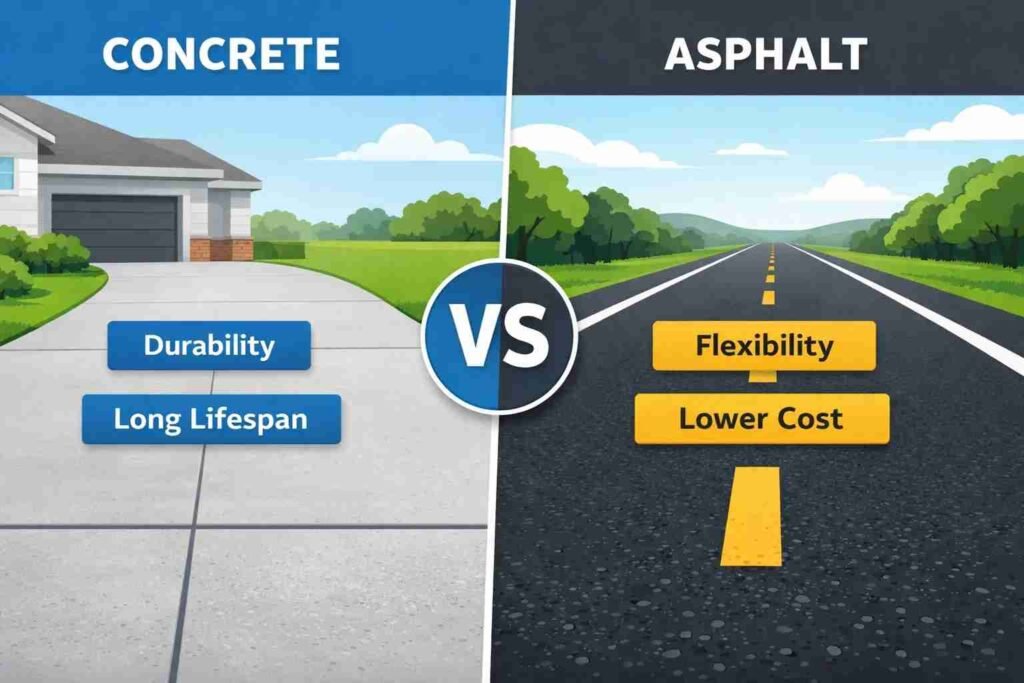
Concrete and asphalt are two of the most common paving materials used for roads, driveways and parking areas. Concrete is durable, long lasting, and requires less maintenance, while asphalt is flexible, cost effective and faster to install. Choosing between concrete vs asphalt depends on budget, climate, traffic load and long term maintenance goals.
When building a driveway, parking lot, or road, one important decision must be made early. Should you use concrete or asphalt? Both materials are widely used around the world. Both provide strong and reliable surfaces. Yet they differ in cost, durability, appearance, maintenance and climate performance.
Many property owners feel confused when comparing concrete vs asphalt. Asphalt seems cheaper at first. Concrete appears stronger and cleaner. Some say asphalt handles cold weather better. Others claim concrete lasts longer. So which is truly better?
The answer depends on your needs. A residential driveway may require different features than a commercial parking lot or highway. Climate, traffic weight, installation time, and long term repair costs all matter.
In this guide, we will explore concrete vs asphalt in detail. You will learn the differences, advantages, disadvantages, real world applications, global usage trends, maintenance tips, and cost comparisons. By the end, you will know which material suits your project best.
Quick Overview
Concrete and asphalt are paving materials made from different ingredients and designed for different performance needs.
| Feature | Concrete | Asphalt |
|---|---|---|
| Main Material | Cement, sand, gravel, water | Bitumen, sand, gravel |
| Color | Light gray | Black |
| Installation Time | Longer curing time | Faster installation |
| Lifespan | 30 to 50 years | 15 to 30 years |
| Maintenance | Lower frequency | Higher frequency |
| Cost | Higher upfront | Lower upfront |
| Flexibility | Rigid | Flexible |
Concrete is rigid and strong. Asphalt is flexible and adaptable. This core difference affects performance, maintenance, and durability.
Definition and Explanation
What Is Concrete
Concrete is a mixture of cement, sand, gravel, and water. When mixed, it forms a paste that hardens over time through a chemical reaction called hydration. Once cured, it becomes extremely strong and durable.
Concrete is commonly used for highways, bridges, sidewalks, and residential driveways. It has high compressive strength, which means it can support heavy loads without bending.
However, concrete requires time to cure properly. It may take several days before it can handle traffic and weeks before it reaches full strength.
What Is Asphalt
Asphalt is made from aggregates such as sand and gravel bound together with bitumen, a petroleum based product. It is heated and poured while hot. After cooling, it becomes solid and ready for use.
Asphalt is flexible. It can expand and contract with temperature changes. This flexibility helps reduce cracking in colder climates. Asphalt roads are common in residential streets, highways, and parking lots.
Unlike concrete, asphalt can usually be used within one to two days after installation.
Composition Differences
Understanding material composition helps explain performance differences.
Concrete contains
- Cement as a binding agent
- Aggregates such as sand and gravel
- Water
Asphalt contains
- Aggregates
- Bitumen binder
Concrete relies on chemical curing. Asphalt relies on cooling and compaction.
Advantages and Disadvantages
Advantages of Concrete
- Long lifespan of 30 to 50 years
- Strong and durable under heavy loads
- Lower long term maintenance
- Reflects light, reducing heat absorption
- Clean and modern appearance
Disadvantages of Concrete
- Higher upfront cost
- Longer installation and curing time
- Prone to cracking in freezing temperatures
- Repairs can be more expensive
Advantages of Asphalt
- Lower initial cost
- Faster installation
- Performs well in cold climates
- Easier and cheaper to repair
- Smooth driving surface
Disadvantages of Asphalt
- Shorter lifespan compared to concrete
- Requires regular sealing
- Can soften in extreme heat
- Dark surface absorbs heat
Cost Comparison
Cost plays a major role in the concrete vs asphalt decision.
Concrete typically costs more per square foot during installation. However, it may require fewer repairs over time.
Asphalt is cheaper initially but requires maintenance such as seal coating every three to five years. Over decades, maintenance costs can increase total expenses.
Example
If a driveway costs 30 percent more in concrete upfront, but lasts twice as long as asphalt, the long term value may favor concrete.
Real World Examples
Residential Driveways
Homeowners often choose asphalt for affordability. However, those seeking long term durability may prefer concrete.
Highways
Major highways often use concrete for its strength and load capacity. Local streets commonly use asphalt for flexibility and lower cost.
Commercial Parking Lots
Businesses frequently select asphalt because it is quick to install and easy to repair, reducing downtime.
Airports
Airport runways often use concrete due to heavy aircraft loads.
Climate Performance
Climate greatly influences the concrete vs asphalt decision.
Cold Climates
Asphalt performs better because it expands and contracts without cracking easily. Concrete may crack during freeze thaw cycles if not properly reinforced.
Hot Climates
Concrete performs better in extreme heat. Asphalt can soften and deform under high temperatures.
Rainy Regions
Both materials can perform well with proper drainage. However, standing water can damage asphalt faster.
Installation Process
Concrete Installation
- Ground preparation
- Formwork setup
- Pouring mixture
- Leveling and finishing
- Curing process
Curing may take several days before use.
Asphalt Installation
- Base preparation
- Heating asphalt mixture
- Spreading and compacting
- Cooling
Asphalt can often be driven on within 24 to 48 hours.
Maintenance Requirements
Concrete Maintenance
- Occasional cleaning
- Sealing joints
- Crack repair if needed
Asphalt Maintenance
- Seal coating every few years
- Crack filling
- Patching damaged areas
Asphalt requires more frequent maintenance than concrete.
Regional and Global Usage
Concrete and asphalt usage varies worldwide based on climate, economy, and infrastructure needs.
North America
Both materials are common. Concrete is used for highways and heavy load areas. Asphalt is widely used for residential roads and parking lots.
Europe
Many European countries prefer asphalt for roads due to ease of maintenance. However, concrete is common in high traffic areas.
Middle East
Concrete is preferred in extremely hot climates because asphalt may soften under intense heat.
Asia
Rapid urban development has increased the use of both materials. Asphalt is often chosen for quick infrastructure expansion.
Africa
Asphalt is common for road construction due to lower cost and faster installation, especially in developing regions.
Globally, asphalt accounts for a large percentage of paved roads due to cost efficiency and flexibility. Concrete remains important for long lasting and heavy duty infrastructure.
Common Mistakes
- Choosing based only on initial cost
- Ignoring climate conditions
- Skipping proper base preparation
- Delaying maintenance for asphalt
- Improper curing of concrete
Correct planning ensures long term performance regardless of material choice.
Exercises With Answers
Exercise 1
Identify whether the following situations favor concrete or asphalt.
- A driveway in a very hot climate
- A temporary parking lot project
- A heavy truck loading zone
- A budget limited residential driveway
Answers
- Concrete
- Asphalt
- Concrete
- Asphalt
Exercise 2
Match the feature to the material.
| Feature | Concrete | Asphalt |
|---|---|---|
| Flexible surface | No | Yes |
| Longer lifespan | Yes | No |
| Lower upfront cost | No | Yes |
| Requires frequent sealing | No | Yes |
Related Comparisons
Concrete vs Asphalt vs Gravel
Gravel is cheaper but less durable and requires frequent leveling. Concrete and asphalt provide smoother, more permanent surfaces.
Asphalt vs Concrete for Driveways
Concrete offers longevity and aesthetic appeal. Asphalt provides affordability and easier repairs.
Concrete vs Asphalt for Roads
Concrete supports heavy loads. Asphalt offers smoother rides and lower construction time.
FAQs
Which lasts longer, concrete or asphalt?
Concrete generally lasts longer, often 30 to 50 years, while asphalt may last 15 to 30 years with proper maintenance.
Is asphalt cheaper than concrete?
Yes, asphalt usually has a lower upfront cost compared to concrete.
Which is better for hot climates?
Concrete performs better in very hot climates because asphalt can soften in high temperatures.
Which handles cold weather better?
Asphalt performs better in freezing conditions due to its flexibility.
Does asphalt require more maintenance?
Yes, asphalt requires regular seal coating and crack repair to maintain durability.
Can concrete crack easily?
Concrete can crack if not properly installed or exposed to freeze thaw cycles without reinforcement.
Which is better for heavy trucks?
Concrete is generally better for heavy loads due to higher compressive strength.
Is asphalt environmentally friendly?
Asphalt can be recycled, making it environmentally practical in many regions.
Does concrete need sealing?
Concrete may benefit from sealing to protect against moisture and stains.
Which looks better for residential homes?
Many homeowners prefer concrete for its clean and modern appearance, though asphalt offers a smooth black finish.
Conclusion
The comparison of concrete vs asphalt depends on your priorities. Concrete offers strength, durability, and long term value. Asphalt provides flexibility, affordability and faster installation.
If you need a long lasting surface that handles heavy loads and extreme heat, concrete may be the better choice. If you prefer lower upfront cost and easier repairs, asphalt may be more suitable. Climate, traffic volume, and maintenance commitment should guide your decision.
Both materials are reliable when properly installed and maintained. By evaluating your budget, environment and project requirements, you can confidently select the right paving solution for lasting performance.
Discover More Related Articles:
- Philosophy vs Psychology: Are Thinkers Smarter Than Therapists? in 2026
- ZX4R vs ZX4RR: The Ultimate 400cc Super Sport Showdown in 2026
- Larkspur vs Delphinium in Gardens: Which One Should You Grow? in 2026

David Thompson is the grammar expert behind TalkNexs.com. He believes that learning English grammar doesn’t have to be boring or complicated. Through practical examples and easy explanations, David helps readers understand confusing grammar rules and use them correctly in daily communication. His goal is to make grammar simple, clear and enjoyable for everyone.