
Definition
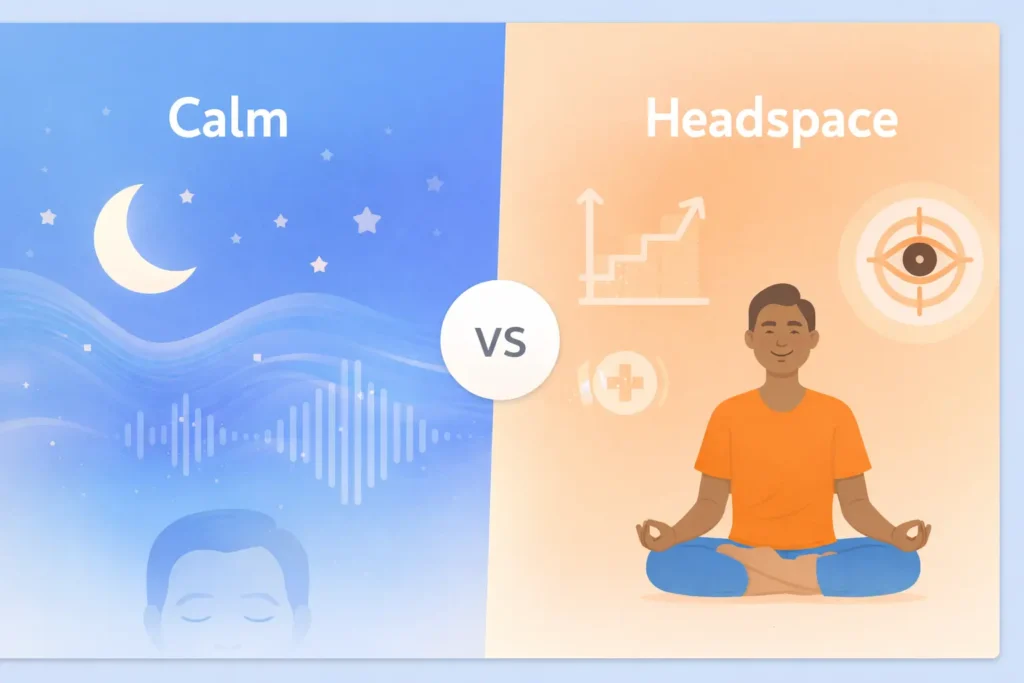
Calm and Headspace are two leading meditation apps designed to reduce stress and improve mental well-being. Calm focuses more on sleep, relaxation and soothing content, while Headspace offers structured meditation courses and mindfulness training. Choosing the right app depends on your goals, you want better sleep or guided mental clarity.
In today’s fast-paced world, stress, anxiety, and sleep problems have become part of daily life. Many people are now turning to meditation apps to improve their mental health and find balance. Among the most popular options are Calm and Headspace. These two apps have helped millions of users develop better habits, reduce stress, and sleep more peacefully.
However, choosing between Calm and Headspace can be confusing. Both apps offer guided meditations, relaxing sounds, and mindfulness tools. Yet, they differ in their approach, content style, and user experience. Some users prefer Calm for its soothing atmosphere and sleep stories, while others choose Headspace for its structured learning and practical techniques.
Understanding the differences between Calm and Headspace is important before committing to one. In this article, we will explore features, benefits, drawbacks, real-world usage, global trends, and expert insights. By the end, you will clearly know which app fits your lifestyle and mental health goals.
Quick Overview
Calm and Headspace are both meditation apps, but they serve slightly different purposes. Calm focuses more on relaxation, sleep, and stress relief, while Headspace emphasizes structured meditation and mindfulness learning.
| Feature | Calm | Headspace |
|---|---|---|
| Primary Focus | Relaxation and sleep | Meditation training and mindfulness |
| Content Style | Soothing and flexible | Structured and educational |
| Best For | Sleep, anxiety relief | Beginners and guided learning |
| Voice Tone | Calm and slow | Friendly and instructional |
| Special Feature | Sleep stories | Meditation courses |
Definition and Explanation
Calm
Calm is a meditation and relaxation app designed to help users reduce stress, improve sleep, and relax their minds. It offers guided meditations, breathing exercises, sleep stories, and calming music. The app creates a peaceful environment that encourages users to unwind after a long day.
One of the standout features of Calm is its sleep content. It includes bedtime stories narrated in soothing voices, relaxing soundscapes, and gentle music. These features make Calm especially popular among users who struggle with insomnia or anxiety at night.
Calm also provides daily meditations that are short and easy to follow. Users can choose sessions based on mood, such as stress relief, focus, or gratitude. The app is designed to feel flexible and less structured, allowing users to explore content freely.
Headspace
Headspace is a meditation and mindfulness app focused on teaching users how to meditate effectively. It provides structured courses that guide users step by step, making it ideal for beginners.
The app uses a friendly and engaging approach, with simple explanations and animations to help users understand mindfulness concepts. Headspace focuses on building habits through daily practice and progressive learning.
It also offers themed meditation packs, such as managing anxiety, improving focus, and boosting productivity. Unlike Calm, Headspace emphasizes consistency and skill development rather than just relaxation.
Key Features Comparison
Meditation Style
- Calm offers flexible, mood-based sessions.
- Headspace provides structured courses with clear progression.
Sleep Content
- Calm excels in sleep stories and relaxing audio.
- Headspace offers sleepcasts and wind-down exercises but is less focused on storytelling.
User Experience
- Calm has a visually soothing design with nature scenes.
- Headspace uses simple graphics and animations for learning.
Voice and Tone
- Calm uses slow, relaxing voices.
- Headspace uses a friendly and conversational tone.
Content Variety
- Calm includes music, stories, and relaxation tools.
- Headspace focuses more on meditation and mindfulness training.
Advantages and Disadvantages
Calm Advantages
- Excellent for sleep improvement and relaxation
- Wide variety of soothing content
- Flexible and easy to explore
- High-quality audio and storytelling
Calm Disadvantages
- Less structured for learning meditation
- May feel overwhelming due to content variety
- Limited focus on skill-building
Headspace Advantages
- Clear structure for beginners
- Easy-to-follow meditation courses
- Focus on building long-term habits
- Educational and engaging content
Headspace Disadvantages
- Less emphasis on sleep stories
- Limited flexibility compared to Calm
- Some users may find it repetitive
Real-World Examples
- A working professional with insomnia may prefer Calm for its sleep stories and relaxing sounds.
- A student trying to improve focus and productivity may benefit more from Headspace’s structured meditation programs.
- A beginner who has never tried meditation might find Headspace easier to follow due to its step-by-step approach.
- Someone dealing with anxiety after work may use Calm’s quick relaxation sessions for immediate relief.
A survey conducted among app users showed that many people use Calm at night for sleep and Headspace during the day for focus and mindfulness practice.
Regional and Global Usage
Meditation apps like Calm and Headspace are used worldwide, but preferences vary by region based on culture, lifestyle, and mental health awareness.
North America and Europe
In countries such as the United States, Canada, and the United Kingdom, both Calm and Headspace are widely used. Many professionals rely on these apps to manage stress and improve work-life balance. Headspace is often used in workplaces and schools as part of wellness programs, while Calm is popular for sleep improvement.
Asia
In countries like India, Japan, and South Korea, meditation has deep cultural roots. Headspace is popular among younger users who want a modern approach to mindfulness. Calm is used for relaxation and stress relief, especially in urban areas where fast-paced lifestyles increase anxiety levels.
Middle East
In regions experiencing rapid urban growth, stress management is becoming more important. Calm is often preferred for relaxation and sleep, while Headspace is used by individuals seeking structured mental wellness routines.
Latin America
Both apps are gaining popularity as awareness of mental health increases. Users appreciate Calm’s soothing content and Headspace’s practical approach to mindfulness training.
Africa
Access to mental health resources is improving, and meditation apps are becoming more common. Users often choose apps based on ease of use and affordability, with both Calm and Headspace gaining attention.
Globally, the rise of remote work and digital lifestyles has increased demand for meditation apps. Many users now integrate these tools into their daily routines to maintain mental well-being.
Common Mistakes
- Choosing an app without understanding personal goals
- Expecting instant results from meditation
- Not using the app consistently
- Ignoring sleep features when sleep is the main issue
- Switching between apps too frequently
Correct approach involves selecting one app based on your needs and using it consistently for at least a few weeks.
Exercises with Answers
Exercise 1: Choose the right app for each situation.
- A person wants better sleep.
- A beginner wants to learn meditation step by step.
- Someone needs quick stress relief after work.
- A student wants to improve focus.
Answers:
- Calm
- Headspace
- Calm
- Headspace
Exercise 2: True or False
- Calm focuses more on sleep and relaxation.
- Headspace is best for structured learning.
- Both apps are identical in content.
- Headspace offers meditation courses.
Answers:
- True
- True
- False
- True
Related Concepts and Comparisons
| Feature | Calm | Headspace | Traditional Meditation |
|---|---|---|---|
| Guidance | Yes | Yes | No |
| Structure | Flexible | Structured | Self-directed |
| Accessibility | High | High | Moderate |
| Focus | Relaxation | Learning | Discipline |
| Tools | Audio, stories | Courses, exercises | Breathing, silence |
Calm and Headspace both make meditation accessible, while traditional meditation requires more discipline and self-guidance.
Best Use Cases
Choose Calm If
- You struggle with sleep
- You want relaxation and stress relief
- You prefer soothing audio and storytelling
- You like flexible content
Choose Headspace If
- You are new to meditation
- You want structured learning
- You want to build a daily habit
- You prefer clear guidance and progression
Prevention and Improvement Strategies
To get the best results from either app:
- Set a daily meditation schedule
- Start with short sessions
- Use sleep features regularly if needed
- Track your progress
- Stay consistent for at least 2 to 4 weeks
Research shows that consistent meditation practice for 10 to 15 minutes daily can reduce stress levels by up to 30 percent over time.
FAQs
What is the main difference between Calm and Headspace?
Calm focuses on relaxation and sleep, while Headspace emphasizes structured meditation learning.
Which app is better for beginners?
Headspace is better for beginners because it offers step-by-step guidance.
Is Calm better for sleep than Headspace?
Yes, Calm provides more sleep-focused content like stories and calming sounds.
Can I use both Calm and Headspace together?
Yes, some users use Calm for sleep and Headspace for daily meditation practice.
Are Calm and Headspace free?
Both apps offer limited free content, but full access requires a subscription.
Which app helps with anxiety more?
Both help with anxiety, but Calm focuses on relaxation while Headspace teaches coping techniques.
How long should I meditate daily?
Start with 5 to 10 minutes and gradually increase to 15 to 20 minutes.
Do these apps really work?
Yes, consistent use has been shown to improve mental health and reduce stress.
Which app has better content variety?
Calm offers more variety in terms of stories and music.
Which app is more structured?
Headspace provides a more structured learning experience.
Conclusion
Calm and Headspace are both powerful tools for improving mental health, reducing stress, and building mindfulness habits. However, they serve different purposes. Calm is ideal for relaxation, sleep improvement, and stress relief through soothing content. Headspace is better suited for beginners and individuals who want structured meditation training and long-term habit building.
Choosing between Calm and Headspace depends on your personal goals. If your main concern is sleep or relaxation, Calm is the better choice. If you want to learn meditation step by step and develop a consistent practice, Headspace is more suitable.
The most important factor is consistency. Whichever app you choose, regular use will lead to better results. Start small, stay committed, and gradually build a routine that supports your mental well-being. Over time, both apps can help you achieve a calmer mind and a healthier lifestyle.
Discover More Related Articles:
- Outcall vs Incall: Which One Is More Convenient and Why in 2026
- Etiology vs Pathophysiology: Why Both Matter in Healthcare in 2026
- Headspace vs Calm: Which Meditation App Is Worth Your Money in 2026

David Thompson is the grammar expert behind TalkNexs.com. He believes that learning English grammar doesn’t have to be boring or complicated. Through practical examples and easy explanations, David helps readers understand confusing grammar rules and use them correctly in daily communication. His goal is to make grammar simple, clear and enjoyable for everyone.