Definition
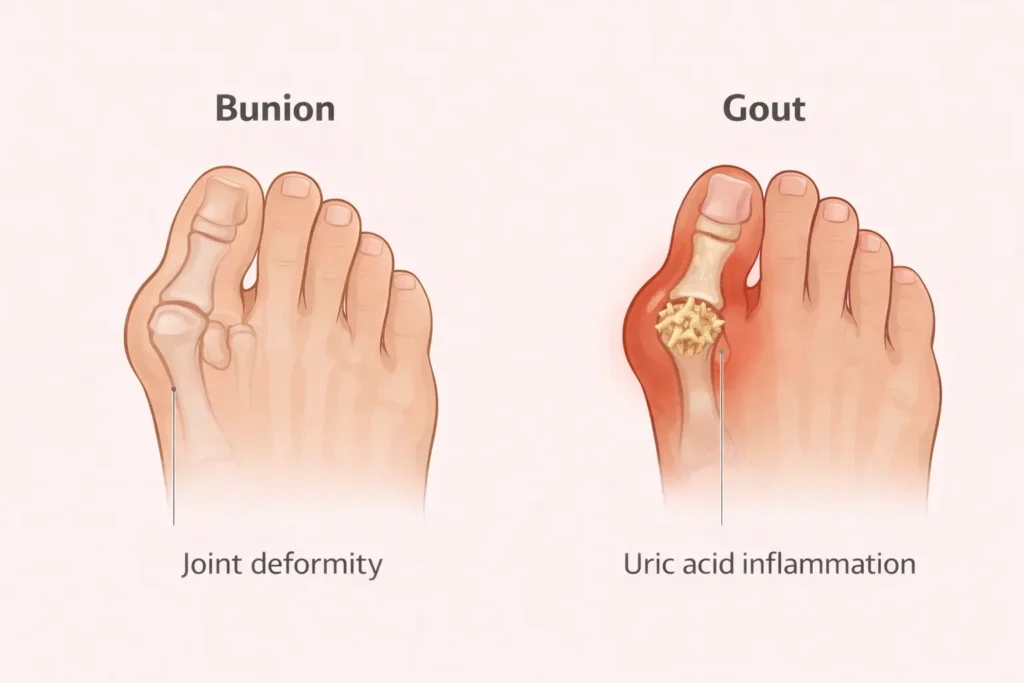
Bunion and gout both cause pain near the big toe, but they are very different conditions. A bunion is a structural bone deformity that develops slowly over time, while gout is a form of inflammatory arthritis caused by uric acid buildup that can trigger sudden and severe pain. Understanding the difference helps ensure accurate diagnosis and proper treatment.
Pain in the big toe is a common problem. Many people assume that all toe pain is the same. However, bunion and gout are two very different conditions that can affect the same area of the foot.
A bunion develops gradually. It forms when the joint at the base of the big toe shifts out of alignment. Over time, a visible bump appears on the side of the foot. The pain usually increases slowly.
Gout, on the other hand, is a sudden and intense form of arthritis. It happens when uric acid crystals build up in the joint. The pain can start overnight and become severe within hours.
Because both conditions often affect the big toe, many people confuse bunion vs gout. Misunderstanding the difference can delay proper treatment. In this guide, you will learn how to recognize each condition, understand their causes, explore treatment options, and prevent complications.
Quick Overview
The main difference between bunion vs gout is structural deformity versus inflammatory arthritis.
| Feature | Bunion | Gout |
|---|---|---|
| Type of Condition | Bone deformity | Inflammatory arthritis |
| Onset | Gradual | Sudden |
| Pain Pattern | Mild to moderate, increases over time | Severe, sudden attacks |
| Visible Bump | Yes | Usually swelling, not structural bump |
| Cause | Joint misalignment | Uric acid crystal buildup |
| Treatment | Footwear changes, surgery in severe cases | Medication, diet changes |
Definition and Explanation
What Is a Bunion
A bunion is a bony bump that forms at the base of the big toe. The medical term is hallux valgus. It occurs when the big toe leans toward the second toe. This misalignment forces the joint outward.
Over time, the joint becomes enlarged. Shoes may rub against the bump, causing redness and discomfort. Bunions usually develop slowly over years.
They are more common in women, especially those who wear tight or narrow shoes. Genetics also play a role.
What Is Gout
Gout is a type of inflammatory arthritis. It develops when uric acid builds up in the blood and forms crystals in the joints. These crystals trigger intense inflammation.
The big toe joint is commonly affected. This is known as podagra. Gout attacks often begin suddenly, frequently at night. The joint may become red, swollen, warm, and extremely painful.
Unlike bunions, gout does not cause a structural bone shift. The swelling comes from inflammation, not deformity.
Causes and Risk Factors
Causes of Bunion
- Genetic foot structure
- Flat feet or abnormal gait
- Wearing tight or high heeled shoes
- Arthritis affecting the toe joint
- Foot injuries
Studies suggest that bunions affect up to 23 percent of adults aged 18 to 65 and more than 35 percent of older adults.
Causes of Gout
- High uric acid levels in blood
- Diet high in red meat and seafood
- Excess alcohol consumption
- Obesity
- Kidney disease
- Certain medications such as diuretics
According to global health data, gout affects approximately 1 to 4 percent of adults worldwide, with higher rates in men.
Symptoms Comparison
Understanding symptoms is key when distinguishing bunion vs gout.
| Symptom | Bunion | Gout |
|---|---|---|
| Pain onset | Gradual | Sudden |
| Pain intensity | Mild to moderate | Severe |
| Redness | Sometimes | Very common |
| Swelling | Mild | Significant |
| Fever | No | Possible in severe attacks |
| Recurrence | Constant discomfort | Recurrent attacks |
Key Symptom Differences
- Bunion pain increases with pressure from shoes.
- Gout pain can occur even without touching the foot.
- Gout attacks may last days to weeks.
- Bunions persist unless corrected.
Advantages and Disadvantages of Early Diagnosis
Bunion Early Detection
Advantages:
- Prevents worsening deformity
- Allows conservative treatment
- Reduces need for surgery
Disadvantages:
- Cannot fully reverse without surgery
- May continue progressing slowly
Gout Early Detection
Advantages:
- Prevents joint damage
- Reduces frequency of attacks
- Lowers risk of kidney complications
Disadvantages:
- Requires long term medication in many cases
- Lifestyle changes are necessary
Real World Examples
Example 1
A 45 year old woman notices a bump forming at the base of her big toe. It becomes painful when wearing narrow shoes. The pain is consistent but not sudden. This is likely a bunion.
Example 2
A 50 year old man wakes up with sudden, severe pain in his big toe. The joint is red, swollen, and warm. He cannot bear weight. This pattern strongly suggests gout.
Example 3
An older adult with a visible toe bump experiences increased pain and redness overnight. This person may have both bunion and gout, which sometimes occur together.
Regional and Global Patterns
North America and Europe
Gout prevalence is higher due to dietary habits and obesity rates. High purine diets contribute to uric acid buildup. Bunion surgery is common in developed healthcare systems.
Asia
Rapid lifestyle changes have increased gout rates in urban populations. Bunions are less common in areas where open footwear is traditional.
Middle East
High meat consumption and dehydration from hot climates increase gout risk. Bunions are often linked to footwear choices.
Africa
Gout rates are increasing in urban areas. Bunions may be less frequently diagnosed due to limited access to orthopedic care.
Globally, both conditions are rising due to aging populations and lifestyle changes.
Common Mistakes
Mistake 1
Assuming all big toe pain is gout.
Correction
Check for visible deformity and gradual progression.
Mistake 2
Ignoring sudden swelling thinking it is a bunion.
Correction
Seek medical testing for uric acid levels.
Mistake 3
Self diagnosing without imaging or blood tests.
Correction
Consult a healthcare provider for accurate evaluation.
Mistake 4
Delaying treatment.
Correction
Early care prevents long term damage.
Diagnosis Methods
Bunion Diagnosis
- Physical examination
- Foot X ray to measure bone alignment
Gout Diagnosis
- Blood test for uric acid
- Joint fluid analysis
- Ultrasound imaging
- Dual energy CT scan in complex cases
Accurate diagnosis is essential in distinguishing bunion vs gout.
Treatment Options
Bunion Treatment
Non surgical:
- Wide comfortable shoes
- Orthotic inserts
- Padding
- Ice therapy
- Anti inflammatory medication
Surgical:
- Realignment of bone
- Removal of bony prominence
- Joint fusion in severe cases
Gout Treatment
Acute attack:
- NSAIDs
- Colchicine
- Corticosteroids
Long term management:
- Allopurinol
- Febuxostat
- Lifestyle modification
- Weight management
- Hydration
Prevention Strategies
Preventing Bunions
- Wear properly fitted shoes
- Avoid high heels
- Use arch support
- Maintain healthy weight
Preventing Gout
- Limit red meat and seafood
- Reduce alcohol intake
- Drink plenty of water
- Maintain healthy weight
- Monitor uric acid levels
Exercises with Answers
Exercise 1
Identify the condition.
- Sudden severe pain at night in big toe.
- Gradually forming bump on toe joint.
- Joint swelling with fever.
- Pain worsens with tight shoes.
Answers
- Gout
- Bunion
- Gout
- Bunion
Exercise 2
True or False
- Bunions are caused by uric acid crystals.
- Gout attacks can happen suddenly.
- Bunions develop slowly over time.
- Both conditions affect the same joint area.
Answers
- False
- True
- True
- True
Related Comparisons
| Condition | Main Cause | Pain Pattern |
|---|---|---|
| Bunion | Structural deformity | Gradual |
| Gout | Uric acid crystals | Sudden |
| Osteoarthritis | Cartilage wear | Progressive stiffness |
| Rheumatoid arthritis | Autoimmune | Symmetrical joint pain |
FAQs
What is the main difference between bunion vs gout?
A bunion is a structural bone deformity, while gout is inflammatory arthritis caused by uric acid buildup.
Can a bunion turn into gout?
No. They are separate conditions, but a person can have both.
Is gout more painful than a bunion?
Yes. Gout attacks are usually much more severe and sudden compared to bunion discomfort.
Can diet affect bunion development?
Diet does not directly cause bunions, but obesity may increase pressure on feet.
Does gout always affect the big toe?
No. It commonly affects the big toe but can occur in ankles, knees, and other joints.
Are bunions permanent?
Yes. They do not disappear without surgical correction.
How long does a gout attack last?
Typically several days to two weeks if untreated.
Can footwear prevent bunions?
Proper footwear reduces risk but cannot fully prevent genetic cases.
Is surgery required for gout?
Rarely. Medication and lifestyle management are primary treatments.
When should I see a doctor for toe pain?
If pain is sudden, severe, or persistent, seek medical evaluation.
Conclusion
Understanding bunion vs gout is essential for proper treatment. Although both conditions affect the big toe, their causes, symptoms, and treatments are very different.
A bunion develops slowly due to structural misalignment of the toe joint. It forms a visible bump and causes gradual discomfort. Gout is a sudden inflammatory condition triggered by uric acid crystals. It causes intense pain, swelling, and redness.
Accurate diagnosis prevents complications. Bunions may require footwear changes or surgery. Gout requires medication and lifestyle adjustments to prevent recurring attacks and joint damage.
If you experience big toe pain, observe the pattern. Gradual and structural suggests bunion. Sudden and inflammatory suggests gout. Consulting a healthcare professional ensures effective treatment and long term joint health.
Discover More Related Articles:
- Blackhead vs Whitehead: Expert Tips to Clear Your Skin Effectively in 2026
- Rekordbox vs Serato: Which DJ Software is Right for You in 2026
- Fillet vs Chamfer: Which Edge Treatment Is Stronger and Safer? in 2026

Christopher Hayes is a passionate language enthusiast and the lead content creator at TalkNexs.com, a platform dedicated to helping readers master the art of grammar, writing and effective communication. With years of experience in writing, editing and teaching language, Christopher’s mission is to make grammar simple, practical and engaging for everyone.