
Definition
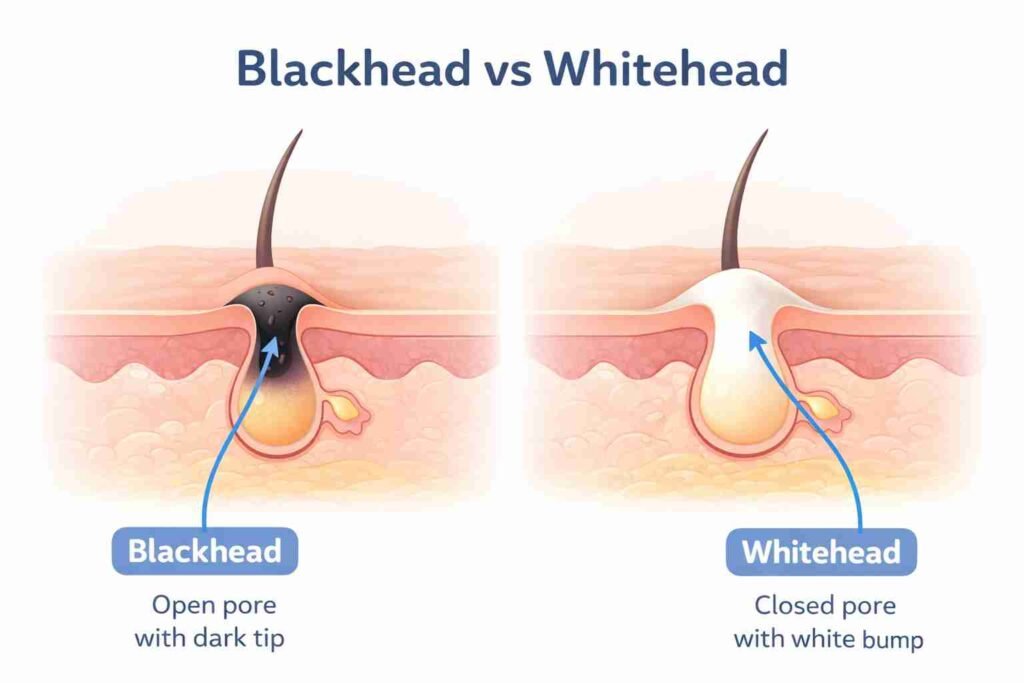
Blackheads and whiteheads are common types of acne caused by clogged pores. Blackheads appear dark due to oxidation in open pores, while whiteheads remain under the skin as small white bumps. Knowing the difference allows for effective treatment and prevention.
Acne is one of the most common skin problems worldwide, affecting teenagers and adults alike. Among the various types of acne, whiteheads and blackheads are the most frequently observed. Despite their prevalence, many people confuse them, leading to ineffective treatments and prolonged skin issues.
Blackheads appear as small dark spots on the skin, usually on the nose, chin, and forehead. They are open clogged pores where oil, dead skin cells, and debris have oxidized. Whiteheads, in contrast, are small white bumps that remain hidden beneath the skin’s surface.
Understanding the differences between blackheads and whiteheads is crucial for effective skincare. Proper identification allows individuals to choose the right treatments, prevent complications, and maintain long-term skin health. This article will explore definitions, causes, treatments, prevention strategies, common mistakes, global trends, and exercises to help you master the management of blackheads and whiteheads.
Quick Overview
Blackheads and whiteheads are both caused by clogged pores. The key difference lies in whether the pore is open or closed.
| Feature | Blackhead | Whitehead |
|---|---|---|
| Pore Type | Open | Closed |
| Appearance | Dark or black | White or skin-colored |
| Cause | Oxidation of oil and debris | Trapped oil and dead skin cells |
| Common Areas | Nose, chin, forehead | Cheeks, chin, jawline |
| Treatment | Exfoliation, chemical peels, extraction | Gentle cleansing, topical creams, retinoids |
Definition and Explanation
Blackheads
Blackheads, or open comedones, occur when a pore becomes clogged with excess oil, dead skin cells, and bacteria. The surface remains open, allowing the trapped material to oxidize and turn dark. This makes blackheads noticeable on the skin.
They are most common on areas with high oil production, such as the nose, chin, and forehead.
Whiteheads
Whiteheads, or closed comedones, form when a pore gets clogged with oil, dead skin cells, and bacteria but remains covered by a thin layer of skin. This prevents oxidation, so the bump stays white or flesh-colored. Whiteheads are less visible than blackheads but can persist longer and may develop into inflammatory acne if left untreated.
Whiteheads often appear on the cheeks, chin, and jawline. Proper care can prevent them from worsening or leading to deeper skin issues.
Causes and Contributing Factors
Several factors contribute to the formation of blackheads and whiteheads:
- Excess Oil Production: Hormonal changes, particularly during puberty, increase sebum production.
- Accumulation of Dead Skin Cells: Trapped skin cells block pores and lead to comedone formation.
- Bacteria: Propionibacterium acnes contributes to inflammation and acne development.
- Cosmetic Products: Heavy or non-comedogenic products can clog pores.
- Diet and Lifestyle: Diets high in sugar, dairy, or processed foods, combined with stress, may worsen acne.
According to the American Academy of Dermatology, approximately 85 percent of teenagers experience some form of acne, with blackheads and whiteheads being the most common early signs.
Advantages and Disadvantages
Blackheads Advantages
- Easier to detect and target for treatment.
- Usually superficial, less likely to scar deeply.
Blackheads Disadvantages
- Improper squeezing can lead to infection or scarring.
- May recur without proper skincare.
- Visible dark spots can cause cosmetic concerns.
Whiteheads Advantages
- Less visible than blackheads.
- Typically less prone to oxidation-related darkening.
- Can often be managed with topical treatments.
Whiteheads Disadvantages
- Harder to treat because they are under the skin.
- Can lead to inflammatory acne if untreated.
- Picking can cause scarring and infection.
Real-World Examples
- Teenagers: Hormonal surges increase oil production, resulting in blackheads on the nose and forehead.
- Adults: Stress and hormonal changes can cause whiteheads along the jawline and cheeks.
- Oily Skin: More prone to blackheads, particularly in the T-zone.
- Combination Skin: Blackheads and whiteheads may appear in different areas at the same time.
A study from the American Academy of Dermatology reports that consistent skincare routines, including cleansing and exfoliation, significantly reduce blackhead and whitehead formation.
Regional and Global Usage
Blackheads and whiteheads are universal, but regional skincare practices, cultural habits, and product availability influence how they are treated.
North America and Europe
Over-the-counter treatments such as salicylic acid cleansers, retinoid creams, and benzoyl peroxide are widely used. Dermatologist-guided treatments, including chemical peels and laser therapies, are popular for persistent acne.
Asia
Countries like South Korea, Japan, and China emphasize preventive skincare. Double cleansing, chemical exfoliation with AHAs and BHAs, and hydrating masks are standard.
Middle East and North Africa
Hot and dry climates lead to increased oil production. Gentle cleansing, lightweight moisturizers, and clay masks are commonly used to manage blackheads. Sunscreens suitable for oily skin prevent pore clogging.
Latin America
Exfoliating scrubs, charcoal masks, and chemical treatments are common. Dermatologists emphasize consistent routines to counter humidity-related oil production.
Africa
Online education and social media have increased awareness of proper treatments.
Globally, teledermatology and online tutorials help people access expert advice, while social media spreads preventive techniques and skincare education.
Common Mistakes in Treatment
- Squeezing or Picking: Can cause scarring and infection.
- Harsh Scrubbing: Irritates skin and worsens acne.
- Using Heavy Creams: Non-comedogenic products are better.
- Ignoring Routine: Inconsistent cleansing allows pores to remain clogged.
- Confusing Types: Using the wrong treatment may worsen acne.
Correct care involves gentle cleansing, chemical exfoliation, and selecting products suitable for the type of acne.
Exercises with Answers
Exercise 1: Identify blackheads or whiteheads.
- Small dark bumps on the nose.
- Tiny white bumps under the skin on cheeks.
- Open pores clogged with oil.
- Closed pores forming white bumps.
Answers: 1. Blackhead, 2. Whitehead, 3. Blackhead, 4. Whitehead
Exercise 2: Match treatments to acne types.
| Treatment | Blackhead | Whitehead |
|---|---|---|
| Salicylic acid cleanser | Yes | No |
| Retinoid cream | No | Yes |
| Gentle exfoliating scrub | Yes | No |
| Topical cream with benzoyl peroxide | No | Yes |
Related Concepts and Comparisons
| Feature | Blackhead | Whitehead | Pimple |
|---|---|---|---|
| Pore Type | Open | Closed | Inflamed |
| Appearance | Dark spot | White bump | Red, raised, sometimes pus |
| Cause | Oxidized oil | Trapped oil | Bacterial infection |
| Treatment | Exfoliation, extraction | Topical creams | Anti-inflammatory creams, antibiotics |
Prevention Strategies
- Cleanse skin twice daily with gentle cleansers.
- Exfoliate 2–3 times per week using chemical or mild physical exfoliants.
- Use non-comedogenic skincare and makeup products.
- Maintain a balanced diet and manage stress levels.
- Avoid touching or picking at acne-prone areas.
- Consult a dermatologist for persistent acne.
Research shows combining cleansing, exfoliation, and topical retinoids reduces blackhead and whitehead formation by up to 60 percent within three months.
FAQs
Can blackheads turn into whiteheads?
No, they are distinct types. Poor care may cause inflammation but does not convert one to the other.
How can blackheads be treated?
Regular exfoliation, chemical peels, retinoids, and professional extraction are effective.
How can whiteheads be treated?
Gentle cleansing, topical retinoids, and non-comedogenic moisturizers help prevent and reduce whiteheads.
Are blackheads caused by dirt?
No, the dark color is from oxidation of trapped sebum and dead skin cells.
Does diet affect blackheads and whiteheads?
Yes, sugar, dairy, and processed foods can worsen acne for some individuals.
Is it safe to squeeze blackheads and whiteheads?
No, squeezing can lead to scarring and infection. Proper treatments are recommended.
Which skin types are prone to blackheads and whiteheads?
Oily skin is more prone to blackheads; whiteheads can appear in all skin types.
Can blackheads and whiteheads be prevented?
Yes, consistent cleansing, exfoliation, and non-comedogenic products help prevent clogged pores.
Do blackheads and whiteheads scar?
Improper treatment can cause scarring. Superficial blackheads and whiteheads rarely scar if treated correctly.
Conclusion
Correct identification is essential for effective treatment.
Gentle cleansing, chemical exfoliation, non-comedogenic products, and targeted topical treatments are the most effective strategies. Avoid squeezing or harsh scrubbing to reduce the risk of infection and scarring.
Regular skincare routines and a healthy lifestyle significantly reduce acne occurrence. Understanding these differences ensures proper management and healthier, clearer skin.

Christopher Hayes is a passionate language enthusiast and the lead content creator at TalkNexs.com, a platform dedicated to helping readers master the art of grammar, writing and effective communication. With years of experience in writing, editing and teaching language, Christopher’s mission is to make grammar simple, practical and engaging for everyone.