Definition
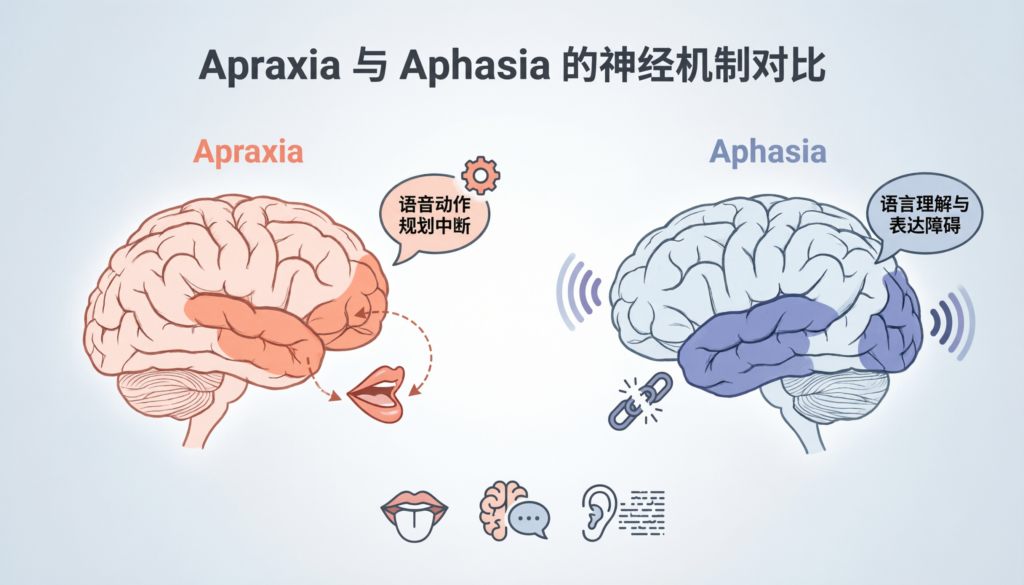
Apraxia and aphasia are communication disorders that affect speech and language, but they occur for different reasons. Apraxia affects the brain’s ability to plan and coordinate speech movements, while aphasia affects language processing, including speaking, understanding, reading and writing.
Communication is a fundamental part of everyday life. It allows people to share ideas, express emotions, and interact with others. When communication becomes difficult due to a neurological condition, it can affect relationships, education, and daily activities. Two conditions that often cause confusion are apraxia and aphasia.
Although both disorders affect speech and communication, they are not the same. Apraxia mainly affects the brain’s ability to plan the movements needed for speech. Aphasia, on the other hand, affects the ability to understand or produce language. Because both conditions can occur after brain injuries such as strokes or traumatic brain injuries, many people misunderstand their differences.
Learning about apraxia vs aphasia is important for patients, caregivers, educators, and healthcare professionals. A clear understanding helps guide proper therapy, improves communication strategies, and supports recovery. In this article, we will explore definitions, causes, symptoms, treatments, real world examples, and key differences between these two disorders.
Quick Overview
Apraxia and aphasia both affect communication but involve different brain functions.
| Feature | Apraxia | Aphasia |
|---|---|---|
| Main Issue | Difficulty planning speech movements | Difficulty understanding or producing language |
| Cause | Brain cannot coordinate muscle movements for speech | Brain damage affecting language processing |
| Speech Ability | Words may come out incorrectly or inconsistently | Words may be missing or incorrect |
| Understanding Language | Usually normal | Often impaired |
| Common Cause | Stroke, brain injury, neurological disorders | Stroke, brain injury, tumors |
Definition and Explanation
What is Apraxia
Apraxia of speech is a neurological condition that affects the brain’s ability to plan and coordinate the movements required for speaking. The muscles of the mouth, tongue, and lips are not weak, but the brain struggles to send the correct signals to control them.
A person with apraxia knows what they want to say, but their brain cannot properly organize the sequence of movements needed to produce clear speech.
Common characteristics of apraxia include
- Difficulty starting words
- Inconsistent pronunciation errors
- Struggling to move smoothly from one sound to another
- Slow and effortful speech
For example, someone may try to say the word “banana” but produce something like “ba…na…ba.”
What is Aphasia
Aphasia is a language disorder caused by damage to parts of the brain responsible for language processing. It affects the ability to speak, understand speech, read, and write.
Unlike apraxia, aphasia is not primarily about muscle coordination. Instead, it affects how the brain processes words and meaning.
Common symptoms include
- Difficulty finding the right word
- Speaking in short or incomplete sentences
- Trouble understanding spoken language
- Problems with reading or writing
For example, someone with aphasia may want to say “I want water” but instead say “Want… drink.”
Causes and Risk Factors
Both apraxia and aphasia are neurological conditions usually caused by damage to the brain.
Common Causes
- Stroke
Stroke is the most common cause of both apraxia and aphasia. When blood supply to the brain is interrupted, language and speech areas may be damaged. - Traumatic Brain Injury
Head injuries from accidents or falls can damage areas responsible for speech and language. - Brain Tumors
Tumors can interfere with brain regions responsible for communication. - Neurological Diseases
Conditions such as Parkinson’s disease, Alzheimer’s disease, or progressive neurological disorders may contribute to speech and language difficulties.
Statistics
Research suggests that approximately 2 million people in the United States live with aphasia. Stroke survivors have a high risk of developing aphasia, with about 25 to 40 percent experiencing some form of language impairment. Apraxia of speech often occurs alongside aphasia but can also appear independently.
Types of Aphasia
Aphasia includes several subtypes depending on the affected brain area.
Broca’s Aphasia
This type affects speech production. People understand language but struggle to form sentences.
Example
“Want food… hungry.”
Wernicke’s Aphasia
Speech may sound fluent but lacks meaning. Understanding language becomes difficult.
Example
“Food chair window eating.”
Global Aphasia
This is the most severe form. Both speech production and comprehension are significantly impaired.
Advantages and Challenges
Apraxia Strengths
- Language understanding is usually preserved
- People often know exactly what they want to say
- Therapy can significantly improve speech coordination
Apraxia Challenges
- Speech may be slow and effortful
- Pronunciation errors may vary
- Communication frustration may occur
Aphasia Strengths
- Some language skills may remain intact
- Therapy and rehabilitation can improve communication
- Alternative communication methods can help
Aphasia Challenges
- Difficulty understanding language
- Trouble expressing thoughts
- Reading and writing may be impaired
Real World Examples
Example One
A stroke survivor tries to say “good morning.” They understand the phrase but struggle to coordinate the sounds. The result may be “goo…mo…ning.” This is likely apraxia.
Example Two
Another patient says “cup… table… drink” when trying to ask for water. This indicates aphasia because the language structure is affected.
Example Three
A child with childhood apraxia of speech knows the words they want to say but struggles to produce them clearly.
Regional and Global Usage
Speech and language disorders such as apraxia and aphasia occur worldwide. However, awareness, diagnosis, and treatment vary between regions.
North America and Europe
In countries like the United States, Canada, and the United Kingdom, speech language pathologists provide specialized therapy for both apraxia and aphasia. Rehabilitation programs often include speech therapy, communication exercises, and digital learning tools.
Asia
In countries such as Japan, South Korea, and China, healthcare systems increasingly recognize communication disorders. Speech therapy services are growing, particularly in urban hospitals and rehabilitation centers.
Middle East and Africa
Awareness of speech disorders is expanding, but access to speech therapy services may be limited in some areas. Telehealth services are helping improve access to professional care.
Global Trends
Online therapy platforms and mobile health applications are improving communication rehabilitation worldwide. Digital speech therapy tools allow patients to practice exercises at home, increasing recovery opportunities.
Common Mistakes in Understanding Apraxia vs Aphasia
Many people misunderstand these conditions. Some common mistakes include
- Assuming both disorders are the same
Although they affect communication, they involve different brain processes. - Thinking apraxia is muscle weakness
The muscles are usually normal. The issue lies in brain planning. - Believing aphasia only affects speech
Aphasia can also affect reading, writing, and comprehension. - Ignoring early treatment
Early speech therapy significantly improves recovery outcomes.
Exercises With Answers
Exercise 1
Identify whether the description refers to apraxia or aphasia.
- Difficulty coordinating speech sounds
- Trouble understanding spoken language
- Speech errors that change each time
- Difficulty finding the right word
Answers
1 Apraxia
2 Aphasia
3 Apraxia
4 Aphasia
Exercise 2
Match the symptom to the disorder.
| Symptom | Apraxia | Aphasia |
|---|---|---|
| Difficulty planning speech | Yes | No |
| Trouble understanding language | No | Yes |
| Inconsistent pronunciation errors | Yes | No |
| Difficulty forming sentences | No | Yes |
Related Concepts and Comparisons
| Feature | Apraxia | Aphasia | Dysarthria |
|---|---|---|---|
| Main Problem | Speech planning | Language processing | Muscle weakness |
| Speech Clarity | Inconsistent | Often incorrect words | Slurred |
| Understanding Language | Usually normal | Often affected | Normal |
| Cause | Brain coordination issue | Language center damage | Muscle control issue |
Dysarthria differs from both conditions because it results from muscle weakness rather than language or planning problems.
Prevention and Treatment Strategies
Although not all cases can be prevented, early medical care and therapy improve outcomes.
Treatment for Apraxia
- Intensive speech therapy
- Repetition of speech movements
- Visual and auditory cues
- Rhythm and pacing strategies
Treatment for Aphasia
- Language therapy with speech pathologists
- Communication exercises
- Reading and writing practice
- Use of communication boards or apps
Recovery varies depending on the severity of brain damage and the individual’s health.
FAQs
What is the main difference between apraxia vs aphasia?
Apraxia affects the brain’s ability to plan speech movements, while aphasia affects language comprehension and expression.
Can a person have both apraxia and aphasia?
Yes. Many stroke survivors experience both conditions because nearby brain areas control speech and language.
Is apraxia a language disorder?
No. Apraxia is a motor planning disorder that affects speech coordination.
Is aphasia permanent?
Some people recover partially or fully with therapy, especially when treatment begins early.
What causes apraxia of speech?
Common causes include stroke, brain injury, neurological diseases, and developmental conditions in children.
How is aphasia diagnosed?
Doctors and speech language pathologists evaluate speech, comprehension, reading, and writing abilities.
Can children develop apraxia?
Yes. Childhood apraxia of speech affects a child’s ability to plan speech movements.
What therapy helps apraxia most?
Intensive speech therapy that focuses on repeated practice of sounds and words.
Can technology help treat aphasia?
Yes. Mobile apps, communication devices, and online speech therapy programs support language rehabilitation.
How long does recovery take?
Recovery time varies widely. Some people improve within months, while others require long term therapy.
Conclusion
Apraxia and aphasia are communication disorders that affect speech and language in different ways. Apraxia interferes with the brain’s ability to plan and coordinate speech movements, while aphasia affects the ability to understand and produce language. Because both conditions often occur after strokes or brain injuries, they are sometimes confused.
Recognizing the difference between apraxia vs aphasia is essential for accurate diagnosis and effective treatment. Speech therapy plays a crucial role in helping individuals improve communication skills and regain confidence.
Early intervention, consistent therapy, and supportive communication strategies can significantly enhance recovery. With proper care and understanding, individuals with apraxia or aphasia can improve their ability to communicate and maintain meaningful connections with others.
Discover More Related Articles:
- GLD vs GLDM: Key Differences Every Investor Should Know in 2026
- Mebendazole vs Fenbendazole: Which Antiparasitic Works Better? in 2026
- Nodule vs Papule: How to Tell the Difference in Skin Bumps in 2026

Christopher Hayes is a passionate language enthusiast and the lead content creator at TalkNexs.com, a platform dedicated to helping readers master the art of grammar, writing and effective communication. With years of experience in writing, editing and teaching language, Christopher’s mission is to make grammar simple, practical and engaging for everyone.