
Definition
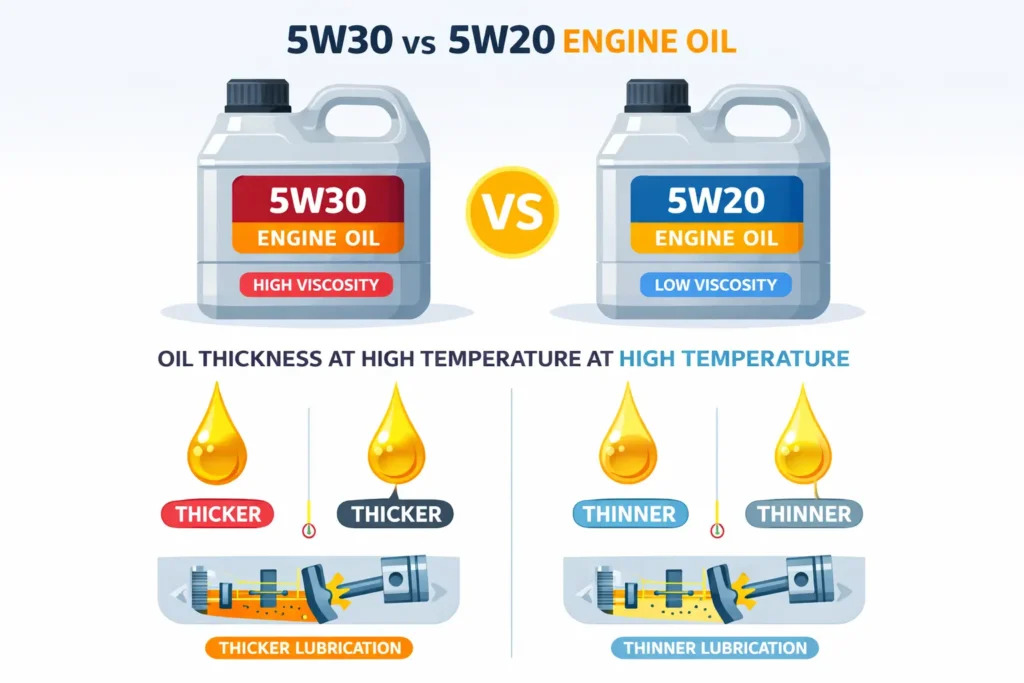
5W30 and 5W20 are common engine oil grades used in modern vehicles. Both perform well in cold temperatures, but 5W30 is thicker at high temperatures while 5W20 is thinner and improves fuel efficiency. Choosing between 5W30 vs 5W20 depends on your engine design, driving conditions, and manufacturer recommendations.
Engine oil plays a critical role in protecting your vehicle’s engine. It lubricates moving parts, reduces friction, controls temperature, and helps keep the engine clean. Among the many oil grades available, two of the most commonly used are 5W30 and 5W20. Many drivers often wonder which oil is better for their car and whether they can switch between them.
The numbers and letters in engine oil grades can be confusing. For someone unfamiliar with automotive terminology, choosing between 5W30 vs 5W20 may feel complicated. However, understanding the difference is easier than it appears.
Both oils perform similarly in cold temperatures, but they differ in thickness when the engine is running at normal operating temperatures. This difference can influence engine protection, fuel efficiency, and long term engine performance.
In this article, we will explain what 5W30 and 5W20 mean, compare their advantages and disadvantages, explore real world usage, and help you determine which oil grade is best for your vehicle. By the end, you will have a clear understanding of how to make the right choice for your engine.
Quick Overview
5W30 and 5W20 are multigrade engine oils designed to work across a range of temperatures. The number before the letter W represents the oil’s cold temperature performance. The number after the W indicates how thick the oil remains at high engine temperatures.
Both oils perform similarly during cold starts, but 5W30 remains slightly thicker at higher temperatures than 5W20.
| Feature | 5W20 | 5W30 |
|---|---|---|
| Cold temperature performance | Excellent | Excellent |
| High temperature thickness | Thinner | Slightly thicker |
| Fuel efficiency | Better | Moderate |
| Engine protection in heavy loads | Moderate | Better |
| Common usage | Modern fuel efficient engines | Performance or high temperature engines |
Understanding Engine Oil Grades
Engine oil grades follow a classification system established by the Society of Automotive Engineers. These grades help drivers and mechanics understand how oil performs in different temperatures.
What the Number 5 Means
The number before the letter W indicates cold temperature viscosity. Both 5W20 and 5W30 have the same cold weather rating. This means they flow easily during cold engine starts, which helps reduce engine wear during the first few seconds after starting the car.
Meaning of the Letter W
The letter W stands for winter. It indicates that the oil has been tested for performance in colder climates.
What the Numbers 20 and 30 Mean
The second number represents oil thickness when the engine is operating at normal temperature. A higher number means thicker oil.
- 5W20 is thinner when the engine is hot.
- 5W30 is slightly thicker and provides stronger protection in high temperature conditions.
Definition and Explanation
What is 5W20 Engine Oil
5W20 is a lightweight engine oil designed for modern engines that prioritize fuel efficiency. Its lower viscosity allows engine components to move more freely, reducing friction and improving fuel economy.
Many car manufacturers recommend 5W20 oil for smaller engines and vehicles designed for efficient performance.
What is 5W30 Engine Oil
5W30 is slightly thicker than 5W20 when the engine reaches operating temperature. This thickness provides stronger protection for engines that operate under heavier loads, higher temperatures, or performance conditions.
5W30 is widely used in many vehicles around the world because it offers a balance between fuel efficiency and engine protection.
Key Differences Between 5W30 vs 5W20
| Feature | 5W20 | 5W30 |
|---|---|---|
| Oil thickness | Thinner | Thicker |
| Fuel economy | Higher | Slightly lower |
| Engine protection | Moderate | Stronger |
| Best for climate | Mild to moderate | Moderate to hot |
| Engine type | Modern fuel efficient engines | High load engines |
The biggest difference between 5W30 vs 5W20 is viscosity at operating temperature.
Advantages and Disadvantages
Advantages of 5W20 Oil
- Improves fuel efficiency because it flows easily
- Reduces internal engine friction
- Suitable for modern fuel efficient vehicles
- Faster circulation during cold starts
Disadvantages of 5W20 Oil
- May provide less protection in high heat
- Not ideal for heavy towing or high performance engines
- Thinner oil film under extreme conditions
Advantages of 5W30 Oil
- Better protection in high temperature environments
- Ideal for engines under heavy load
- Provides stronger oil film between moving parts
- Widely compatible with many engine types
Disadvantages of 5W30 Oil
- Slightly lower fuel efficiency
- May not be necessary for smaller modern engines
- Slightly slower flow compared to thinner oils
Real World Examples
Understanding how these oils are used in everyday vehicles helps clarify the differences.
Example 1: Fuel Efficient Sedan
Many compact sedans are designed to maximize fuel economy. Manufacturers often recommend 5W20 oil because it reduces engine resistance and improves mileage.
Example 2: SUV or Performance Engine
Vehicles that tow trailers, drive long distances, or operate in hot climates often benefit from 5W30 oil. The thicker viscosity protects engine components under stress.
Example 3: Older Engines
Older engines with higher mileage may perform better with slightly thicker oil like 5W30 because it maintains stronger lubrication.
Regional and Global Usage
Engine oil preferences vary depending on climate, vehicle design, and manufacturer standards across different regions.
North America
In the United States and Canada, 5W20 oil is widely used in modern vehicles designed for fuel efficiency. Manufacturers introduced thinner oils to help meet strict fuel economy regulations.
Europe
European vehicles often recommend slightly thicker oils like 5W30 or even 5W40 because engines are designed for higher performance and longer driving distances.
Asia
Japanese and Korean car manufacturers frequently recommend 5W20 or 5W30 depending on engine size and design. Smaller engines often use thinner oils to improve efficiency.
Middle East
In hot climates such as the Middle East, drivers often prefer slightly thicker oils like 5W30 because they maintain stability in high temperatures.
Global Trend
The automotive industry is gradually shifting toward lower viscosity oils to improve fuel efficiency and reduce emissions while maintaining adequate engine protection.
Common Mistakes When Choosing Engine Oil
Many drivers make simple mistakes when selecting engine oil.
Ignoring Manufacturer Recommendations
Always follow the oil grade recommended in the vehicle owner’s manual.
Switching Oil Grades Without Understanding
Changing from 5W20 to 5W30 may be acceptable in some engines but not in all vehicles.
Using Oil Based Only on Climate
While climate matters, engine design is the most important factor.
Using Incorrect Oil Type
Using the wrong oil grade repeatedly may reduce fuel efficiency and increase engine wear.
Exercises With Answers
Exercise 1
Identify whether the following statement refers to 5W20 or 5W30.
- Provides better fuel efficiency
- Thicker oil at high temperatures
- Recommended for heavy loads
- Often used in modern fuel efficient vehicles
Answers
- 5W20
- 5W30
- 5W30
- 5W20
Exercise 2
Match the oil type with its benefit.
| Oil Type | Benefit |
|---|---|
| 5W20 | Improved fuel economy |
| 5W30 | Stronger high temperature protection |
Related Concepts and Comparisons
5W30 vs 5W20 vs 10W30
| Feature | 5W20 | 5W30 | 10W30 |
|---|---|---|---|
| Cold start performance | Excellent | Excellent | Moderate |
| High temperature protection | Moderate | Strong | Strong |
| Fuel efficiency | High | Moderate | Lower |
Synthetic vs Conventional Oil
Modern vehicles often use synthetic versions of 5W20 or 5W30 because they offer improved durability, better temperature stability, and longer service intervals.
Prevention and Maintenance Tips
Proper oil maintenance helps extend engine life.
- Check oil level regularly
- Change oil according to manufacturer schedule
- Use high quality engine oil
- Replace oil filter during oil changes
- Avoid mixing different oil grades unless approved
Studies show that regular oil changes can extend engine life by more than fifty percent compared to poorly maintained engines.
FAQs
Can I use 5W30 instead of 5W20?
Some engines can safely use 5W30 instead of 5W20, but always check the manufacturer recommendation before switching.
Which oil is better for fuel economy?
5W20 usually provides better fuel economy because it has lower viscosity.
Is 5W30 better for hot climates?
Yes, 5W30 provides better protection in high temperature conditions compared to 5W20.
Can mixing 5W20 and 5W30 damage the engine?
Mixing small amounts typically will not cause damage, but consistent use of the recommended oil grade is best.
Why do manufacturers recommend thinner oils?
Thinner oils reduce friction inside the engine, which improves fuel efficiency and reduces emissions.
Is 5W30 suitable for older engines?
Yes, many older engines benefit from slightly thicker oil like 5W30.
How often should engine oil be changed?
Most modern vehicles require oil changes every 5000 to 7500 miles depending on driving conditions.
Is synthetic oil better than regular oil?
Synthetic oil generally provides better protection, longer lifespan, and improved temperature stability.
Can wrong oil reduce engine life?
Using incorrect oil grades over time may increase engine wear and reduce efficiency.
Which oil should I choose between 5W30 vs 5W20?
The best choice depends on the vehicle manufacturer recommendation, climate, and driving conditions.
Conclusion
Understanding the difference between 5W30 vs 5W20 is essential for proper engine maintenance. Both oils provide excellent cold start performance, but they differ in viscosity when the engine reaches operating temperature.
5W20 is thinner and improves fuel efficiency, making it ideal for modern engines designed for economy. On the other hand, 5W30 is slightly thicker and offers stronger protection under heavy loads, high temperatures, and demanding driving conditions.
The most important rule when choosing engine oil is to follow the vehicle manufacturer’s recommendation. Engine design, climate conditions, and driving habits all influence which oil grade performs best.
By selecting the correct oil and maintaining regular oil changes, drivers can extend engine life, improve fuel efficiency, and ensure reliable vehicle performance for many years.
Discover More Related Articles:
- Boil vs Abscess: Understanding These Painful Skin Infections in 2026
- Dihydroberberine vs Berberine: Which Is Better for Insulin Resistance in 2026
- Apostille vs Notary: Which Is Required for International Use in 2026

David Thompson is the grammar expert behind TalkNexs.com. He believes that learning English grammar doesn’t have to be boring or complicated. Through practical examples and easy explanations, David helps readers understand confusing grammar rules and use them correctly in daily communication. His goal is to make grammar simple, clear and enjoyable for everyone.